
Why This Decision Matters More Than You Think
Baggage fees in the US generated over $7 billion for airlines in a single recent year - most of it from travelers who hadn't fully mapped out their options before booking. The carry-on vs. checked bag decision isn't just about packing space. It directly affects your total trip cost, your airport experience, and in some cases your ability to make a connecting flight.
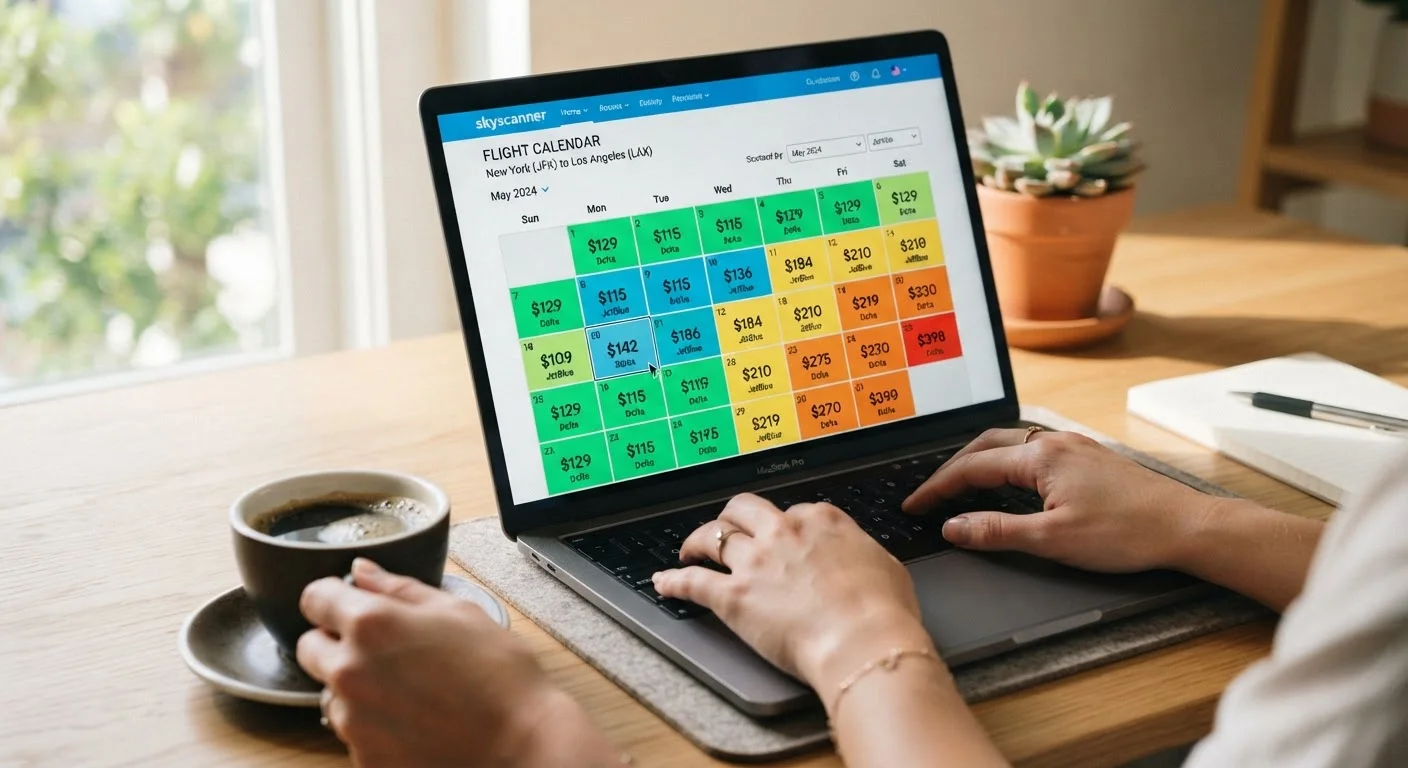
Before you open a search engine, it helps to factor baggage into your planning. Our pre-search flight checklist covers this as a core step - because the airline you choose determines your baggage fee structure before you ever pack a thing.
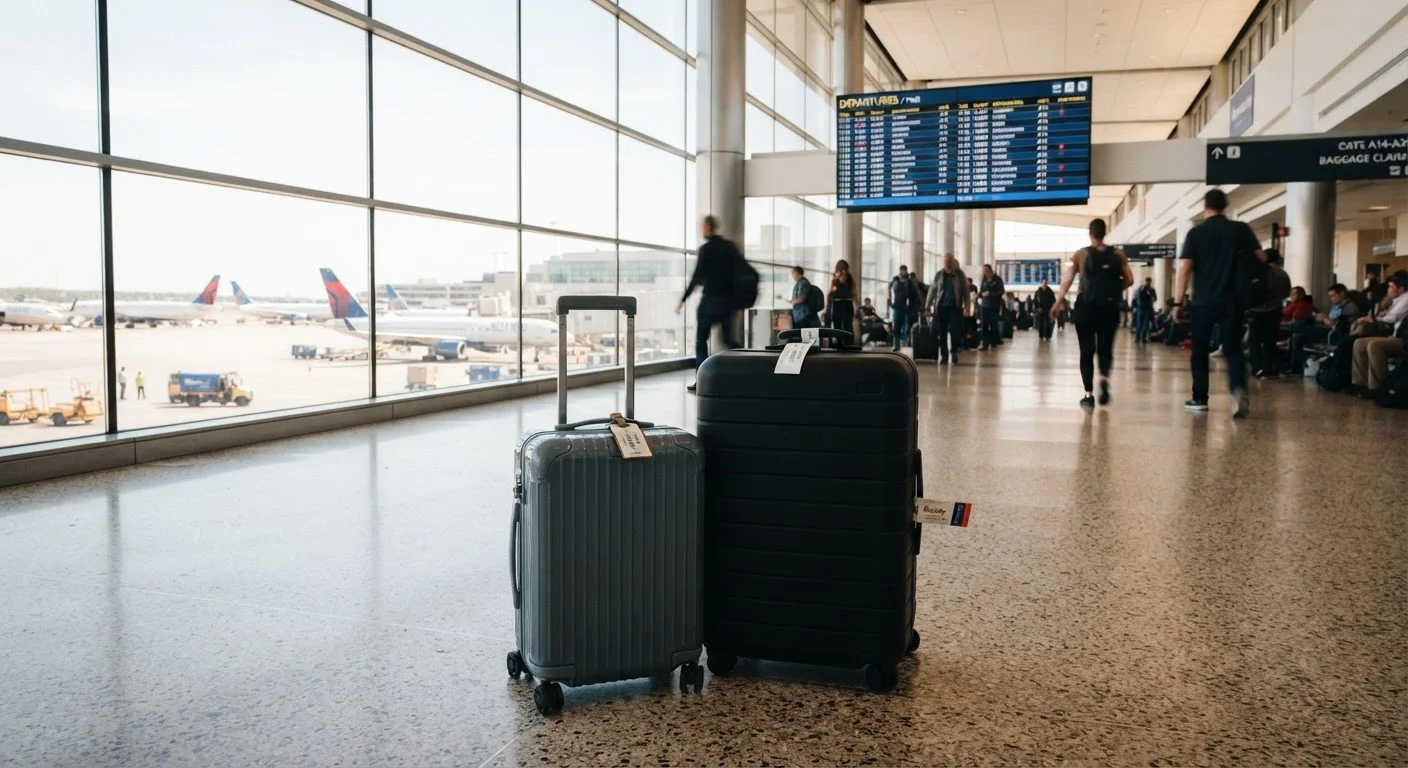
The core trade-off is straightforward: carry-ons save money on most full-service carriers and keep you moving faster through the airport, while checked bags offer packing freedom at an added cost. Neither is universally better - the right choice depends on your trip, your airline, and what you're bringing.
How the Fees and Rules Actually Stack Up
On major US carriers, a checked bag typically runs $30-$40 for the first bag each way, adding $60-$80 or more round-trip. Carry-ons remain free on most full-service airlines, but that's not universal - ultra-low-cost carriers (ULCCs) such as Spirit and Frontier charge for carry-ons above personal item dimensions, which changes the math significantly.
| Criterion | Carry-On Bag | Checked Bag |
|---|---|---|
| Typical fee (full-service US carrier) | Usually free | $30-$40 each way |
| Fee on ultra-low-cost carriers | Charged above personal item | Charged separately |
| TSA liquid restrictions | Yes - 3.4 oz rule applies | No restrictions on liquids |
| Baggage claim required | No | Yes - adds 20-45 minutes |
| Risk of delay or loss | Very low | Low but present on connections |
| Max typical capacity | ~40 liters / 22 x 14 x 9 in | 50 lbs / ~62 linear inches |
| Suitable for trips over 7 days | Challenging without laundry | Yes, comfortably |
Size limits matter too. Most airlines cap carry-on bags at 22 x 14 x 9 inches, but enforcement varies by aircraft type and how full the flight is. Overhead bin space fills quickly on regional jets, and gate agents may check your carry-on to the destination at no charge - or charge you depending on the carrier. Always verify your airline's current policy directly, as rules and fees change.
If you're flying a ULCC and want to avoid all bag fees, traveling with only a personal item is the most cost-effective path. Our guide to packing a personal item as your only bag walks through exactly what fits and how to make it work for short trips.
Airline Policies Change - Always Verify
Baggage fee structures, size limits, and free allowance rules are set by individual airlines and can change without broad notice. What applies to one fare class on one carrier may not apply on a codeshare partner or a connecting flight operated by a different airline. Always check the baggage policy page of every carrier on your itinerary before packing - not just at booking, but again closer to departure.
Operational Factors: Connections, Delays, and Lost Bags
The financial calculation is only part of the picture. Checked bags introduce variables that carry-ons don't. On connecting itineraries, bags can be misrouted, delayed at origin, or fail to transfer if your first flight lands late. Understanding what happens to your checked bag when flights connect - including when you're required to re-check bags yourself - is essential if your route involves multiple carriers or international entry.
Carry-ons eliminate that uncertainty. Your bag is with you from gate to gate. For travelers with tight connections or itineraries spanning multiple airlines without interline agreements, that control has real value beyond any fee calculation.
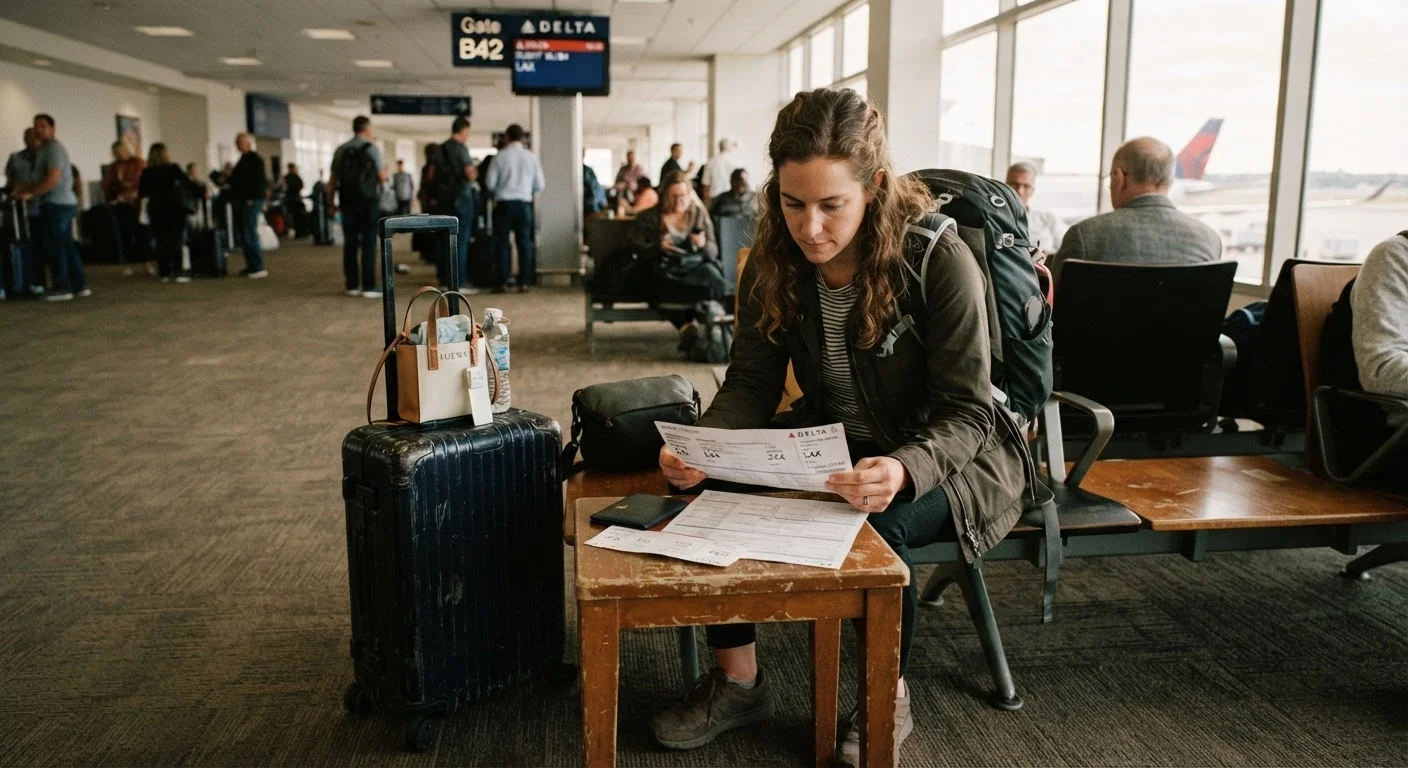
On the other hand, carry-on travel demands discipline. TSA liquid rules apply (3.4 oz per container, all in a single quart-sized bag), sharp or restricted items must be checked, and you're responsible for hauling the bag through every transit point. For multi-week or solo travel where you're moving accommodations frequently, that physical load adds up - something worth weighing honestly.
$7B+
Annual US airline baggage fee revenue
US airlines collectively reported over $7 billion in baggage fee revenue in a recent pre-pandemic year, per Bureau of Transportation Statistics data.
20-45 min
Average baggage claim wait time
Industry estimates suggest domestic baggage claim adds roughly 20 to 45 minutes to post-flight airport time, depending on airport size and staffing.
~3%
Checked bags mishandled annually
SITA's Baggage IT Insights report has historically placed global baggage mishandling rates in the range of 2-4 per 1,000 passengers, though rates vary by carrier and route.
Matching Your Bag Strategy to Your Trip Type
Trip length is the most reliable starting variable. Trips of three days or fewer can almost always be managed with a carry-on or even a personal item only - especially if your destination has laundry access. Trips of a week or more start to push against carry-on capacity for most travelers, particularly if the itinerary spans different climates or dress codes.
For extended solo travel, the packing equation shifts further. When you're managing your own bags through frequent location changes, every pound matters. Our piece on packing logic for long solo trips addresses exactly how to evaluate what earns its place in your bag.
Cruise travelers face a different set of constraints altogether - cabin storage is limited and port days require practical flexibility. See our guide to packing sensibly for a cruise for a context-specific breakdown of what you actually need to bring versus what the ship provides.
The most cost-effective approach for many travelers is a hybrid: a carry-on sized bag plus a personal item (backpack or tote), maximizing free allowance on full-service carriers without paying a checked bag fee. Just confirm both items fit your airline's specific allowances before you leave home.