
Why the Personal Item Strategy Pays Off
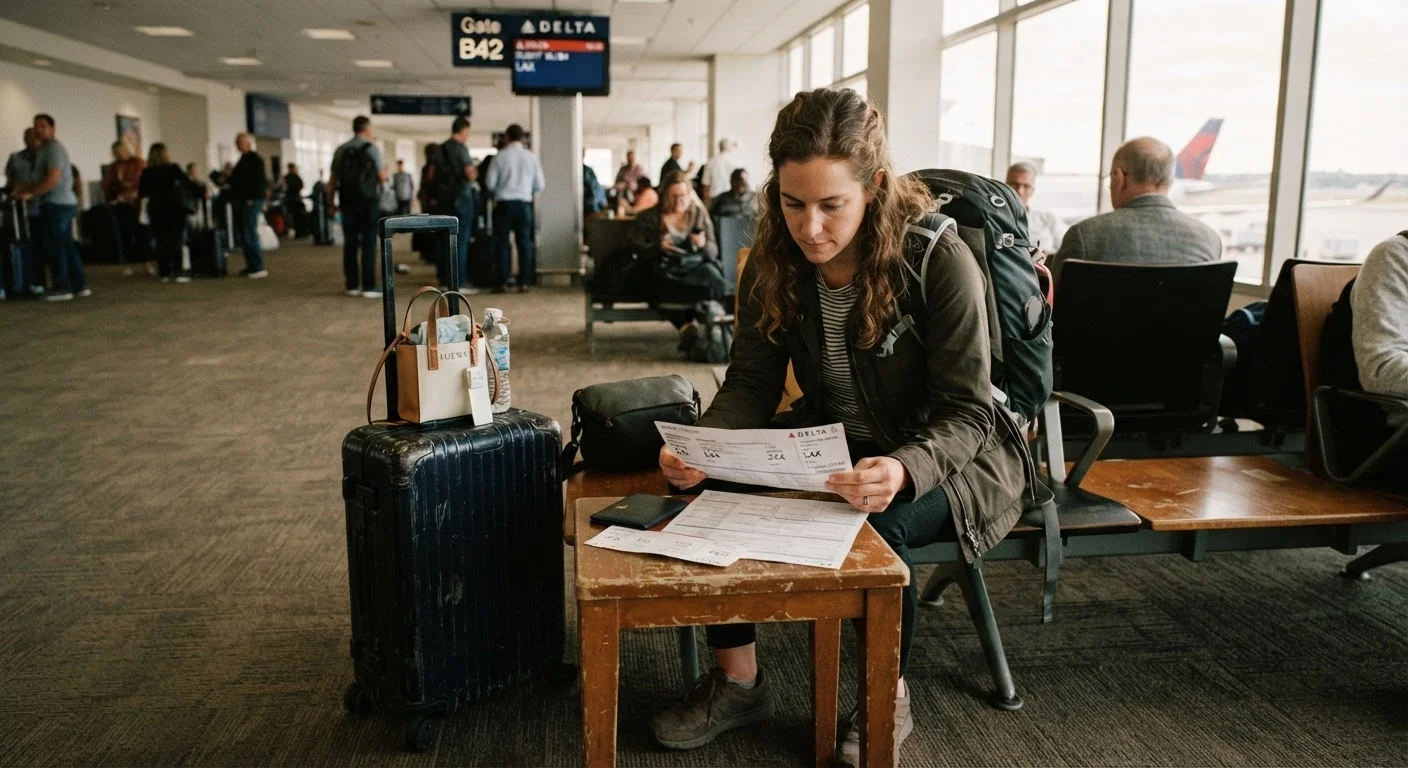
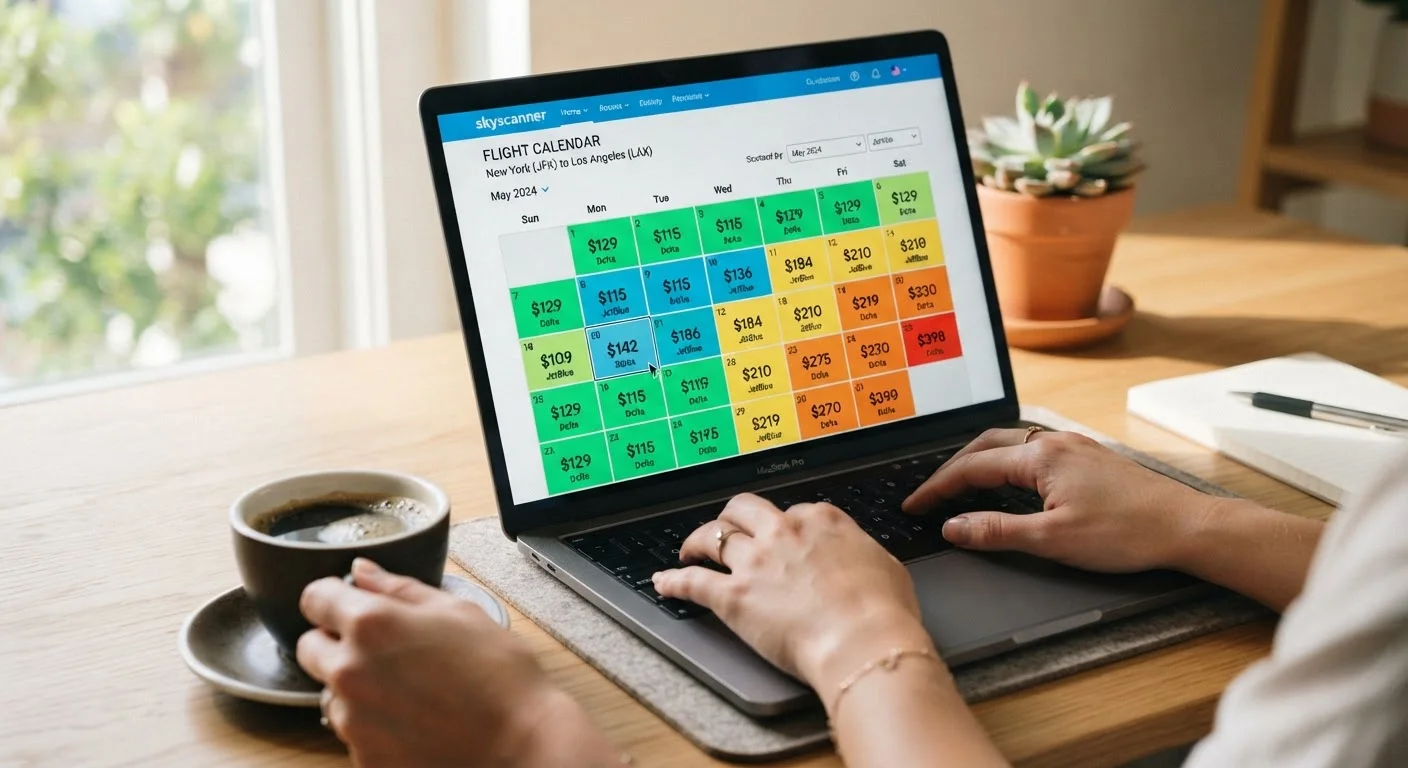
Budget carriers have reshaped the pricing model for short-haul flights: the base fare covers your seat and one personal item, and everything else - including a carry-on bag - is a paid add-on. On ultra-low-cost carriers, carry-on fees commonly run $35-$75 per flight segment when added at booking, and can climb higher if you wait until the gate. On a round trip, that's real money that often exceeds the cost of the flight itself.
The personal item exemption exists because the item must fit under the seat in front of you, not in the overhead bin - a distinction that defines the size constraint you're working within. Travelers who learn to pack within that constraint effectively fly carry-on free on every budget trip. For context on how add-on fees compound across a trip, see our piece on the real tradeoffs of flying with budget carriers.
This approach works best for trips of one to four nights. Longer trips or those requiring specialty gear call for a different calculation - the carry-on vs. checked bag tradeoff guide covers when upgrading your baggage strategy actually makes financial sense.
Size Limits Vary by Airline - Always Verify
Personal item dimensions are not standardized across airlines. Spirit, Frontier, Allegiant, and Ryanair each publish different maximum measurements, and gate agents can and do enforce them with sizers. Pull up your airline's current baggage policy page before you finalize your bag choice - policies change, and a bag that flew free on one carrier may trigger a fee on another.
What to Pack and What to Leave Behind
The personal item constraint forces a useful discipline: every item must justify its volume. Clothing is almost always the largest variable. The most effective framework is a capsule approach - neutral colors that mix and match, fabrics that dry fast and resist wrinkles (merino wool and nylon blends are widely cited by travel-packing communities for this reason), and a single pair of shoes worn on the plane.
Toiletries are the second major decision point. The TSA 3-1-1 rule (containers of 3.4 oz or less, in one quart-size bag) applies to carry-ons and personal items alike. Most full-size toiletry items are sold in travel sizes or can be decanted - or purchased at your destination to avoid carrying them at all. For short trips, a minimalist toiletry kit of five to eight items is usually sufficient.
Electronics deserve special attention. A phone, one set of earbuds, and a charger cover most travelers' needs. A tablet or e-reader is a reasonable addition if it replaces a book. A laptop is worth carrying only if your trip genuinely requires it - the volume cost is significant in a small bag.
Roll, Don't Fold, for Maximum Density
Rolling clothes tightly rather than folding them reduces wrinkles and creates uniform cylinders that pack edge-to-edge with no wasted air gaps. Stuff socks inside shoes and fill every cavity. Compression packing cubes can reduce soft clothing volume by roughly 30%, according to frequent traveler testing.
Solo travelers planning trips where budget discipline extends beyond the airport will find complementary strategies in the budget solo travel hub, and a full pre-departure checklist at Before You Board.
Don't Stuff the Bag Until It Can't Close Flat
An overpacked personal item that won't compress can be flagged at the gate just as easily as an oversized one. Gate agents are increasingly checking both dimensions and whether bags can fit under the seat. Leave a small margin of compressibility so the bag slides under without a fight.
What Doesn't Work in a Personal Item
Some trips and some items genuinely can't fit this framework. If you're traveling for more than four or five nights, carrying formal clothing, bringing medication that requires refrigeration, or heading somewhere with gear requirements (hiking boots, a wetsuit, formal attire), a personal-item-only strategy will either fail or require purchasing items at your destination at higher cost. The packing logic for long solo trips guide addresses the calculus for extended travel.
It's also worth being honest about your own habits. If you consistently use items you bring, the strategy works. If you're a just-in-case packer who rarely touches half of what you carry, the personal item constraint will feel punishing. The answer isn't to upgrade your bag - it's to build a more accurate trip-specific packing list before you start, as outlined in the steps above.
Slim backpack or structured tote (18×14×8 inches or smaller)
Serves as the personal item itself - must fit under the seat in front of you.
Compression packing cubes
Compress soft clothing so it takes up less volume inside the bag.
TSA-compliant quart-size zip bag
Holds all liquids and gels under 3.4 oz for security screening.
Luggage scale
Confirms packed weight before you leave home if your airline enforces a personal item weight cap.
Confirm your airline's exact personal item policy
Go directly to your airline's baggage policy page - not a third-party comparison site - and note the maximum dimensions and any weight limit. Write the numbers down. Budget carriers are not uniform: one airline may allow 18×14×8 inches, another 16×12×6 inches. If you're connecting on a partner carrier, check that carrier's policy too.
Choose the right bag for your trip
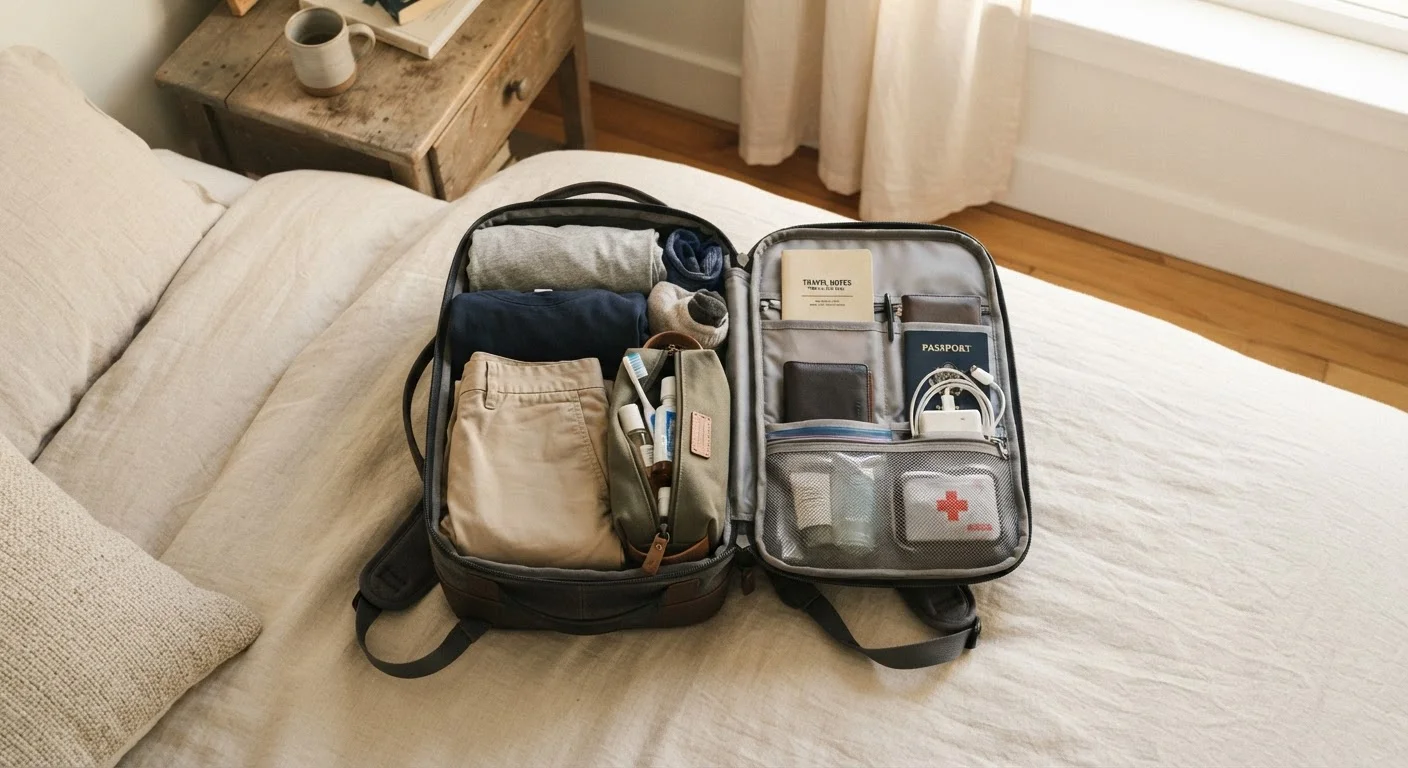
Select a bag that fits within the confirmed dimensions when fully packed, not just when empty. Slim daypack-style backpacks and structured crossbody bags tend to work best because they compress flat and have external dimensions that match typical under-seat spaces. Avoid rollers and rigid shells - they rarely fit under seats and cannot compress.
Build a ruthless packing list
Write your list before touching your bag. For a 1-3 night trip, a realistic list typically looks like:
- 3 underwear, 3 pairs of socks
- 2 tops (one that doubles as sleepwear if needed)
- 1 bottom (pants or skirt that can be re-worn)
- 1 light layer (packable jacket or cardigan)
- Toiletries in a quart-size bag
- Phone charger and one cable
- Documents, wallet, earbuds
Cross off anything that serves only one purpose or that you can buy at your destination for less than a bag fee costs.
Pack liquids and electronics first
These are your densest, most awkward items. Place your quart-size liquids bag and any electronics (tablet, charger, cables) at the top of the main compartment so they're accessible for security screening without unpacking everything. Keeping them accessible prevents the rushed, messy re-pack that often breaks your careful organization.
Pack clothing using compression cubes
Roll each garment tightly and load them into a compression packing cube. Once zipped, use the compression zipper to reduce the cube's thickness. Pack the cube flat in the bottom or middle of your bag, then fill remaining gaps with socks, underwear, and other soft items. The goal is zero air pockets.
Wear your bulkiest items at the airport
Shoes, jackets, and heavy sweaters should be on your body during travel, not in your bag. This is the single highest-impact space hack for personal item packing. A pair of boots or a puffer jacket can occupy 25-40% of a small bag's volume. Dress for the airport, then change when you arrive if needed.
Do a final fit and weight check at home
Once fully packed, test the bag in a realistic simulation: place it under a chair or table that's approximately 10 inches tall (typical under-seat clearance) and confirm it slides in without forcing. If your airline lists a weight cap, use a luggage scale now. Remove items until the bag fits and weighs within limits - do not leave this check for the gate.