
How Bags Actually Move Between Flights
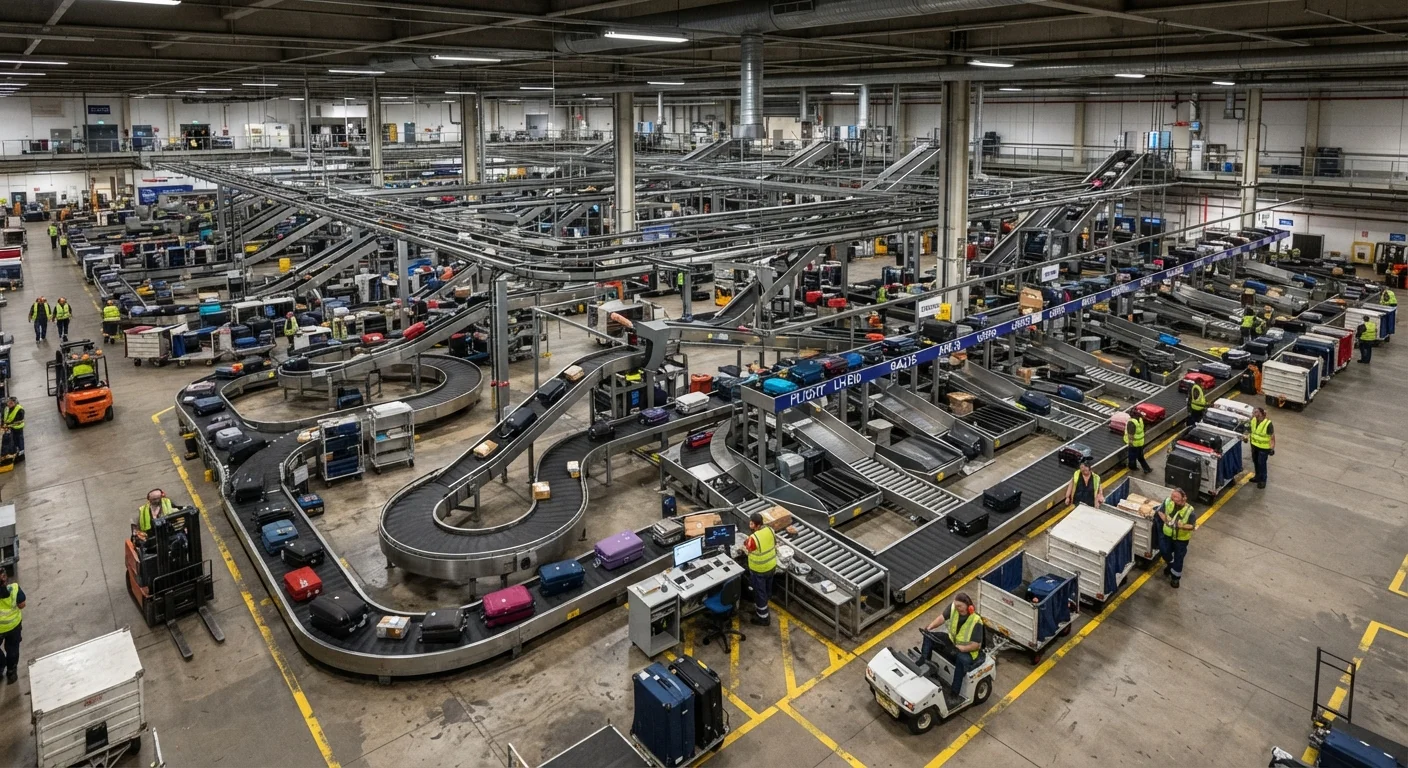
When you check a bag at the counter, it gets a destination tag printed with a barcode that baggage systems read throughout the airport. On a through-checked itinerary, that tag shows your final destination city code. Handlers at the connecting airport scan it, sort it, and load it onto your next plane - all without you being involved.
The key variable is whether the airlines on your itinerary have an interline baggage agreement. These are bilateral contracts that let carriers accept each other's bag tags and take financial responsibility for a bag across the entire journey. Major network carriers - those in alliances like Star Alliance, oneworld, and SkyTeam - generally have these agreements with each other. That's why a single booking with a connection between two alliance partners usually results in automatic bag transfer.
If no interline agreement exists between your operating carriers, the first airline's responsibility ends when the plane lands at the connection point. Your bag will be offloaded to the arrivals belt, and you'll need to collect it, exit security if necessary, and re-check it for the second flight.
Alliance membership ≠ automatic interline baggage
Airline alliance membership (Star Alliance, oneworld, SkyTeam) strongly correlates with interline agreements but doesn't guarantee one for every route or fare class. Some partner carriers maintain limited agreements that exclude certain ticket types or routes. When in doubt, ask at the check-in counter rather than assuming.
When You'll Need to Re-Check Your Bag
Three common situations almost always require you to collect and re-check:
- Separate ticket bookings: If you built your own multi-carrier itinerary by buying two tickets independently, through-checking is rarely available. Each airline sees only its own reservation. Connecting flights booked as a single itinerary avoid this problem.
- Low-cost carrier connections: Many budget carriers opt out of interline agreements to keep costs down. Even if your itinerary looks like one trip, a leg operated by an LCC (low-cost carrier) often breaks the through-check chain.
- International arrivals requiring customs: Entering the U.S. from abroad requires you to collect your bags, pass through customs, and re-check them - regardless of interline agreements. This applies even on a single booking with one airline.
Re-checking adds real time pressure. Budget at minimum 45-60 minutes beyond the time it takes to exit your arriving gate. Layover length becomes especially critical when you're responsible for physically moving your own luggage between flights.
Ask for the bag tag destination at check-in
Before you leave the counter, look at the tag attached to your bag and confirm the three-letter airport code matches your final destination - not your layover city. This 10-second check tells you immediately whether your bag will transfer automatically or whether you'll need to collect it mid-journey.
What to Verify Before You Board
You don't need to guess - the information is available at check-in if you ask for it. Here's a quick verification routine:
- Check the bag tag destination. The agent prints a tag at check-in. Confirm the three-letter destination code matches your final city, not your connection city.
- Ask specifically about each airline. If your itinerary mixes carriers, ask whether all segments are interline-eligible. Don't assume alliance membership guarantees it.
- Factor customs into your layover math. On international-to-domestic connections entering the U.S., mandatory re-check is built into the process. Terminal transfers add more time if re-check happens in a different building.
Before booking any complex itinerary, running through a pre-purchase checklist pays off. See the flight deal checklist for a full rundown of what to confirm before you commit to a fare - baggage logistics included.
~4%
Rate of mishandled bags per 100 passengers (U.S.)
U.S. Department of Transportation Air Travel Consumer Reports have historically tracked mishandled bag rates; exact figures vary by year and carrier - check the most recent DOT report for current data.
45-90 min
Estimated time to collect, clear customs, and re-check
Industry guidance and frequent-traveler experience consistently suggest a minimum 45-90 minute buffer when re-checking is required at a U.S. international gateway.
If your bag doesn't arrive at your final destination, report it immediately at the baggage service desk before leaving the airport. Airlines have a much harder time tracing a bag once you've left the terminal without filing a report.
For travelers still weighing whether to check a bag at all on a connecting itinerary, the carry-on vs. checked bag tradeoff is worth reviewing - a carry-on eliminates the transfer risk entirely on most domestic routes.