
What You're Actually Paying For With Each Option
The price gap between ship-booked and independent shore tours is real and consistent. Cruise lines act as intermediaries - they contract with local operators, add a margin, and bundle in logistics coordination and the much-marketed "guaranteed return" policy. That policy means the ship will wait, or arrange transport, if a ship-organized tour runs late. It's a genuine safety net, not marketing fluff, and it has real value in ports where traffic or logistics are unpredictable.
Independent tours cut out that intermediary layer. The same local operators that run ship excursions frequently sell directly to travelers at lower rates. You lose the return guarantee but gain pricing transparency and often a more personal experience. For a deeper look at how cruise lines structure and price their excursion offerings, see how cruise-line shore excursions are priced and packaged.
| Criterion | Ship-Booked Tours | Independent Tours |
|---|---|---|
| Typical price premium | 30-50% higher per person | Lower; no intermediary margin |
| Ship return guarantee | Yes - ship waits if tour runs late | No - traveler assumes full risk |
| Group size | Often 30-50+ passengers | Typically smaller, sometimes private |
| Booking flexibility | Limited; fixed itinerary | High; customizable pace and stops |
| Operator vetting | Handled by cruise line | Traveler's responsibility |
| Access to regulated sites | Often pre-arranged by cruise line | May require advance independent booking |
| Best port type | Remote, tender, or short-window ports | Major cities with reliable infrastructure |
The Departure Risk Equation
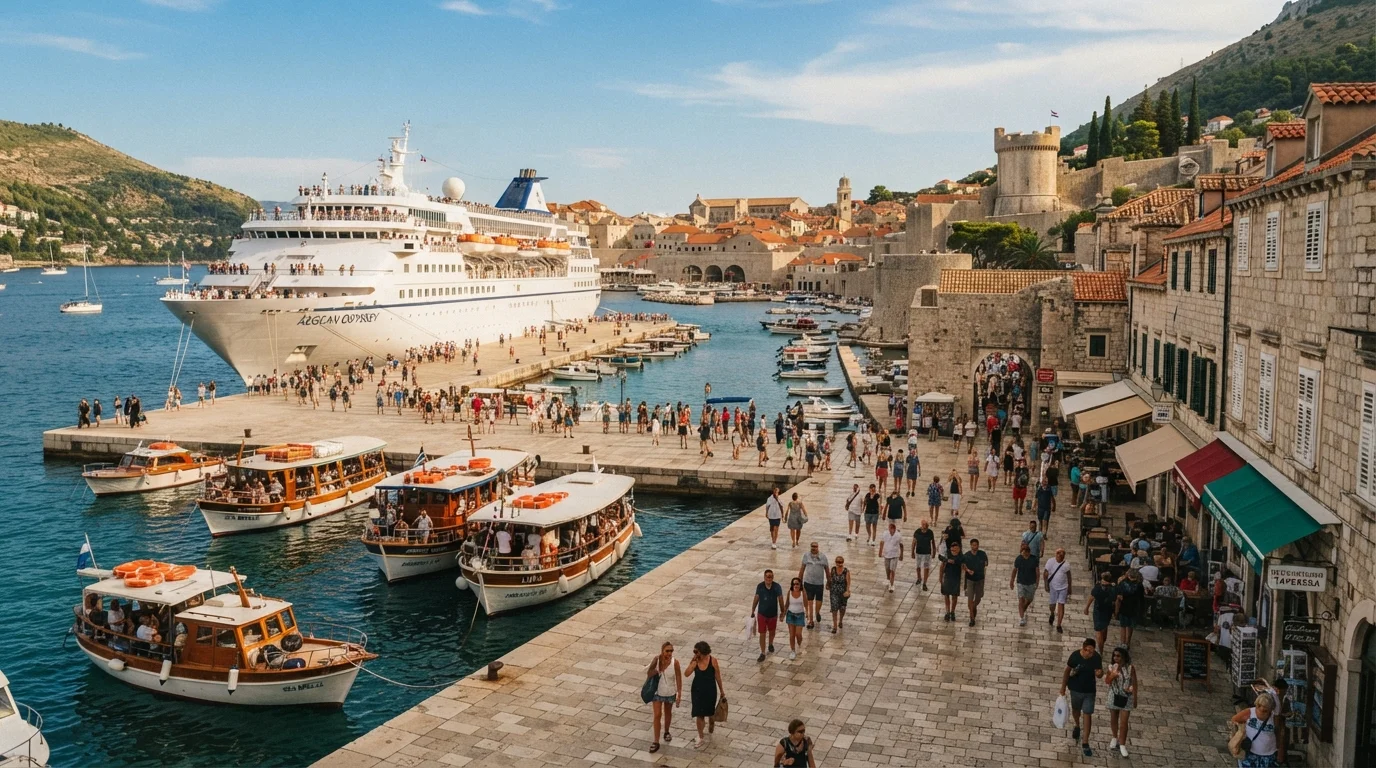
Missing the ship is the central fear that drives most cruisers toward ship-booked tours, and it deserves honest assessment rather than dismissal. Ships do leave without passengers who booked independently - it happens. But context matters. A port with a six-hour window in a well-connected city carries far less risk than a two-hour tender stop on a remote island.
Key variables to weigh before committing to either option:
- Port duration: Shorter windows leave less buffer for independent delays.
- Tender vs. docked: Tender ports (where you take a small boat to shore) add complexity and potential delays that compound independent timing risk.
- Local transport reliability: Ports in major tourist hubs with dependable taxis or transit are lower-risk for independent travelers.
- Distance from ship to attraction: Tours that travel far inland carry more logistical uncertainty.
Experienced cruisers often build a simple rule: if the port window is under four hours or the destination requires significant inland travel, they default to the ship's tour. Otherwise, they evaluate independently. See when independent shore trips make more financial sense for a fuller cost breakdown.
30-50%
Typical ship-tour price premium over independent alternatives
Industry observers and travel researchers consistently note cruise-line excursion markups in this range compared to local operator direct pricing.
30-50+
Average passengers per ship-organized group tour
Large group sizes are a structural feature of ship-organized excursions designed to maximize logistical efficiency at scale.
Experience Quality and Group Dynamics
Ship-organized tours frequently run with 30 to 50 passengers per group, sometimes more. That scale affects pace, access, and the quality of interaction with a destination. Independent operators - whether booked through local agencies or directly with licensed guides - commonly run smaller groups that allow more flexibility around timing, site selection, and even language.
That said, ship tours aren't uniformly inferior in experience. On highly regulated sites (certain archaeological zones, wildlife areas, or capacity-controlled attractions), the cruise line's advance booking relationships can secure access that individual travelers simply can't arrange on short notice at the pier.
If the distinction between group and private formats interests you further, group vs. private shore excursion trade-offs explores the comfort, cost, and control dimensions in detail.
How to Vet an Independent Operator Before Committing
The primary practical risk of going independent isn't missing the ship - it's booking a low-quality or unreliable operator. Due diligence matters. Before booking any independent tour:
- Verify the operator is licensed in the destination country. Many ports have tourism boards that publish lists of certified guides and operators.
- Check recent traveler reviews on multiple platforms, focusing specifically on punctuality and handling of unexpected situations.
- Confirm the pickup point and timing in writing, and establish a clear contingency plan if the tour runs long.
- Understand the cancellation policy, particularly whether it accounts for weather or port changes by the cruise line.
For a structured framework on assessing any excursion before booking - ship or independent - evaluating a shore excursion before you commit provides practical checklists and red flags to watch for.
Port Conditions Change - Always Verify Locally
Port schedules, tender operations, and local tour operator availability can shift due to weather, port congestion, or destination-side events. Cruise lines may alter or cancel port stops with little advance notice. Independent bookings that carry non-refundable deposits carry real financial risk if the ship reroutes. Always check cancellation terms and, where possible, choose operators with flexible policies tied to cruise itinerary changes.