
The Price Gap Is Real - But It's Not the Whole Story
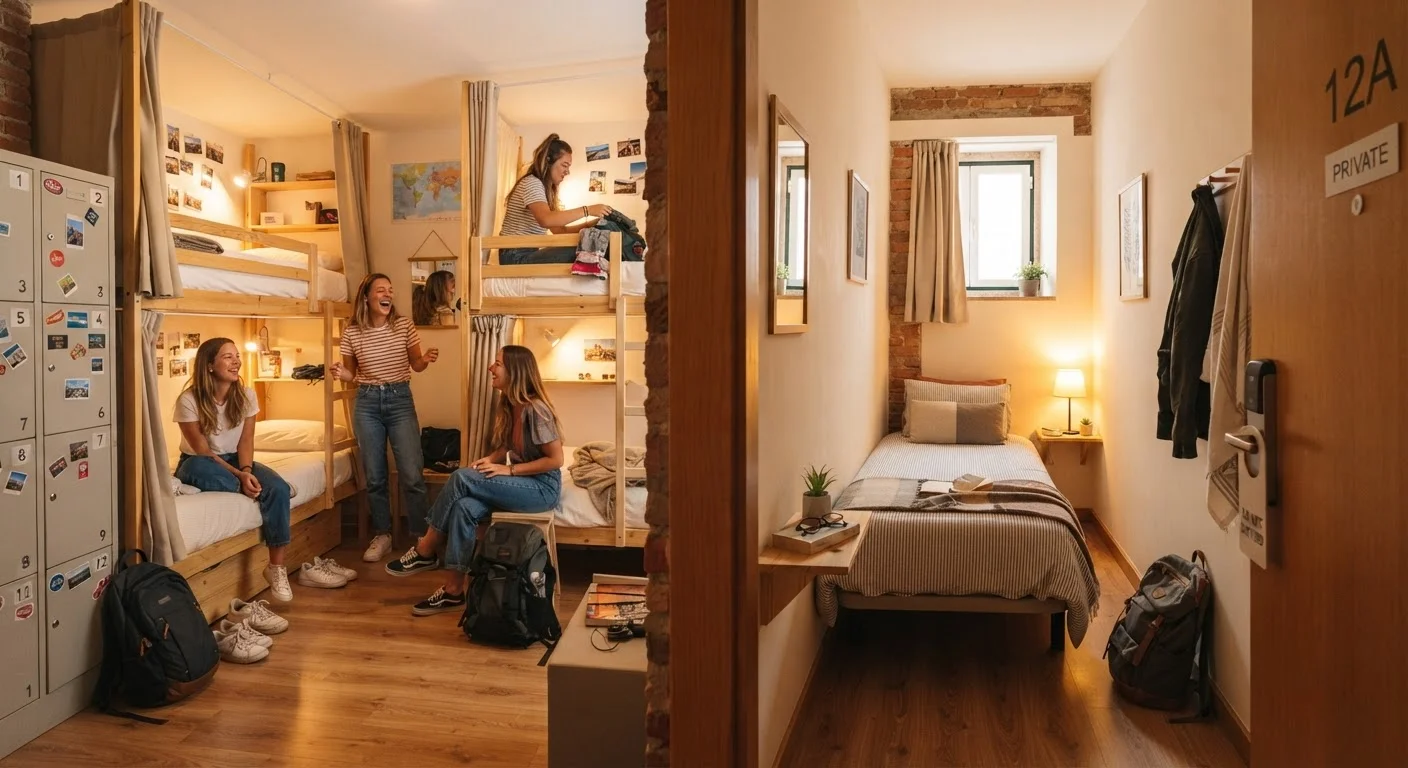
The core appeal of a dormitory bed is straightforward: it costs significantly less than a private room in the same property. In many popular backpacker destinations, a dorm bed runs $15-$30 per night while a private room in the same hostel can be $50-$80 - a gap that compounds fast across a multi-week trip. For travelers watching every dollar, that difference can fund an extra week of travel.
But the sticker price doesn't capture the full cost. A bad night's sleep before a long travel day, a stolen item from an unsecured locker, or a 1 a.m. arrival by a bunkmate who doesn't bother being quiet - these are real expenses measured in comfort, mood, and sometimes money. Before defaulting to whichever option is cheaper, it's worth understanding what each option actually delivers.
For a broader look at how accommodation type fits into your overall daily spend, see our guide to managing daily travel costs.
Significantly lower nightly cost than private rooms
Dormitory beds routinely cost 50-75% less than a private room in the same hostel, making multi-night savings substantial on extended trips.
Built-in social environment for solo travelers
Shared dorms organically connect travelers - a practical advantage for solo travelers who want company without scheduling organized tours or activities.
Often located in centrally placed, full-amenity hostels
Many hostels offering dorm beds also include communal kitchens, luggage storage, and common areas that add value well beyond a basic private room.
Stretches limited budgets across more travel days
Savings from consistent dormitory use can add days or even a week of additional travel on a fixed budget, especially in higher-cost destinations.
Where Dormitories Fall Short
The trade-offs in a dormitory are largely predictable, but their impact varies significantly by traveler. Sleep disruption is the most consistent issue: snoring bunkmates, late check-ins, and early departures are endemic to shared rooms. Earplugs and eye masks help but don't eliminate the problem.
Security is the second major concern. Most reputable hostels provide lockers, but they're only as useful as the lock you bring. Valuables left out - phones, passports, electronics - are a known risk. Travelers carrying expensive gear or sensitive documents should factor this in carefully. Our article on safety trade-offs between hostels and private rooms goes deeper on this point.
Privacy, predictably, is minimal. Getting dressed, taking calls, or just having a quiet moment to decompress after a long day becomes difficult in a room of six to twelve people. For travelers on longer trips or dealing with travel fatigue, this matters more than it might seem at the outset.
Noise and light disturbances disrupt sleep
Snoring, late arrivals, and phone alarms from bunkmates are among the most frequently cited downsides of dormitory stays, and no preparation fully eliminates them.
Limited personal security for valuables
Even when lockers are provided, thefts from unsecured or unlocked storage occur. Travelers carrying expensive electronics or original travel documents face elevated risk.
Minimal privacy for daily tasks
Simple needs - a private phone call, getting changed, or quiet decompression time - become logistically complicated in a room shared with strangers.
Variable quality standards across dormitory properties
Dormitory experience ranges from clean and well-managed to overcrowded and poorly maintained; a lower price doesn't signal any particular quality standard.
When a Private Room Starts to Make Financial Sense
Private rooms aren't inherently the budget-unfriendly option - context changes the math. If you're traveling as a couple or with a friend, splitting a private room can match or beat dormitory pricing per person while adding privacy and security for both.
If your itinerary demands peak performance - early flights, physically demanding days, important meetings - poor sleep has a measurable cost. Paying an extra $25 for a private room that guarantees rest can be the more rational choice than saving that $25 and arriving exhausted.
~60%
Average dormitory savings vs. private hostel room
Across major backpacker routes in Southeast Asia and Europe, dormitory beds commonly cost 50-70% less per night than private rooms in the same hostel property.
2-3 nights
Nights to break even on private room premium
In many budget destinations, the nightly savings from a dormitory bed can offset an entire additional night of travel within two to three nights of staying in a dorm.
Location also changes the calculation. A private room in a well-placed hostel near transit hubs can offset the cost through saved transportation. See why location matters as much as price for a full breakdown of this trade-off.
Making the Right Call for Your Trip
Rather than defaulting to one option for an entire trip, most experienced budget travelers switch between them strategically. Dormitories work well during high-energy legs of a trip - city hopping, festival travel, or routes where meeting other travelers adds genuine value. Private rooms make sense around anchor moments: long transit days, nights before early departures, or stretches where recovery matters.
Hostels vary widely in quality, so reading current reviews specifically mentioning noise levels, locker security, and night-check-in procedures is worth the time. A dormitory in a well-run hostel with enforced quiet hours will serve you better than a mid-range private room with thin walls in a party hostel.
Solo travelers in particular have the most to gain from dormitory stays - the social infrastructure of a good hostel common area is an often-overlooked benefit. For tactics tailored to solo travel specifically, see our budget solo travel hub. And if you're deciding between a hostel and a budget hotel altogether, this comparison of hostels vs. budget hotels covers that decision directly.
Dormitory Quality Varies More Than Price Does
A $20 dorm bed in one hostel can mean an 8-bed mixed room with no lockers and a noisy bar below; the same price in another can mean a 4-bed female-only room with ensuite access and enforced quiet hours after 11 p.m. Price alone won't tell you which you're booking. Prioritize reading recent reviews that specifically address noise levels, locker availability, and how well the hostel enforces its own policies before booking any dormitory.