

The Real Cost Comparison: Nightly Rate Is Only the Beginning
Sticker price misleads most families. A hotel room in a popular beach destination might list at $180 per night, while a three-bedroom rental shows $320 - but that surface comparison ignores the math that actually matters. See where family vacation spending truly goes before you book anything.
For a family of five sharing one hotel room, that $180 nightly rate often means booking a second room or paying a significant premium for a suite - quickly pushing the real cost past $300. The rental, split five ways, lands at $64 per person per night. Add the rental's one-time cleaning fee (commonly $100-$200) across a seven-night stay, and the per-night premium shrinks further.
Food spending is the other hidden variable. Families who can breakfast and lunch in a rental kitchen routinely spend $40-$80 less per day than those relying entirely on restaurant meals. Over a week, that's $280-$560 back in the family budget.
| Criterion | Vacation Rentals | Hotels |
|---|---|---|
| Nightly cost (family of 5) | Lower per person on longer stays | Higher if second room needed |
| Kitchen access | Full kitchen standard | Rare; mini-fridge only |
| Space & bedrooms | Multiple bedrooms typical | Usually one room; suites cost more |
| Cancellation flexibility | Often strict or non-refundable | Free cancellation common |
| Cleaning fees | One-time fee ($100-$200+) | None (included in rate) |
| Daily housekeeping | Rarely included | Standard at most hotels |
| On-site pool or amenities | Varies; not guaranteed | Common at family hotels |
| Loyalty rewards | Not available | Major chains offer programs |
| Minimum stay requirements | Often 3-7 nights in peak season | Typically one night minimum |
| Consistency of quality | Variable; owner-dependent | More predictable by brand |
What hotels recover ground on is incidental costs: parking (often included), resort amenities like pools and fitness centers, and the absence of a cleaning fee on short stays. Always calculate total trip cost - not just the nightly rate - before deciding.
Space, Comfort, and the Reality of Traveling With Kids
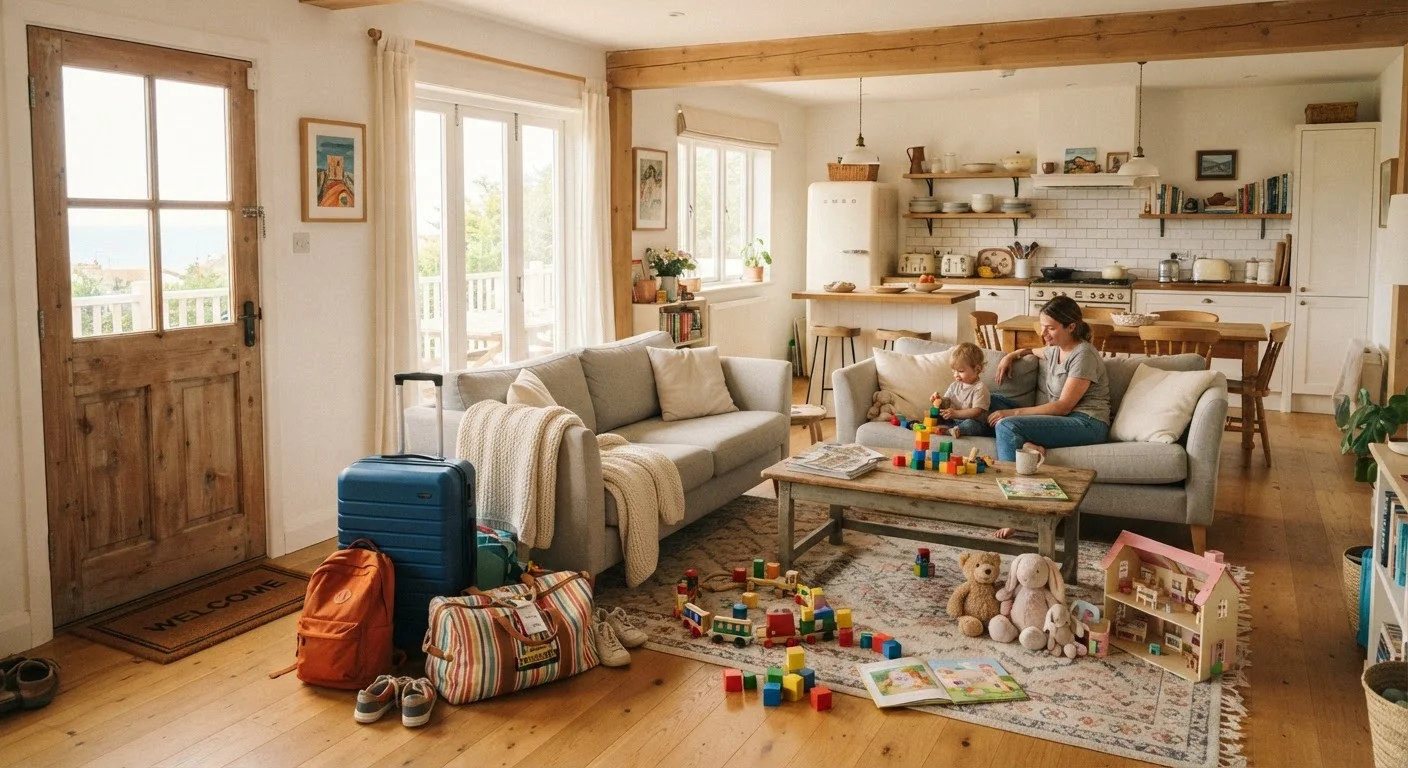
Any parent who has whisper-argued with a partner at 10 p.m. while two kids sleep three feet away knows the real luxury of a family trip isn't a fancy pool - it's a separate room. Vacation rentals deliver this almost by default. A standard two-bedroom rental gives kids their own space, parents a private retreat, and everyone a living room where someone can be awake at 6 a.m. without waking the whole group.
Hotels counter with genuine conveniences that rentals rarely replicate: daily housekeeping, a front desk for immediate problem-solving, on-site dining when nobody has energy to cook, and pools that don't require a 10-minute drive. For families with very young children or those visiting theme-park destinations where the hotel is part of the experience, these advantages matter enormously.
2-3x
More space in a typical vacation rental vs. hotel room
Industry analyses consistently find that multi-bedroom vacation rentals offer significantly more square footage per dollar than comparable hotel rooms for groups of four or more.
$60-$80
Estimated daily food savings with a rental kitchen
Families who prepare breakfast and lunch in a rental kitchen typically save $60-$80 per day compared to purchasing all meals at restaurants, according to general travel budgeting guidance.
3-5 nights
Break-even point where rentals usually beat hotels on cost
Travel budget planners generally find that once a stay exceeds three to five nights and cleaning fees are amortized, multi-bedroom rentals tend to undercut comparable hotel costs for larger families.
Rental comfort also varies far more than hotel comfort. A four-star hotel brand delivers a reasonably predictable experience; a rental's quality depends entirely on the individual owner. Reading reviews carefully - especially from other families - is non-negotiable. Look for mentions of working appliances, accurate photo representation, and responsive hosts.
For a broader look at how rentals compare to other budget lodging formats, the breakdown of hostels, guesthouses, and home rentals is worth reading alongside this comparison.
Booking Practicalities, Flexibility, and When Each Option Falls Short
Hotels win the flexibility battle handily. Most allow free cancellation within 24-48 hours of check-in, accept same-day bookings, and don't require a lengthy messaging exchange before you can reserve. Vacation rentals increasingly require advance booking, non-refundable deposits, and minimum stays - sometimes three to seven nights, particularly in high-demand markets during peak season.
Minimum-stay requirements can actually work in families' favor on longer trips, since those same markets often reward seven-night bookings with flat weekly rates that reduce the effective nightly cost. But if your trip is a spontaneous long weekend, most rentals simply won't be available or affordable after cleaning fees are factored in. The camping vs. budget lodging comparison explores this short-stay calculus in useful depth.
Loyalty programs are another hotels-only advantage. Families who travel several times a year can accumulate points toward free nights, room upgrades, and early check-in - perks that rental platforms have not meaningfully replicated. If your family travels frequently, the value of a hotel loyalty program deserves a line in your accommodation math.
For comprehensive family trip planning that accounts for accommodation alongside transportation and activities, the Family Trip Planning hub offers step-by-step frameworks built for real family logistics.
Prices, availability, and platform policies change frequently. Always verify current terms directly with accommodation providers before booking.