
Why Ground Transport Is a Hidden Budget Lever
Flights and accommodation dominate pre-trip budgeting, but daily ground transport is where money quietly disappears. Take three taxi rides a day instead of using the local bus, and you can easily add $20-$40 to your daily spend - a difference that compounds fast over a two-week trip. Understanding which option fits which situation is one of the most actionable cost controls available to any traveler.
This comparison covers the five most common ground transport modes - public buses and metros, rideshares, metered taxis, rental bikes and scooters, and walking - across criteria that actually matter: cost, flexibility, safety, and ease of use. For how transport fits into your wider spending plan, see our complete daily cost management framework.
| Public Transit | Rideshare / Taxi | Rental Bike / Scooter | Walking | |
|---|---|---|---|---|
| Typical daily cost | $1-$8 | $10-$30+ | $3-$10 | $0 |
| Flexibility | Moderate (fixed routes) | High (door-to-door) | High (self-directed) | Low (distance-limited) |
| Learning curve | Moderate | Low | Low-Moderate | None |
| Luggage-friendly | Limited | Yes | No | No |
| Best for | Daily urban commuting | Late nights, luggage, safety | Half-day exploration | Short hops, discovery |
| Budget impact (2-week trip) | Low ($14-$112) | High ($140-$420+) | Low-Mid ($42-$140) | Minimal |
Public Transit: The Benchmark for Budget Travel
In most cities worldwide, local buses and metro systems set the floor for transport costs. Fares typically range from the equivalent of $0.25 to $2.50 per trip in developing and mid-tier destinations, and $2-$4 in higher-cost cities like Tokyo or Amsterdam. Multi-day or weekly passes often cut per-trip costs by 30-50% compared to single fares.
The tradeoff is learning curve and time. Routes aren't always intuitive, schedules may be infrequent outside peak hours, and overcrowding is common in many cities. That said, transit apps (Google Maps handles most international networks reasonably well) have removed much of the guesswork. Public transit is almost always worth learning on longer stays.
Maximize Transit with a Multi-Day Pass
Before your first full day in a city, check whether a 3-day or weekly transit pass undercuts single-fare pricing. In many cities - including those with extensive metro systems - a weekly pass pays for itself after just four or five trips. Buy it at the station on arrival rather than one ride at a time.
Rideshares and Taxis: Paying a Premium for Convenience
Rideshares - where available internationally - and metered taxis cost significantly more per trip than public transit, but they're not always a waste. For airport arrivals with luggage, for travel after midnight when buses stop running, or when navigating unfamiliar neighborhoods with safety concerns, the extra cost buys something concrete. For detailed guidance on airport-specific options, compare airport ground transport costs and trade-offs.
The key discipline is deliberate use rather than default use. Travelers who use taxis or rideshares for every trip in a mid-tier destination can spend $15-$30 per day on transport alone. Those who limit them to two or three specific situations per week might spend $10-$20 total for that week.
Watch for Unlicensed or Surge-Priced Rides
In tourist-heavy areas, unofficial taxi operators often approach travelers outside airports or major attractions with flat rates that exceed metered fares significantly. Always confirm whether rideshare apps operate locally, use official taxi stands, or verify the meter is running. Surge pricing during peak hours can also push rideshare costs well above expectations - check the fare estimate before confirming.
Bikes, Scooters, and Your Own Two Feet
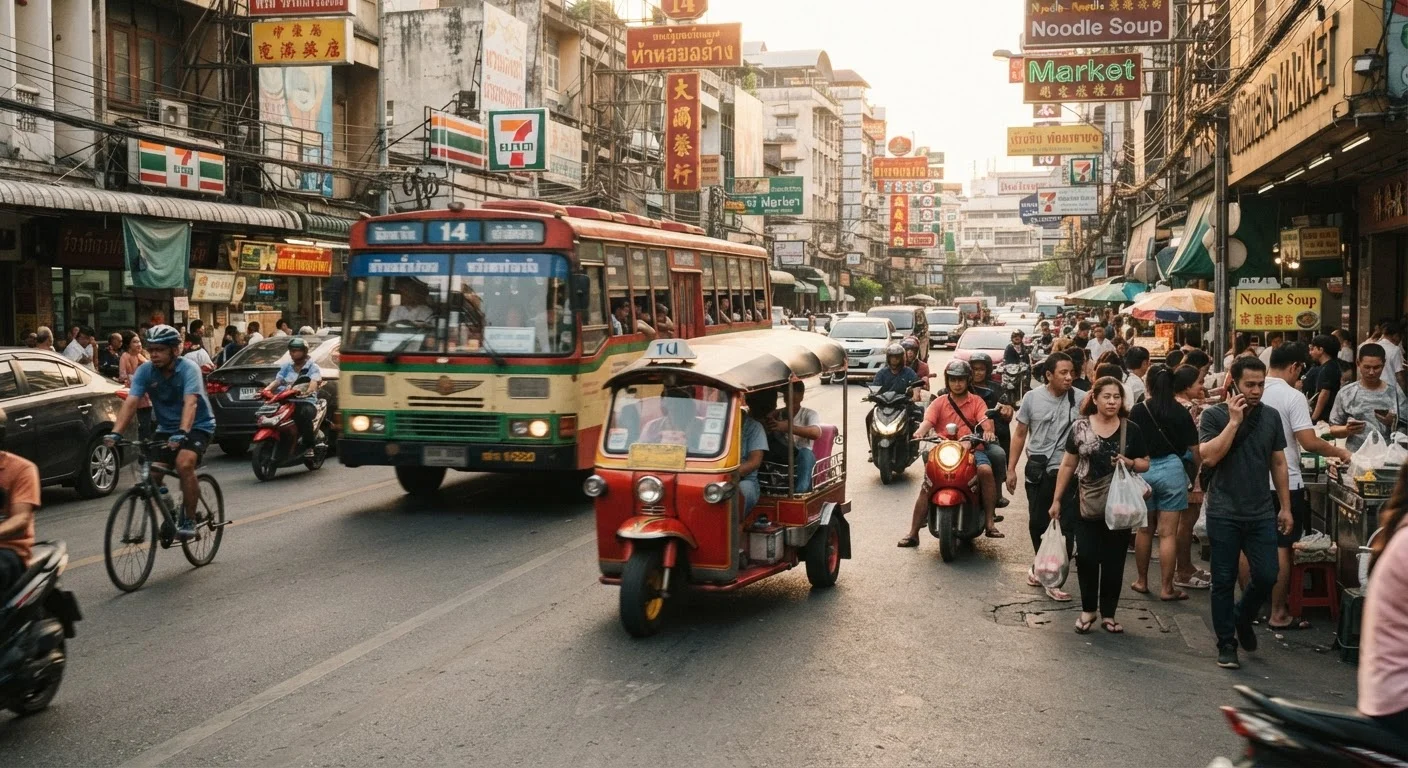
Rental bikes - whether docked city-share systems or private daily rentals - occupy a cost tier between walking (free) and public transit. In many Southeast Asian cities, a scooter rental runs $5-$10 per day, giving you all-day flexibility that a bus pass can't match in less-networked areas. In European cities, bike-share day passes often cost $3-$8 and cover unlimited short trips.
Walking is underrated as a budget strategy. Travelers who map their itinerary around walkable clusters of attractions can eliminate most intra-neighborhood transport costs entirely, and often discover more along the way. Pair walking with occasional transit for longer crossings and you have a genuinely low-cost daily setup. Solo travelers will find additional mode-specific comparisons in this ground and air transport breakdown for solo budgets.
Building a Mixed-Mode Strategy That Holds
The travelers who manage ground transport costs most effectively don't commit to one mode - they assign each mode a job. A practical framework: use public transit for predictable, daytime city-to-neighborhood routes; walk when the distance is under 20 minutes and conditions are safe; rent a bike or scooter for half-day exploration in areas with limited transit; and reserve taxis or rideshares for specific high-need moments.
Factor transport into your daily budget before you arrive, not after. Building a daily budget that holds requires estimating transport costs by destination - what's realistic in Medellín looks very different from Lisbon or Bangkok. Similarly, transport savings work best alongside other daily cost controls; dining choices are the other major variable worth comparing. Set a daily transport ceiling, track it for the first few days, and adjust based on what you actually find on the ground.