
Why Small Cities Deserve a Spot on Your Travel List
There's a persistent assumption in American travel culture that a destination only counts if it has a famous skyline or a packed Instagram hashtag. But some of the most satisfying weekends happen in cities most people drive past - places with genuine neighborhoods, working downtowns, and a local pride that hasn't been polished into a theme-park version of itself.
The cities on this list aren't secrets exactly, but they're consistently skipped in favor of the obvious big names. That oversight works in your favor: lodging runs cheaper, parking isn't a battle, and the locals are happy to point you toward the good stuff. If you want a framework for squeezing maximum value out of 48 hours, our two-day trip planning guide is a solid starting point. These cities were chosen because they reward exactly that kind of focused, unhurried visit.
A Note on Changing Conditions
Small cities can shift quickly - a beloved restaurant closes, a museum expands, road construction reroutes a scenic drive. The destinations here are chosen for durable appeal, but always verify current hours, admission prices, and any permit requirements directly with local tourism offices or attraction websites before your trip. Our pre-trip verification checklist covers what to confirm before heading somewhere less traveled.
Eight Small Cities That Punch Above Their Weight
Marquette, Michigan
Perched on the south shore of Lake Superior, Marquette is the kind of place that quietly stuns first-time visitors. The downtown is compact and walkable, anchored by a historic ore dock that's become an unlikely local landmark. Presque Isle Park - free to enter - wraps around a rocky peninsula with Superior views that rival anything you'd pay admission to see.
The city has a strong local food scene driven partly by Northern Michigan University's presence, which keeps restaurant prices grounded. It's also a launchpad for lesser-known public lands in the Upper Peninsula, including Pictured Rocks National Lakeshore just an hour east.
Presque Isle Park offers Superior shoreline views with no admission fee.
Natchitoches, Louisiana
The oldest permanent settlement in the Louisiana Purchase territory, Natchitoches (pronounced NACK-uh-tish) sits on the Cane River and delivers a genuinely distinctive sense of place. The Front Street Historic District is lined with Creole townhouses, iron-lace balconies, and independent restaurants serving the local specialty - meat pies - for just a few dollars apiece.
The Cane River Creole National Historical Park is free and offers a look at plantation-era history presented with nuance and depth. Lodging options run from budget motels off the highway to affordable B&Bs within walking distance of downtown.
Natchitoches serves its signature meat pies for just a few dollars - a genuine local flavor.
Flagstaff, Arizona
Most travelers treat Flagstaff as a highway stop on the way to the Grand Canyon. That's a mistake. At 7,000 feet elevation, the city has a cool-climate personality completely unlike the rest of Arizona - a walkable historic Route 66 downtown, a thriving craft brewery scene, and Lowell Observatory where public telescope viewing nights are modestly priced.
Flagstaff is also a strong base for exploring the quieter desert landscapes that most visitors overlook while rushing toward Sedona. Walnut Canyon National Monument, just a short drive east, charges a small entrance fee and sees a fraction of Grand Canyon foot traffic.
Flagstaff's 7,000-foot elevation gives it a cool, pine-forested character unlike anywhere else in Arizona.
Paducah, Kentucky
A UNESCO Creative City of Crafts and Folk Art, Paducah sits at the confluence of the Ohio and Tennessee Rivers and has built a small but serious arts identity around its National Quilt Museum - the largest of its kind in the world. The Lowertown Arts District has transformed former industrial buildings into studios and galleries without losing its gritty, lived-in feel.
Downtown Paducah is compact and easy to navigate on foot. The riverfront is free to enjoy, and the city hosts a weekly farmers market in warmer months. Accommodation options are genuinely affordable compared to larger Kentucky cities.
Paducah holds UNESCO Creative City status - rare recognition for a city of fewer than 30,000 people.
Bozeman, Montana
Bozeman has grown considerably in recent years, but it retains a small-city energy that larger Montana metros can't match. Main Street is still lined with independent bookstores, outdoor gear co-ops, and farm-to-table restaurants rather than chain stores. The Museum of the Rockies - affiliated with Montana State University - houses one of the most significant dinosaur fossil collections in the world, with admission costs well below major natural history museums.
The surrounding landscape puts world-class hiking within a short drive. For travelers interested in the broader road trip routing through the Northern Rockies, Bozeman makes a natural anchor stop.
The Museum of the Rockies holds one of the world's premier dinosaur collections at a fraction of big-city museum prices.
Ashland, Oregon
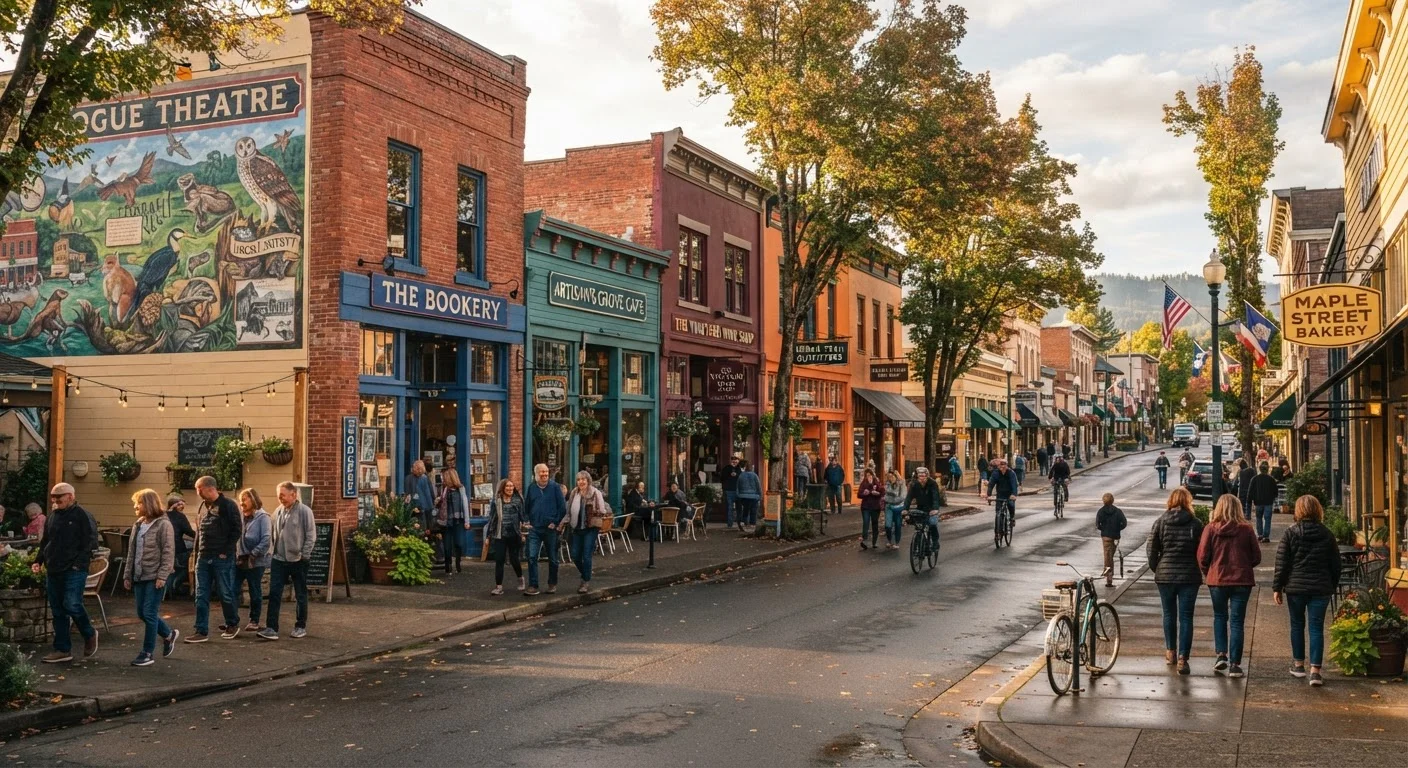
Best known as the home of the Oregon Shakespeare Festival, Ashland is a Southern Oregon town that punches dramatically above its size in arts programming. Beyond the festival - which runs most of the year - Lithia Park is a stunning free public space threading through the center of town along Ashland Creek. The food scene is diverse and locally owned, with options at a range of price points.
Ashland sits close to Crater Lake National Park and the Cascade-Siskiyou National Monument, making it a practical base for those exploring the region's lesser-known public lands. Off-season visits - outside festival peak periods - bring noticeably lower lodging rates.
Lithia Park is a genuine urban green space gem - free, beautiful, and walkable from Ashland's downtown core.
Burlington, Vermont
Vermont's largest city is still small enough to cover on foot in a weekend, with a walkable waterfront on Lake Champlain, a Church Street pedestrian marketplace lined with independent shops, and ECHO Leahy Center for Lake Champlain offering an engaging science museum at reasonable admission rates. The food co-op culture is strong here - a great way to assemble a high-quality, affordable picnic lunch.
The surrounding Champlain Valley and Green Mountains add hiking and cycling options for those who want to venture beyond the city. Burlington also rewards comparison with other culturally rich small cities - it routinely outperforms expectations.
Burlington's Church Street Marketplace and Lake Champlain waterfront are both free to enjoy at any pace.
Galveston, Texas
Often overlooked in favor of South Padre Island or the Florida Gulf Coast, Galveston offers a uniquely layered experience: Victorian architecture, a working fishing pier culture, and the Strand Historic District packed with locally owned restaurants and galleries. The island's history - including its role in the Emancipation Proclamation's announcement - is explored at the Juneteenth Historic Sites, which carry no admission cost.
Galveston is a natural extension of the Gulf Coast drive route, and fits neatly into a broader Texas road trip. Off-peak weekends - avoiding spring break and summer peak - bring accommodation costs down significantly compared to the island's busiest stretches.
Galveston's Strand Historic District combines Victorian architecture, local seafood, and free historic sites in a walkable package.
Time Your Visit for the Shoulder Season
Most of these small cities see their biggest price spikes during local festivals or summer weekends. Visiting in early spring or late fall often means lower lodging rates, fewer crowds, and a more authentic sense of the city's everyday rhythm. Check local event calendars before you book - sometimes a festival weekend is exactly what you want, but knowing in advance helps you plan either way.
How to Make the Most of Any Small-City Weekend
The appeal of these destinations isn't just cost - it's the lower cognitive load. Compact grids mean you can walk between a breakfast spot, a museum, and an afternoon market without consulting a transit map. Most of the cities listed here have a walkable or bikeable historic core, which makes spontaneous detours easy rather than stressful.
For ideas on filling your hours without draining your wallet, our guide to free and low-cost weekend activities covers everything from public markets to state parks. And if you're still skeptical that domestic travel can genuinely excite, this piece challenges that assumption directly. The short version: the US rewards curiosity far more than most travelers expect.
Travel conditions, accommodation prices, and local business hours change over time. Verify current details with official city tourism resources or direct providers before your trip.