
Why Destination Type Changes Everything for Your Budget
Not all weekend escapes cost the same - and the biggest variable isn't distance, it's destination type. A mountain town built around ski lifts operates on a completely different economic model than a river town with a free riverwalk and a public market. Before you book, it helps to understand which destination types naturally lend themselves to low-cost exploring, and what free activities each reliably offers.
This list breaks down the most common US weekend destination categories and the no-cost or near-free activities each one delivers. Think of it as a starting framework - not a rigid itinerary, but a toolkit for building your own weekend without padding the budget unnecessarily. For a broader look at how destination type maps to cost across regions, see our US weekend getaway quick reference guide.
National and State Parks
America's public lands are among the most underutilized budget travel assets in the country. While some national parks charge entry fees (typically in the $10-$35 per-vehicle range), hundreds of state parks charge far less - and many are entirely free. Once you're in, hiking trails, scenic overlooks, wildlife watching, and swimming holes cost nothing at all.
Free days at national parks occur several times per year, typically around holidays like Veterans Day, Martin Luther King Jr. Day, and the National Park Service's birthday in August - check the National Park Service website for the current year's schedule. For a full breakdown of how to plan an affordable park weekend, our guide on national park weekends on a budget covers entry fees, camping, and permits in detail.
State parks often match the scenery of national parks at a fraction of the entry cost.
Coastal Towns
Public beach access is legally protected in most US coastal states, meaning the ocean itself is free. Coastal towns built around public waterfronts typically offer free activities in abundance: beachcombing, pier fishing (check local licensing requirements), sunrise walks, free outdoor concerts in summer, and public boardwalks that double as people-watching gold mines.
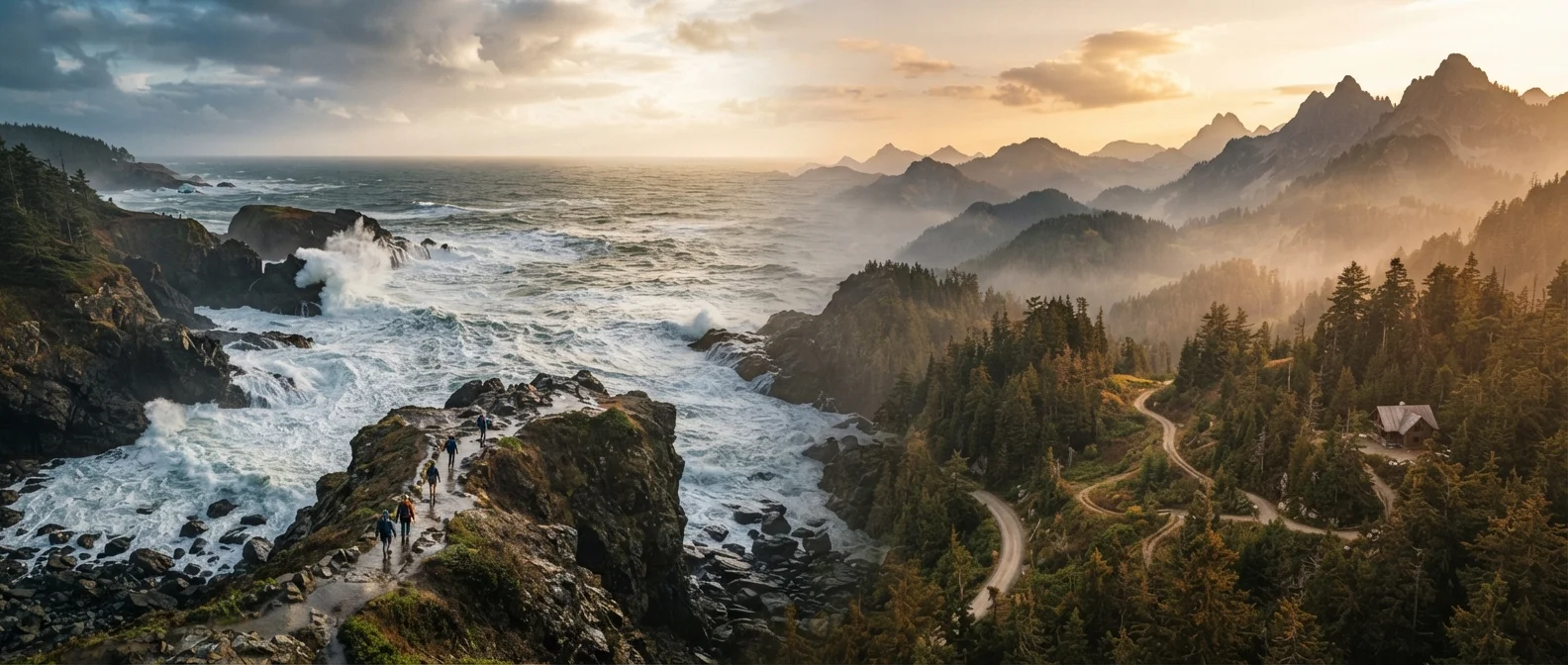
The cost creep in coastal destinations tends to come from parking, dining, and any watersports rentals - not the beach itself. Arriving early often means free or low-cost parking before meters activate, and packing your own food for a beach picnic keeps midday costs near zero. For a detailed comparison of what coastal versus mountain weekends actually cost in practice, see our piece on coastal town vs. mountain town weekends.
Public beaches are legally free in most US coastal states - the ocean costs nothing.
Historic Districts and Heritage Towns
Walking a well-preserved historic downtown is one of the most reliably free weekend activities in the US. Cobblestone streets, architectural walking tours (often available as self-guided PDFs from local visitor bureaus), public murals, and historic markers require no ticket. Many heritage towns also maintain free access to their central plazas, courthouses, and public monuments.
Some historic sites and house museums do charge modest entry fees, typically under $15 per adult, which can be worth it for a single standout attraction. But the streetscape itself - the atmosphere that makes a heritage town worth visiting - is entirely free to absorb at your own pace.
A well-preserved historic downtown is a self-guided museum that never closes and charges nothing.
Small Cities with Arts and Culture Scenes
Mid-size and small US cities often outperform larger metros for free cultural programming precisely because they work harder to attract visitors. Free outdoor concerts, First Friday gallery walks, public sculpture gardens, and university-affiliated museums with no-cost admission are common features of smaller city arts scenes.
Library systems in small cities frequently host free events - author readings, film screenings, community workshops - that align perfectly with a low-key weekend pace. Small cities also tend to have more walkable neighborhoods where the activity is just being outside. Our guide to small cities worth a weekend spotlights destinations that consistently deliver on this front.
Small city arts scenes frequently offer free gallery walks, outdoor concerts, and public events year-round.
Farmers Markets and Public Market Districts
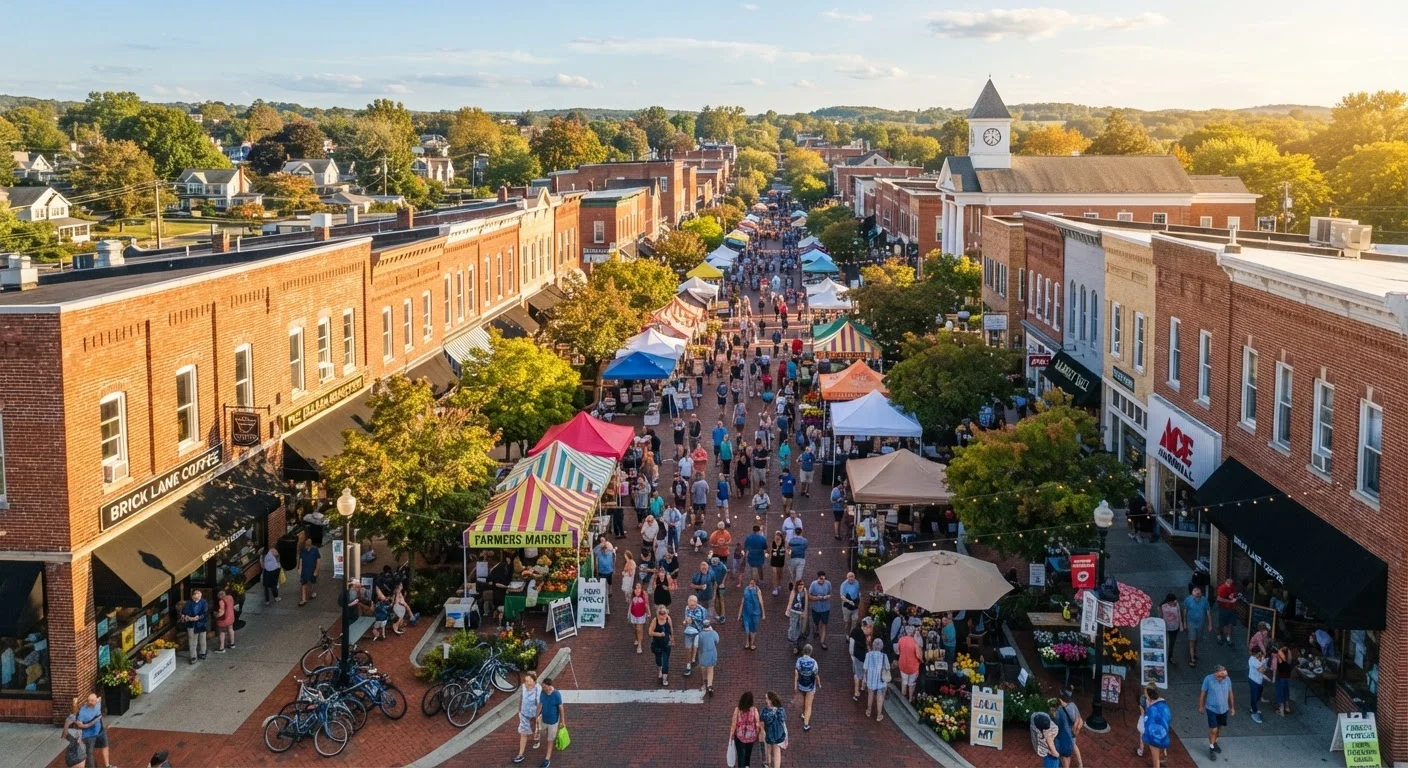
Saturday morning farmers markets are one of the great free weekend activities in the US - and they exist in virtually every destination type, from rural mountain towns to urban neighborhoods. Entry is always free. Browsing costs nothing. Even buying a small snack keeps the morning's entertainment expense well under $10.
Larger public market districts - think covered market halls, waterfront fish markets, or historic market squares - add an additional layer of free activity: street performers, local vendors, and a buzzy atmosphere that easily fills two to three hours. Markets tend to peak on weekend mornings, so arriving early maximizes the experience before crowds thicken.
Farmers market entry is always free - it's one of the most universally available no-cost weekend anchors.
River Towns and Lake Destinations
River and lake destinations have a natural free asset: the water itself. Public riverwalk paths, free boat launch areas, fishing from public banks (a fishing license is typically required - check your state's wildlife agency for current requirements and fees), and free access to shoreline parks make water-adjacent towns well-suited to low-cost weekends.
Many river towns have invested in free recreational infrastructure - paved multi-use trails along the waterfront, public kayak launches, and open-air amphitheaters with free summer programming. Timing your visit to shoulder or off-peak seasons at lake destinations can also reduce accommodation costs significantly while keeping the outdoor activities fully available.
Public riverwalk trails and shoreline parks are free recreational anchors in most US river and lake towns.
Mountain Towns (Outside Ski Season)
Mountain towns have a reputation for being expensive - and during peak ski season, that reputation is often deserved. But outside of winter, these same towns offer genuinely free outdoor activity: hiking national forest trails (most require no entry fee), waterfall walks, scenic drives on public forest roads, and wildflower meadows that charge nothing for access.
Summer and fall shoulder seasons in mountain towns bring free ranger-led programs in national forests, free outdoor festivals, and uncrowded trails. Accommodation costs also drop substantially. A mountain weekend in late May or mid-October can cost a fraction of a February ski trip while delivering equally spectacular scenery. For a full picture of what a structured two-day mountain escape can look like, our piece on the art of the two-day trip offers a practical framework.
Mountain towns outside ski season deliver stunning scenery and free trail access at a fraction of the peak-season price.
Build Your Weekend Around the Free Anchors
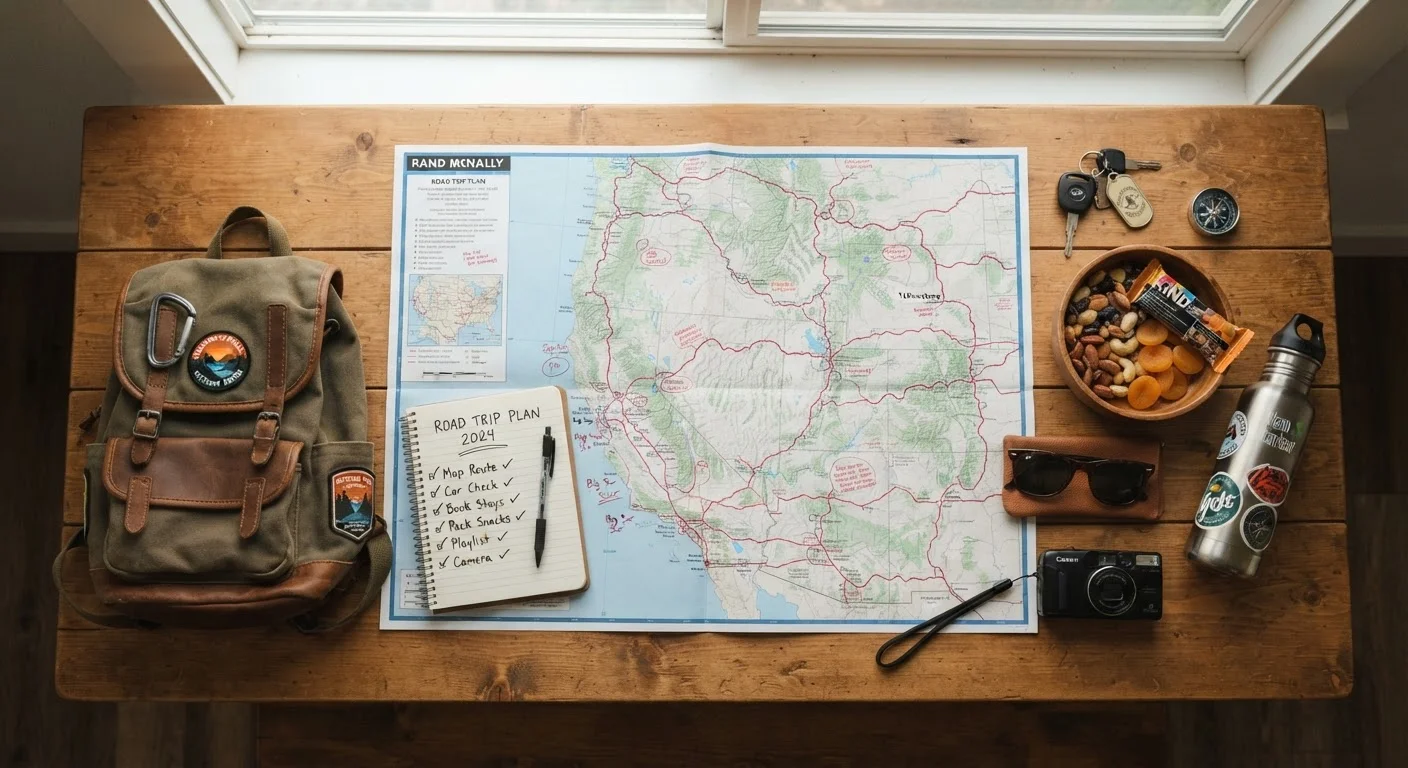
The most effective budget weekend strategy is simple: identify one or two genuinely free anchor activities at your destination, then build the rest of the day around them. A state park trail anchors a morning; a public market anchors a midday browse; a waterfront sunset anchors the evening. Meals, coffee, and a modest accommodation cost fill in the gaps - but the experience itself costs little.
Stack Free Anchors for a Full Day
The strongest budget weekends layer free activities across the day rather than relying on one big attraction. A morning state park hike, a midday farmers market browse, and an evening waterfront walk can fill a Saturday completely - with meal costs as the only real variable. This approach works in nearly every destination type covered above.
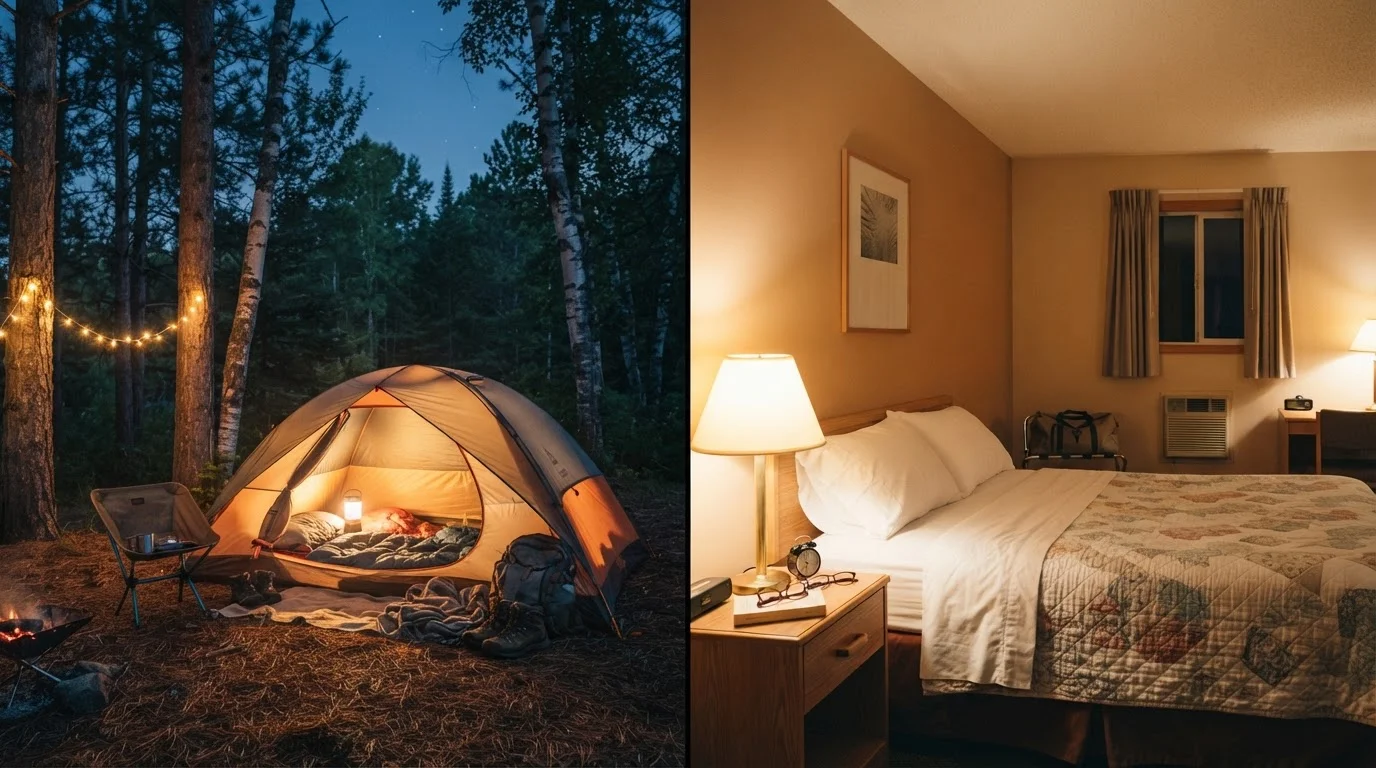
It's also worth being realistic about what's truly free versus what has strings attached. Our counterpart piece separating myth from reality on free activities digs into which activity categories consistently deliver and which often carry hidden costs. And if you're combining your weekend with a longer drive, planning overnight stays on a road trip around free options can keep your lodging spend just as lean as your activity budget.
Whatever destination type calls to you - coast, mountain, small city, or state park - the free activities are there. You just have to know where to look. For more ideas on destinations that punch above their weight, explore our hidden US gems coverage.
Activity availability, park fees, market schedules, and local programming vary by location and season. Verify details directly with local visitor resources and official park or government websites before your trip.