

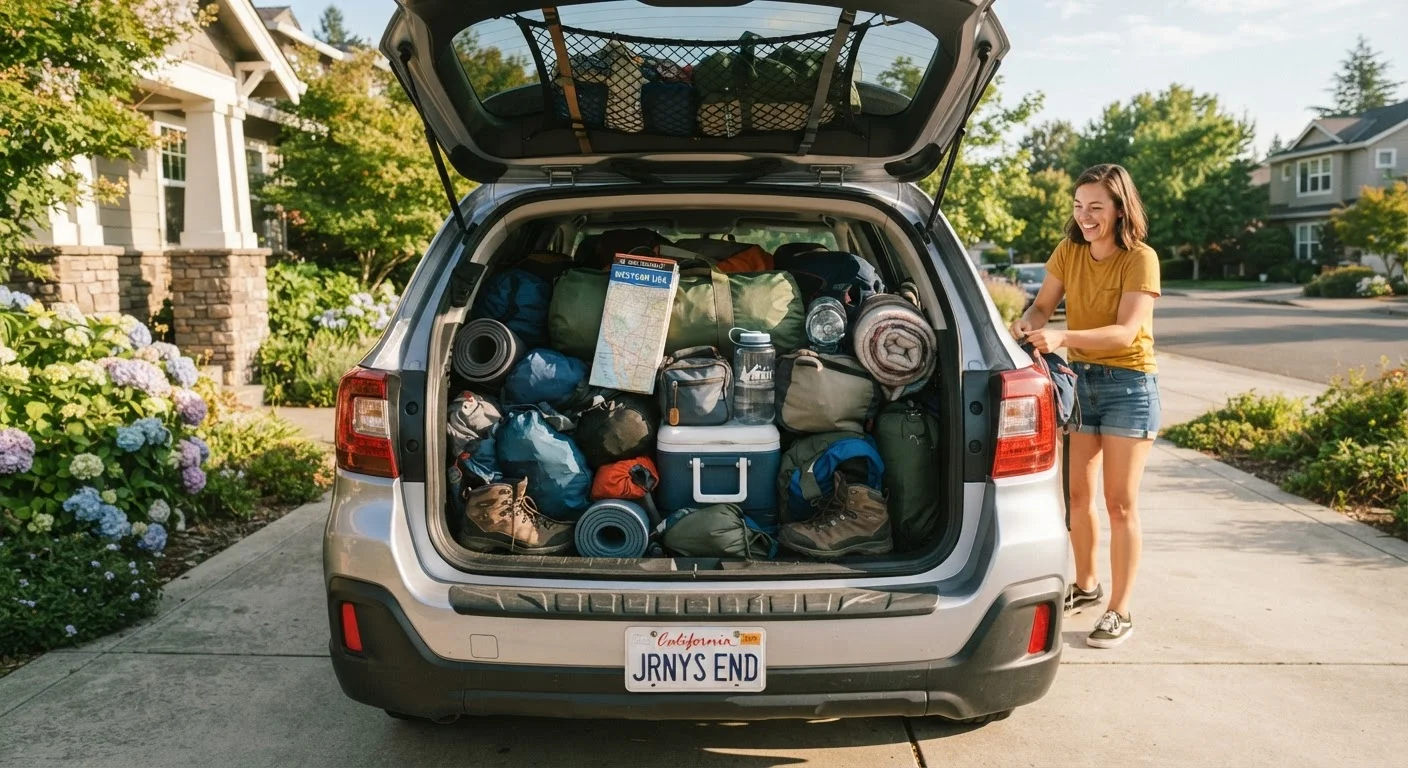
Why This Checklist Pays for Itself
Road trips are one of the most budget-friendly ways to explore the US - until a blown tire, a missed campsite reservation, or three consecutive gas station lunches quietly drain your travel fund. The oversights that inflate road trip costs are almost never dramatic. They're the small things: the tire that was already low when you left, the data plan that ran out in the middle of Nevada, the cooler you forgot to pack.
This checklist addresses exactly those gaps. Work through it the evening before you leave - not the morning of - so you have time to actually fix anything you find. If you're traveling as a family, the Budget Family Trip Planner checklist covers the additional layers that come with kids in the car. And if your route dips into remote or less-traveled corridors, make sure you've also run through what to verify before visiting remote US destinations - cell gaps and seasonal closures change the calculus fast.
Tire Pressure Gauge
Verify all tires are at manufacturer-recommended PSI before departure to protect fuel efficiency and safety.
Offline Map App (e.g. Google Maps offline, Maps.me)
Download your full route for use in areas with no cell coverage.
Portable Cooler
Store food and drinks from home to dramatically reduce highway food spending.
Gas Price Comparison App
Identify cheaper fuel stops along your planned route before you need to fill up.
Roadside Emergency Kit
Cover basic breakdown scenarios - jumper cables, reflective triangles, first aid - without calling for paid help.
Refillable Water Bottles
Eliminate recurring roadside beverage purchases across the full trip.
Your Pre-Departure Checklist
The items below are organized by category so you can move through them systematically. Grab a notebook or use your phone's notes app to tick them off as you go - this is not a list to do from memory.
Vehicle & Safety
Navigation & Connectivity
Lodging & Reservations
Food & Fuel Budget
Documents & Finances
Check Insurance Before You Leave - Not After
Confirm that your auto insurance is current and that you understand what it covers in a breakdown or accident scenario. If you're renting a vehicle, verify coverage through your credit card or rental agreement rather than assuming. Medical costs, towing fees, and rental extensions after an uninsured incident can erase an entire trip budget in a single event. If you have questions about what your policy covers on a multi-state road trip, contact your insurer directly before you depart.
Once you've cleared the mechanical and logistics categories, shift your attention to budget discipline for the road itself. The Daily Travel Budget Planner checklist is a strong companion for mapping out per-day spending before you hit the highway. And solo travelers should also cross-reference the Solo Traveler's Pre-Departure Safety Checklist for the safety prep steps that don't appear here.
Making the Most of Your Route
A well-structured route is itself a budget tool. Zig-zagging between points of interest wastes fuel and adds fatigue. Before you finalize your course, audit it against these questions: Are you driving into a city at peak traffic hours? Is there a scenic alternate that avoids a toll road without adding significant mileage? Do your overnight stops align with free or low-cost public lands rather than expensive gateway-town hotels?
The Daily Travel Costs hub has deeper guidance on managing food, transport, and activity costs once you're rolling. Planning your route with daily budget ceilings - not just a total trip budget - keeps the whole journey from going sideways after an expensive Day 2.
Don't Rely Solely on Real-Time Navigation
Cell coverage on rural US routes - particularly through parts of the Mountain West, Great Plains, and northern Appalachia - can disappear for extended stretches. If your navigation app requires a live connection and you lose signal, you can lose your route entirely. Download offline maps before you leave and keep a physical state map in the glove box as a genuine backup, not a novelty.
The goal isn't to script every hour; it's to remove the decision fatigue and cost surprises that send budgets off the rails. A little structure before departure is what lets you be spontaneous without being reckless. Now go check those tire pressures.