

Why Transport Mode Matters for Solo Safety
Getting from A to B is where solo travelers are most exposed. You're often carrying all your belongings, navigating an unfamiliar environment, and making quick decisions under time pressure. Unlike accommodation - where you can vet a place before committing - transport safety often has to be managed in the moment.
The risk profile varies significantly by mode. Trains carry different vulnerabilities than rideshares; night buses present challenges that daytime coaches don't. Understanding those differences lets you prepare rather than react. For a broader framework on staying safe while traveling alone, see our ground-up safety introduction for first-time independent travelers.
The seven habits below address the most common risk scenarios across the four transport modes solo travelers use most frequently.
Verify rideshare details before you get in
Before opening a rideshare car door, check three things: the license plate matches what the app shows, the car make and color match, and the driver confirms your name - not the other way around. You should never volunteer your name first; a legitimate driver will ask for it.
Screenshot the trip details and driver photo before you get in. If anything feels off - a different car, a driver who seems uncertain about the route, or pressure to cancel and pay cash - step back and request a new ride.
Always let the driver say your name first - never identify yourself to an unverified stranger.
Use the back seat and share your live location
In both taxis and rideshares, the rear seat gives you more options: easier exit from either door, more distance from the driver, and the ability to observe without being directly engaged. Sit diagonally from the driver when possible.
Most rideshare apps have a built-in trip-sharing feature. Use it - send the link to a friend or family member before the car moves. If that isn't available, a quick text with the driver's name, plate, and your destination takes under 30 seconds and creates a record.
Send someone your driver details and destination before the car leaves the curb.
On trains, choose your carriage deliberately
On long-distance or overnight trains, the carriage you pick matters. Choose one that is well-lit and has other passengers, ideally near a conductor or staffed section of the train. Avoid the last carriage or any car that appears empty, particularly on night routes.
Lock or zip your bags and keep small valuables - phone, passport, wallet - on your body or in a bag you're using as a pillow. Luggage stored in overhead racks during an overnight journey is accessible to anyone in the car while you sleep.
Keep valuables on your body during overnight train journeys - overhead racks offer no security.
Stay alert during boarding and alighting
Crowded platforms and bus stops at departure and arrival are prime environments for opportunistic theft. Your attention is divided, you're often managing luggage, and the surrounding crowd provides cover. This is when pickpockets operate most effectively.
Before you board, secure your bag zips. When the vehicle stops, take 10 seconds to gather everything before standing up. Avoid checking your phone or counting cash in doorways or on platforms - step fully clear of the vehicle and into a more controlled space first.
Boarding and alighting are your highest-risk moments - slow down and secure your bags first.
Assess night bus routes before you commit
Night buses are economical and often the only option for certain overnight legs, but they warrant extra scrutiny. Research the specific route: Is it a major intercity service with assigned seating, or a local route with infrequent stops in unfamiliar areas? Where does it terminate, and will you be getting off at 3 a.m. in a location you can navigate safely?
If the arrival point is unfamiliar, map it before you travel. Know where you're going the moment you step off - standing disoriented with luggage in an empty bus terminal at night is avoidable with 15 minutes of preparation. Our accommodation safety guide also covers what to consider when arriving late at lodging.
Know exactly where you're going the moment you step off a night bus - confusion is a vulnerability.
Choose licensed, official transport over street hails
In many cities - particularly outside Western Europe and North America - unlicensed taxis operate at major transport hubs, airports, and tourist areas. They may actively approach you. These vehicles are unregulated: no insurance, no accountability, often no fixed pricing.
Using an official taxi rank, a metered licensed cab, or a recognized rideshare app creates a paper trail and basic accountability. It also removes fare negotiation, which is a common vector for disputes or pressure. The small premium for a licensed vehicle is worth the reduction in variables, particularly when you're tired and arriving in an unfamiliar place.
A licensed vehicle creates accountability; an unvetted street-hail removes it entirely.
Download offline maps and routes before you travel
Reliable data connectivity is not guaranteed in transit - underground sections, rural routes, and international SIM gaps all break navigation at critical moments. An offline map of your destination city and a downloaded version of your route removes that dependency entirely.
Know the name and general location of your destination in the local language or script before you board. If a driver takes an unexpected route, you'll be able to notice it. Apps that allow offline navigation also let you track your own movement, which provides reassurance and a basis for speaking up if a route looks wrong.
Offline maps mean you can track your own route - and notice if a driver takes an unexpected turn.
Applying These Habits on the Road
No single habit eliminates risk entirely, but layering two or three consistently puts you in a materially stronger position than the average traveler. The goal isn't paranoia - it's reducing the window of opportunity for things to go wrong.
Build a pre-departure transport checklist
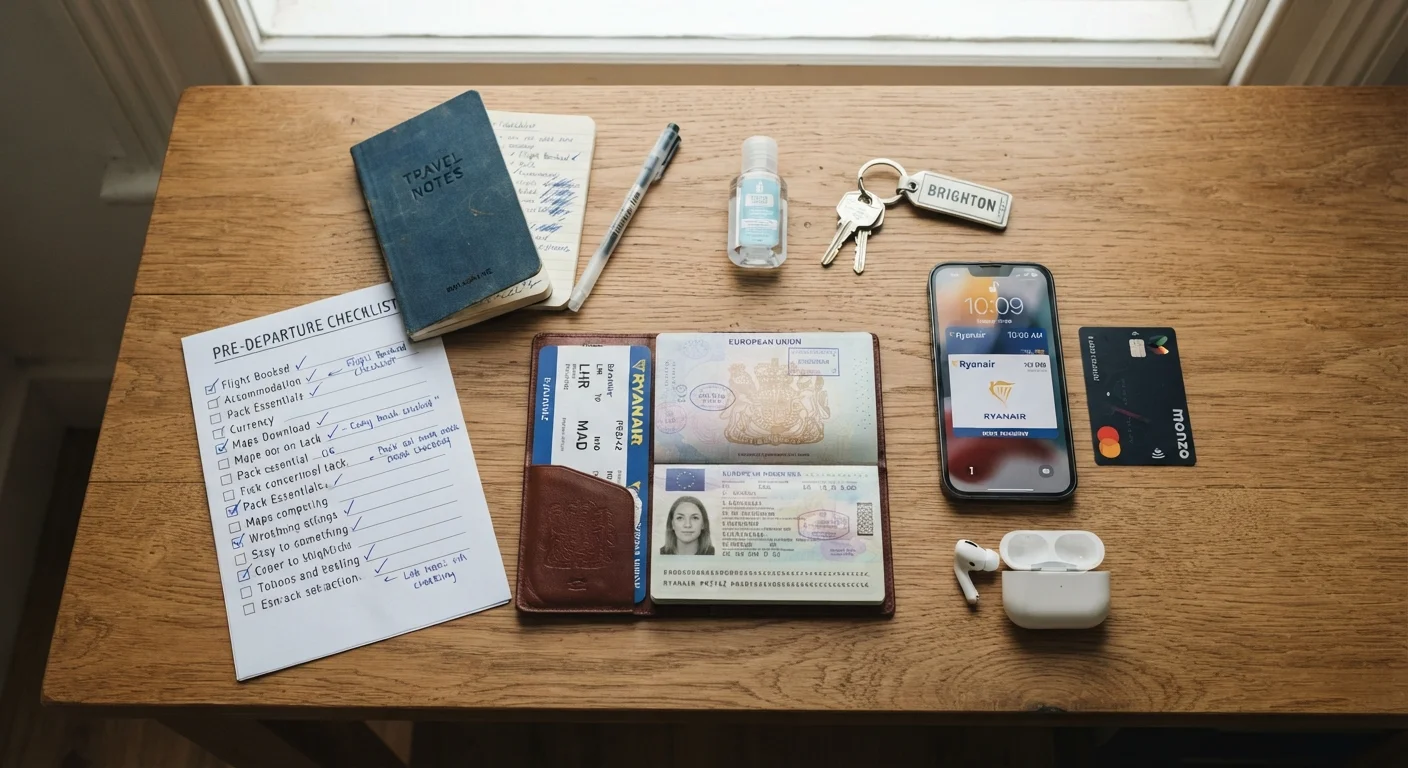
Before each leg of your journey, take two minutes to confirm: your driver or vehicle details are verified, someone has your itinerary, your valuables are secured on your body, and you have offline navigation ready. This takes less time than it sounds and becomes habit within a few trips.
Transport safety overlaps with the decisions you make at your accommodation and in your broader trip planning. Our solo travel safety planning guide covers the full picture of what genuinely warrants your attention before and during a trip. If you're also weighing cost alongside safety, transport on a solo budget breaks down the real trade-offs across modes.
This article provides general travel safety information for educational purposes. Conditions, regulations, and transport options vary by country and city. Always verify local advisories and official guidance before traveling.