
Why Solo Travel Budgets Are Uniquely Vulnerable
Traveling solo has a structural cost problem that group travel doesn't: every expense is yours alone. No splitting a taxi, no sharing a private room, no dividing a restaurant meal. That financial isolation means small spending habits that would barely register in a group become significant drains over a two-week trip.
Most solo travelers already understand the basics of trip planning - they know to compare flight prices and look up hostel reviews. What tends to catch them off guard is the pattern of small, repeated decisions that quietly hollow out a budget. Understanding why solo trip budgets spiral is the first step; knowing the specific habits that prevent it is what actually changes spending behavior.
The Most Common Overspending Mistakes - and How to Correct Them
The mistakes below aren't exotic. They're the predictable patterns that show up across destinations, trip lengths, and traveler experience levels. Recognizing them before you leave is far easier than catching them mid-trip.
Defaulting to taxis and ride-shares for almost every journey.
Why it happens: When you're tired, unfamiliar with transit, or carrying luggage, the convenience of a direct ride feels worth any price. Solo travelers have no one to sanity-check the decision.
Booking accommodation, tours, or transport at the last minute without a cost comparison.
Why it happens: Itinerary flexibility feels like freedom, but it routinely means paying premium prices for the remaining inventory - especially in high-demand areas.
Spending to manage loneliness rather than because the purchase is genuinely wanted.
Why it happens: Solo travel involves real periods of social isolation. Buying a round of drinks to connect with strangers, booking an unnecessary tour for company, or retail-browsing out of boredom are common behavioral patterns.
Ignoring transaction fees on international card payments and ATM withdrawals.
Why it happens: Foreign transaction fees (typically 1-3% per purchase) and ATM fees feel small individually but accumulate significantly over a multi-week trip, especially when cash is drawn frequently in small amounts.
Underbudgeting food costs by planning to cook but consistently eating out.
Why it happens: Many travelers set a budget that assumes self-catering, but the reality of solo travel - limited hostel kitchens, unfamiliar grocery stores, social pressure to join group meals - means eating out far more often than planned.
Paying single-supplement surcharges without checking alternatives.
Why it happens: Packaged tours and cruises routinely charge solo travelers a single supplement - sometimes 50-100% above the per-person rate - to cover the unused bed. Many travelers accept this without exploring other options.
Convenience Spending Compounds Faster Than You Think
Three taxi rides a day instead of using transit can add $20-$40 to your daily spend depending on the destination. Over a 14-day trip, that's potentially $280-$560 above budget - from one habit alone. Convenience costs feel trivial in the moment precisely because each individual decision is small.
For a deeper look at the mental shortcuts that cause daily costs to spiral before and during a trip, see why travelers consistently underestimate their daily spending.
The Habits That Actually Keep Costs in Check
Avoiding overspending isn't about deprivation - it's about intentionality. The travelers who consistently finish trips under budget tend to share a few concrete habits:
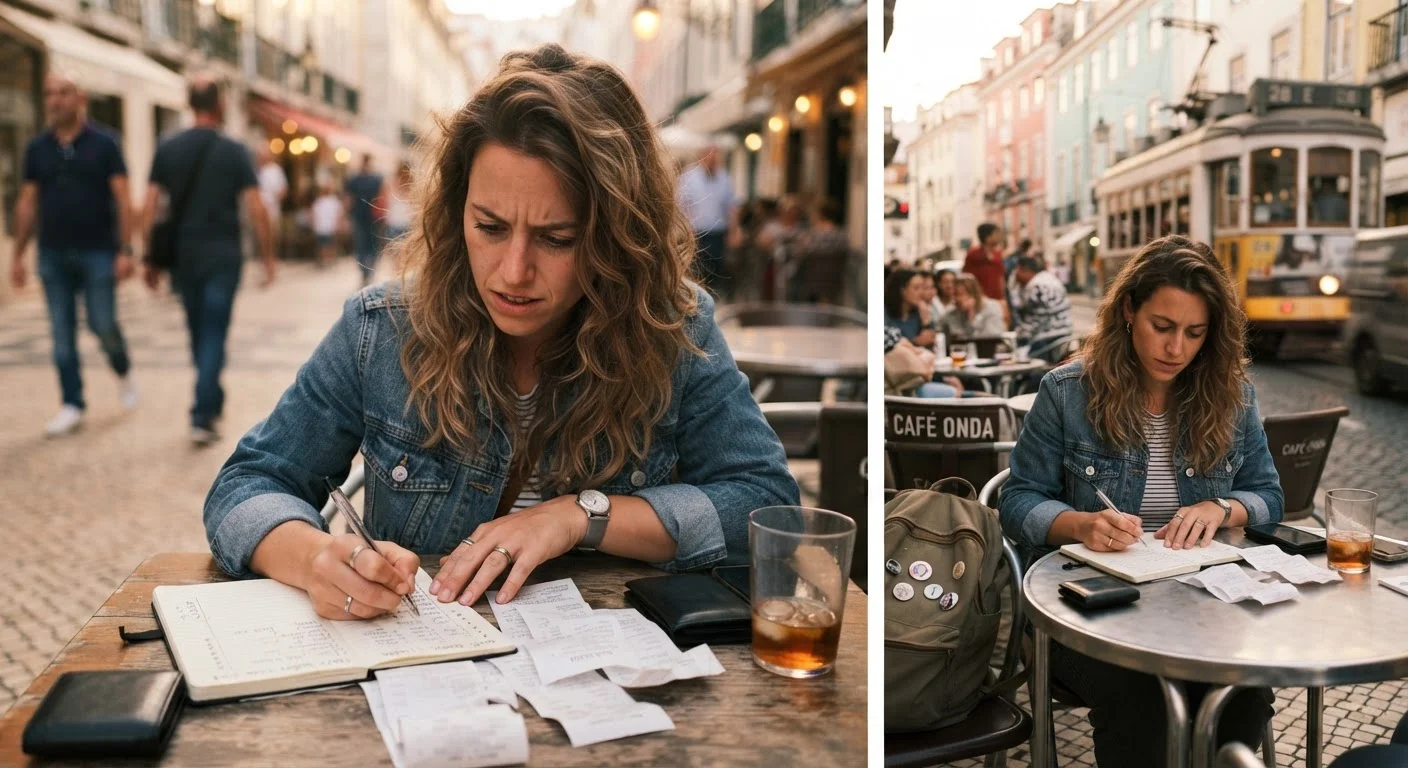
- Track spending daily. A five-minute end-of-day check against your budget ceiling catches drift before it compounds. A weekly review is too late. See how to make a daily spending limit work across an entire trip for a practical framework.
- Pre-decide your convenience ceiling. Decide before you leave how much per day you're willing to spend on convenience (taxis, bottled drinks, paid luggage storage). Having a number makes in-the-moment decisions faster and less likely to spiral.
- Schedule downtime deliberately. Loneliness-driven spending often happens when there's unstructured time and no plan. Building in intentional low-cost activities - reading in a park, cooking at a hostel - removes the vacuum that impulse spending fills.
- Build a buffer, not a fantasy budget. A realistic budget includes 10-15% above your estimated daily spend. If you don't use it, great. If you have one expensive day, it doesn't cascade into the rest of the trip.
50-100%
Typical single supplement surcharge on package tours
Solo travelers on group tours or cruises are commonly charged this premium above the base per-person rate to account for sole occupancy of a double room.
1-3%
Foreign transaction fee per card purchase
Many standard bank and credit cards charge this fee on every international transaction - a cost that adds up quietly across a multi-week trip.
Some costs are worth protecting even under budget pressure. Solo travel safety on a budget covers exactly where frugality and safety genuinely conflict - and which line items should stay non-negotiable regardless of how the budget is running.
For strategies that go beyond the basics, underrated ways solo travelers save money without sacrificing experience offers planning habits that genuinely move the needle on solo travel costs.