

Why the Obvious Advice Only Gets You So Far
Most solo travel budget guides start and end in the same place: book hostels, use budget airlines, travel off-season. That advice isn't wrong, but it's incomplete. For travelers already familiar with the basics, the bigger savings come from structural decisions made weeks before departure - not from hunting flash deals on the day.
The strategies below focus on planning habits and logistical choices that reduce cost without stripping out the experiences that made you want to travel in the first place. For a grounded look at where solo travel genuinely costs more and where it doesn't, see our cost myth breakdown first.
Book shoulder season, not just off-season
True off-season travel works until it doesn't - some destinations have an off-season for good reason (monsoons, extreme heat, closed attractions). Shoulder season - the four to six weeks bracketing peak - is often the smarter call. Crowds thin, accommodation rates drop noticeably, and the destination is still fully operational.
For a concrete example, Portugal in May or October offers nearly identical conditions to July at a meaningfully lower daily cost.
Shoulder season keeps the experience intact while cutting accommodation costs by a significant margin.
Use open-jaw flights to eliminate backtracking
Flying into City A and out of City B - called an open-jaw routing - removes the cost and time of returning to your starting point. When you map your route linearly rather than as a loop, you save a domestic leg and free up a travel day. Many booking engines support open-jaw searches directly; compare the total against a round-trip before assuming one is cheaper.
This pairs well with slow travel: if you're spending a week or more in each location anyway, a linear route makes geographic and financial sense.
Open-jaw routing eliminates a redundant travel leg - saving both money and an entire travel day.
Default to slow travel to unlock weekly rates
The single-night booking is the most expensive way to travel. Most accommodation platforms - including short-term rental services - offer weekly rates that reduce the per-night cost substantially. The same principle applies to coworking spaces, SIM plans, and even some local transport passes.
Staying five or more nights in one place also reduces transit costs between cities, which adds up faster than most solo travelers expect. Understanding where the solo premium actually accumulates makes it easier to see where slowing down has the most impact.
Weekly accommodation rates routinely undercut nightly rates - and you spend less on transit too.
Eat one meal a day at a market or local stall
Restaurant meals abroad, even modest ones, carry overhead: table service, tourist-facing pricing, tips where customary. Replacing one sit-down meal per day with a market visit, a supermarket run, or a street stall cuts daily food spend significantly without sacrificing quality - often the opposite.
Eating well abroad as a solo traveler covers how to identify safe, high-quality local options in unfamiliar cities without guesswork.
One market meal per day can halve your food budget while delivering a more authentic experience.
Use free walking tours as orientation - then tip fairly
Free walking tours (tip-based, guide-led) exist in most major cities and many smaller ones. As a solo traveler, they serve double duty: you get a structured city orientation and an immediate social opportunity with other travelers. Meeting people on a budget is one of the genuinely hard parts of solo travel, and walking tours solve it at low cost.
Tip the guide appropriately - guides depend on tips as their primary income. Factor a fair tip into your budget from the start rather than treating it as optional.
Free walking tours provide orientation and social connection simultaneously - a rare two-for-one on the road.
Research municipal passes and library cards before you arrive
Many cities offer resident-rate or visitor discount cards covering public transit, museums, and cultural venues - often at a fraction of individual ticket prices. Some public library systems in major cities issue short-stay visitor cards granting access to free events, digital resources, and even museum partnerships.
Spending 30 minutes researching a destination's official tourism pass before departure consistently pays off. Underrated domestic destinations in particular often have robust local pass programmes that tourists overlook entirely.
A city's own discount pass frequently beats every third-party deal - check official tourism sites first.
Consider housesitting or work exchanges for extended stays
Housesitting platforms connect property owners needing a trusted caretaker with travelers willing to provide that in exchange for free accommodation. Work-exchange programmes (farm stays, hostel volunteer shifts) operate similarly. Neither is suitable for every trip, but for stays of a week or more, the accommodation savings are substantial.
Vet any arrangement carefully: read platform reviews, confirm the commitment in writing, and understand what's expected before agreeing. These arrangements work best when approached as a mutual exchange, not a free lunch. Maintaining minimum accommodation standards matters even here - free doesn't mean you accept unsafe or unsuitable conditions.
Housesitting converts your biggest solo travel cost - accommodation - into a scheduled, predictable commitment.
Turn These Into Planning Habits, Not One-Off Tricks
The solo travelers who consistently spend less aren't finding secret loopholes - they're making the same structural choices, trip after trip, until those choices become automatic. Slow down your itinerary, build in breathing room, and default to local over tourist-facing whenever a choice exists.
Make it a pre-trip checklist habit
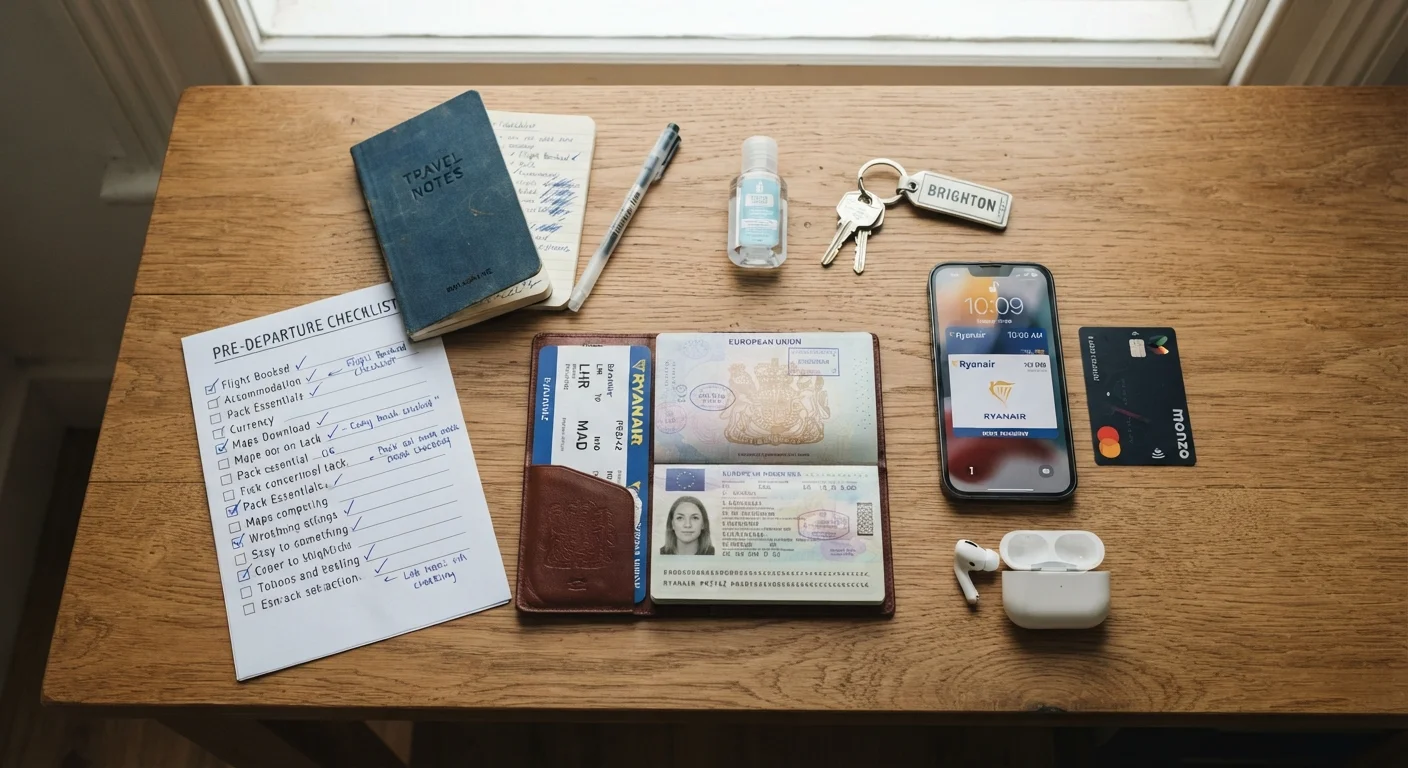
Before every trip, run through four questions: Can I route this linearly instead of as a loop? Am I spending at least five nights per location? Have I checked the city's official discount pass? Is there a market within walking distance of where I'm staying? Answering these before booking locks in structural savings that no amount of deal-hunting can replicate after the fact.
For destination-specific angles, the Budget Solo Travel hub covers regional and category-level strategies in more detail. And if you're weighing where safety spending should never be compromised, this safety-versus-savings guide draws that line clearly.
Prices, platform terms, and programme availability change frequently. Verify current details directly with relevant providers and official tourism sources before committing to any booking or arrangement.