
Daily Budget Benchmarks: What Your Dollar Actually Buys
For budget-conscious American travelers, both Vietnam and Thailand rank among the most affordable long-haul destinations available - but the numbers diverge in meaningful ways once you break down daily spending by category.
In Vietnam, a realistic backpacker daily budget - covering a guesthouse bed, three meals, local transport, and one paid attraction - typically runs between $25 and $40. Mid-range travelers spending on private rooms, occasional taxis, and restaurant meals generally land between $50 and $80 per day. These figures hold across Hanoi, Hoi An, and Ho Chi Minh City, with coastal towns like Mui Ne or Da Lat trending slightly lower.
Thailand's equivalent budget range sits a step higher. A similar backpacker day in Chiang Mai or Bangkok costs roughly $35 to $55, while island destinations like Koh Tao or Koh Phangan can push the floor up by another $10 to $20 due to accommodation premiums and ferry costs. Mid-range travelers in Thailand often spend $70 to $110 per day.
| Criterion | Vietnam | Thailand |
|---|---|---|
| Budget daily spend | $25-$40 | $35-$55 |
| Mid-range daily spend | $50-$80 | $70-$110 |
| Street meal cost (avg) | $1.50-$3 | $3-$6 |
| Budget private room | $10-$20/night | $15-$30/night |
| US visa requirement | E-visa (~$25, advance) | Visa-free (up to 30-60 days) |
| Internal transport complexity | High (long geography) | Moderate (compact network) |
| English accessibility | Moderate in cities | Widely available in tourist areas |
| Beach destination access | Good but limited infrastructure | Extensive island options |
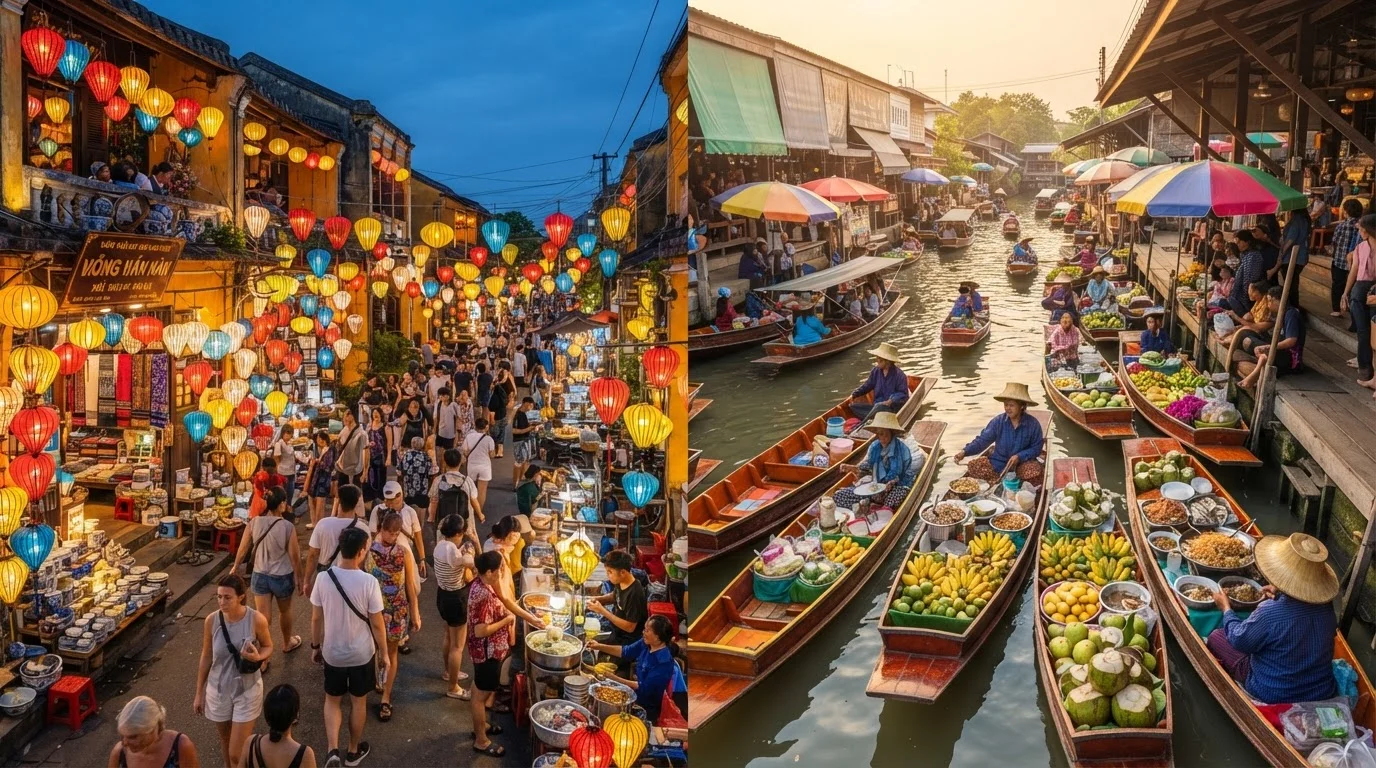
The gap widens most sharply at the street-food level. A full bowl of phở in Hanoi can cost under $2; a bowl of khao man gai in Bangkok rarely falls below $3 and is often closer to $5 in tourist-adjacent markets. For travelers eating local at every meal, that difference compounds fast over a two-week trip. See our guide to street food vs. sit-down dining costs for a fuller breakdown of how meal choices shape your daily spend.
Accommodation, Transport, and Hidden Costs
Accommodation pricing in both countries rewards travelers who book locally or use regional platforms rather than defaulting to international booking sites. In Vietnam, a clean private room in a guesthouse runs $10 to $20 in most cities; dormitory beds in well-reviewed hostels are available from $5 to $8. Thailand's hostel market is similarly competitive in cities, but resort islands command a structural premium - expect to pay $15 to $30 for a basic private room on Koh Samui even in the off-season. For more strategies on keeping lodging costs down, the Lodging on a Budget hub covers practical approaches across destination types.
Internal transport is where Vietnam's geography creates a real budget variable. The country stretches roughly 1,000 miles from Hanoi to Ho Chi Minh City, and travelers doing the full route face meaningful choices: overnight sleeper trains (affordable and scenic, typically $20 to $40 for a berth), budget flights (often $30 to $70 on domestic carriers), or open-tour buses (cheap but slow). Thailand's geography is more compact, and its network of overnight buses, shared minivans, and domestic flights is slightly easier to navigate for first-timers.
$25-$40
Typical Vietnam backpacker daily budget
Based on costs for guesthouse accommodation, local meals, and ground transport across major Vietnamese cities.
~$25
Vietnam e-visa fee for Americans
Single-entry e-visa valid up to 90 days; processing typically takes several business days through the official portal.
1,000+ miles
Vietnam's north-to-south span
The country's length makes internal transport a significant budget variable for travelers doing the full route.
One underappreciated cost in Thailand is the entrance fee structure at major temples and cultural sites, which has a tiered pricing system - foreigners typically pay significantly more than Thai nationals. While individual fees are modest ($3 to $10 per site), they add up quickly on a temple-heavy itinerary. Vietnam has similar tiering at some sites but is generally more consistent. For a practical framework on building a multi-destination itinerary that manages these costs, see our guide to planning a multi-country Southeast Asia trip.
Entry Requirements, Infrastructure, and Practical Considerations
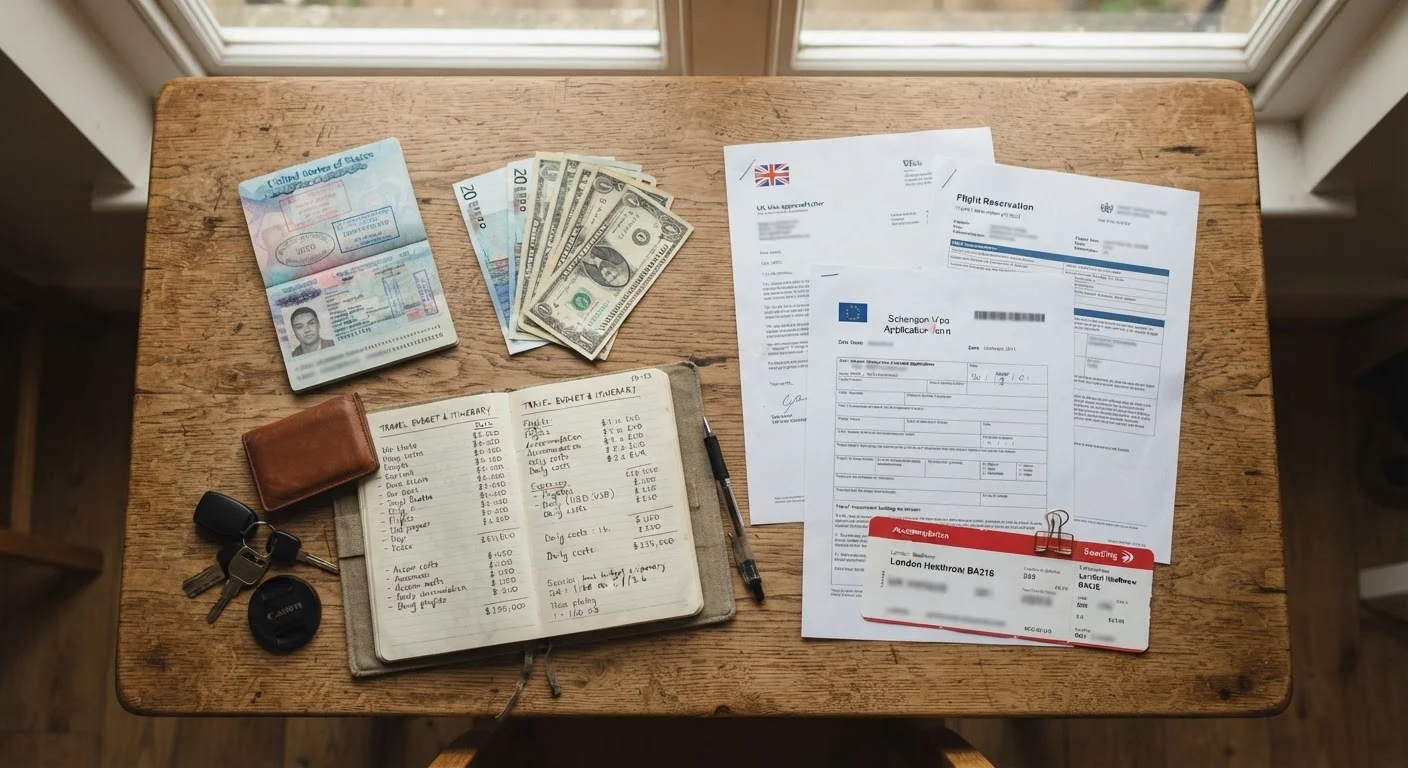
Entry logistics matter more than many travelers anticipate when budgeting a trip. As of the time of writing, American passport holders can enter Thailand visa-free for stays of up to 30 days (extendable once at an immigration office), with a 60-day visa-exemption also available under more recent policy updates - travelers should verify current entry conditions through the Royal Thai Embassy or the U.S. Department of State before booking, as these rules can change.
Vietnam requires most American travelers to obtain an e-visa in advance. The process is straightforward and typically costs around $25, with processing times of several business days. A single-entry e-visa is valid for up to 90 days. Again, confirm requirements with official sources before traveling.
Always Verify Entry Requirements Before You Book
Visa policies, exemption durations, and entry conditions for both Vietnam and Thailand are subject to change. The information above reflects general conditions at the time of writing but should not be treated as definitive. Before booking flights or accommodations, confirm current requirements through the U.S. Department of State's travel portal (travel.state.gov) and the respective country's official embassy website. Entry rules can shift with little notice, and airlines may deny boarding if documentation is incomplete.
On the infrastructure side, Thailand's tourist ecosystem is notably more mature. English-language menus, multilingual ATMs, and well-marked transportation hubs are standard in Bangkok, Chiang Mai, and major resort areas. Vietnam has improved rapidly, but navigating smaller cities or rural routes may require more preparation and comfort with uncertainty - which is part of the appeal for experienced travelers, but a real friction point for first-timers.
Both countries are genuinely rewarding for budget travelers. Vietnam edges ahead on raw cost-efficiency; Thailand edges ahead on navigability. The right choice depends heavily on your travel style, priorities, and tolerance for logistical complexity. For a broader look at why the region remains one of the most compelling destinations for cost-conscious Americans, see our overview of Southeast Asia budget travel value.