
Why Southeast Asia Remains a Benchmark for Budget Travel
Decade after decade, Southeast Asia appears at the top of every serious budget-travel discussion - and for good reason. The combination of favorable exchange rates, a mature backpacker infrastructure, and deeply affordable local economies means American travelers can experience genuinely world-class destinations without depleting their savings. This isn't about roughing it. It's about the structural advantage the US dollar holds in the region.
In Vietnam, a filling bowl of phở costs under $2. A clean guesthouse room in Chiang Mai, Thailand, runs $15-$25 per night. A bus or train journey between major cities in Cambodia or Laos rarely exceeds $15. These aren't exceptions - they're the baseline. The region's cost structure makes daily life comfortable at spending levels that would barely cover a fast-food meal and a budget motel in many US cities.
For context on how airfare factors into the overall equation, see our piece on what drives airfare price gaps to budget regions.
$35-$50
Estimated daily budget in Vietnam
General traveler-reported range covering guesthouse accommodation, street food meals, and local transport; individual costs vary by city and travel style.
~$2
Average cost of a street food meal
A bowl of phở or plate of pad thai from a local vendor in Vietnam or Thailand commonly falls in this range, illustrating the everyday purchasing power of the US dollar.
11
Countries in the Southeast Asia region
The ASEAN bloc encompasses eleven countries, each with distinct cost profiles, entry requirements, and travel experiences - offering significant itinerary flexibility for budget travelers.
Country-by-Country: Where Value Is Strongest
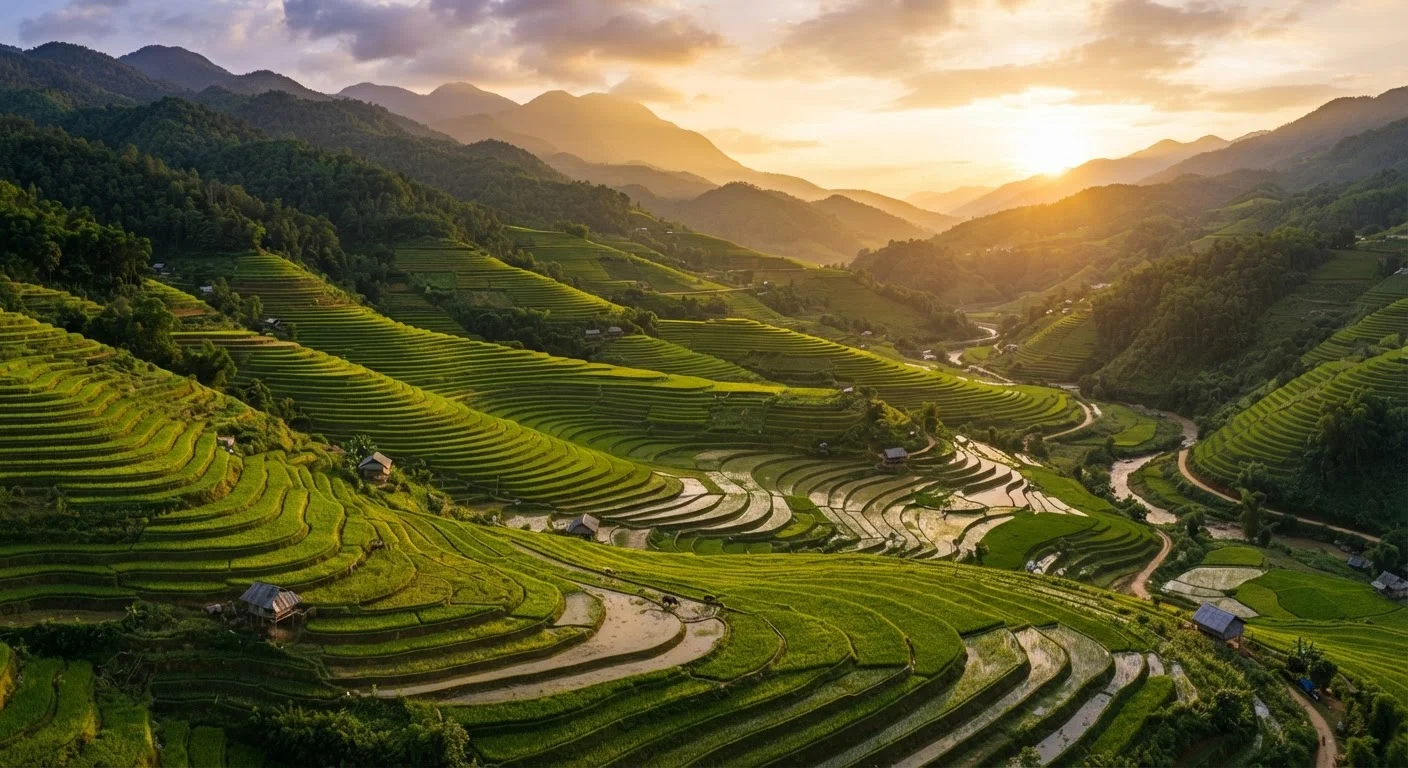
Vietnam consistently ranks among the most affordable countries in Southeast Asia for Americans. From the street food stalls of Hanoi to the beach towns along the central coast, daily spending of $35-$50 covers accommodation, meals, and local transport comfortably. The country also rewards slow travel - spending more time in one place reduces transport costs significantly.
Cambodia is similarly accessible. Siem Reap, the gateway to Angkor Wat, offers a wide range of guesthouses and local restaurants at low price points. The country runs largely on US dollars alongside its own currency (the riel), which simplifies spending for American visitors - though always carry small denominations.
Indonesia offers remarkable range. Bali is the most visited island and has seen some price inflation in tourist-heavy areas like Seminyak, but destinations like Yogyakarta on Java remain extremely affordable. The archipelago rewards travelers who venture beyond the obvious circuits.
Laos and Myanmar merit separate research given their distinct political and logistical contexts. Laos remains one of the quieter, more affordable options for those seeking slower-paced travel. Myanmar's situation requires careful review of current US State Department advisories before any planning decisions.
Structuring Your Trip to Maximize Value
The single largest lever on your Southeast Asia budget - after airfare - is how you move between destinations. Overland transport via bus, minivan, or train is dramatically cheaper than flying between every stop, and often more scenically rewarding. A bus from Ho Chi Minh City to Phnom Penh, for instance, is a well-traveled, affordable route that avoids the cost and inconvenience of a short-haul flight.
Multi-country itineraries require more planning but unlock the real value proposition of the region: geographic and cultural diversity at low marginal cost. For practical guidance on structuring a multi-stop trip, our detailed article on planning a multi-country Southeast Asia itinerary covers route logic, overland options, and realistic daily spending by country.
Travel Slower to Spend Less
One of the most effective cost-reduction strategies in Southeast Asia is simply slowing down. Weekly guesthouse rates are almost always lower per night than daily rates. Staying longer in fewer places also reduces transport costs, which can accumulate quickly if you're moving every one or two days. A two-week stay split between two cities will almost always be more affordable than visiting six cities in the same time frame.
If you're weighing Southeast Asia against other underrated budget regions, it's worth reading about Georgia (the country) as a budget destination - a very different but equally compelling option for dollar-stretching travel.
Entry Requirements, Safety, and Practical Considerations
Visa and entry rules in Southeast Asia are generally straightforward for Americans, but they are not uniform. Thailand, Vietnam, and Cambodia each operate different systems - e-visas, visa-on-arrival, and pre-approved options - with different fees and validity windows. Some countries require proof of onward travel or minimum funds. These requirements change, sometimes with little notice.
Always verify current visa and entry requirements through the official embassy websites for each country and the US State Department's travel portal before finalizing plans. Do not rely solely on third-party sources or this article for entry decisions.
Health considerations also matter. Mosquito-borne illnesses such as dengue fever are present in parts of the region. Recommended vaccinations vary by destination and itinerary. Consult a travel medicine professional or the CDC's destination-specific health pages well before departure - ideally six to eight weeks ahead of travel.
Currency and Payment Practicalities
Cambodia is unusual in that US dollars are widely accepted and often preferred in tourist areas, though the local riel is used for small change. In Thailand, Vietnam, and Indonesia, the local currency is standard - ATMs are widely available in cities, though fees vary by bank and card. Notify your US bank of travel dates to avoid card blocks, and check whether your account reimburses foreign ATM fees before departure.
Travel insurance is strongly advisable for any international trip of this length and complexity. Medical costs in some parts of Southeast Asia, particularly for evacuation or specialist care, can be significant without coverage. General information about travel insurance is widely available; consult a licensed insurance professional to understand your options.