
Why Group Size Is a Proxy for Everything Else
Most travelers notice crowd size first - whether they're jostling through a narrow medieval lane with 45 strangers or slipping into a courtyard with 10. But group size is really shorthand for a cascade of structural decisions that tour operators make long before anyone boards a coach: vehicle type, hotel contracting, meal arrangements, site-entry timing, and the guide-to-traveler ratio.
Understanding these downstream effects is what lets you decode a tour package honestly. A small-group tour isn't simply a large-group tour with fewer seats - it's a fundamentally different product, priced and designed around different assumptions about what travelers want. The same applies in reverse.
For a broader look at how tour formats diverge, see Group Tours vs. Independent Travel - which covers the wider trade-offs between guided and self-directed travel.
| Small-Group Tours (6-16 people) | Large-Group Tours (30-50 people) | |
|---|---|---|
| Typical per-person cost | Higher - less bulk discounting | Lower - economies of scale |
| Vehicle type | Minivan or small coach | Full-size motorcoach |
| Guide attention | High - real-time adaptation possible | Limited - fixed script and schedule |
| Site access | Venues with visitor caps accessible | Restricted to high-capacity sites |
| Pacing flexibility | Moderate-to-high | Low - timed logistics required |
| Social dynamic | Tight-knit, less anonymity | Broader mix, more diffuse |
| Single supplement frequency | Sometimes waived or share programs offered | Typically charged at full rate |
| Meal quality | Smaller, often local restaurants | Group-menu venues, less variety |
Pacing, Access, and the Guide Relationship
In a small group, the guide-to-traveler ratio is tight enough that a real conversation happens. Guides can adjust depth of commentary on the fly, slow down at a site that interests the group, or skip a stop that doesn't. That adaptability is structural - it's only possible when logistics are light.
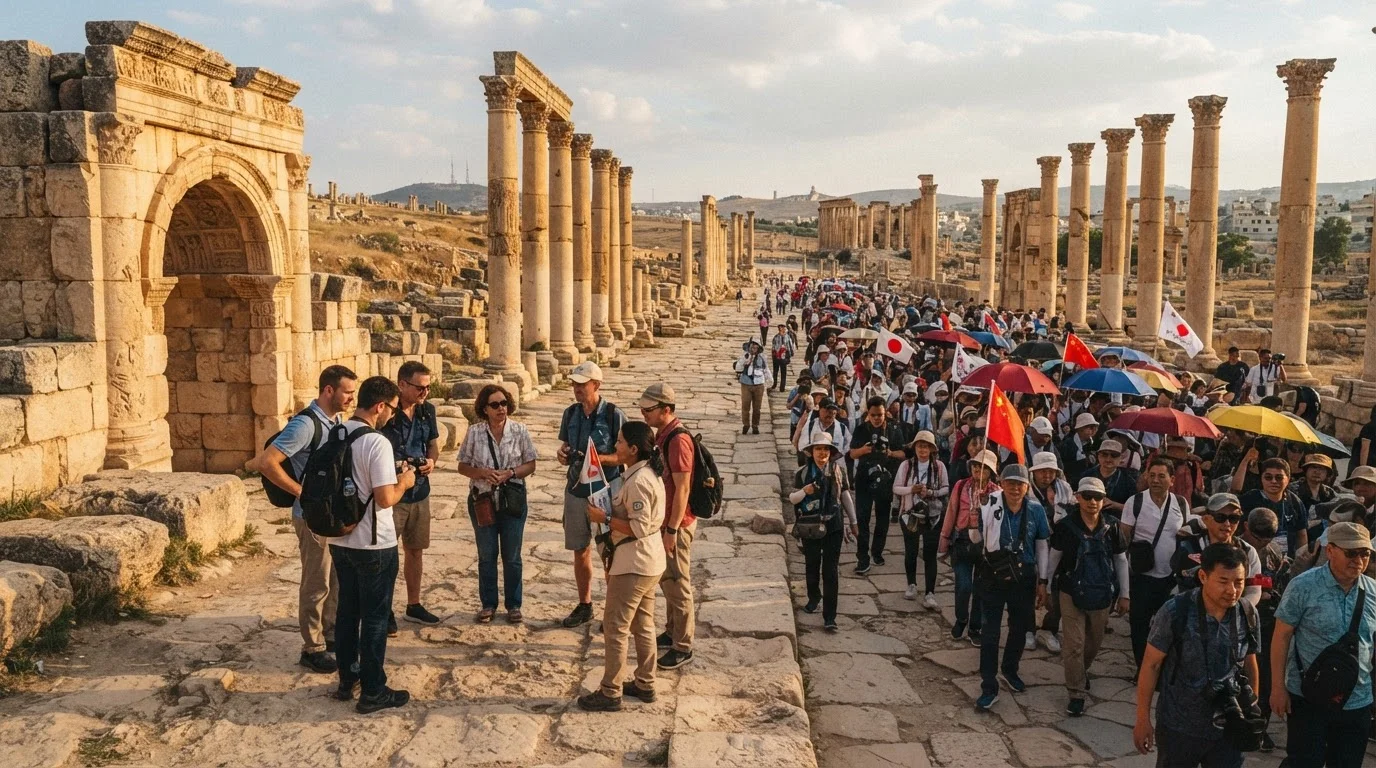
Large groups operate on fixed schedules built around the lowest common denominator of crowd management. Entry to popular sites is often timed to the minute, and guides must use radio headsets (so-called whisper systems) simply to be heard. This isn't a failure of the guide - it's physics.
Access is another underappreciated variable. Some sites - small wineries, private homes, archaeological dig areas, boutique workshops - impose visitor caps that only small groups can meet. These venues effectively don't exist for large-group itineraries, regardless of how the brochure describes the destination.
Ask Operators for the Actual Maximum
Terms like 'small group' are marketing language, not a regulated standard. Before booking, ask the operator for the maximum passenger count for your specific departure - not the average or typical figure. A tour advertised as small-group with a 24-person cap operates very differently from one capped at 12. Getting that number in writing protects you from an unpleasant surprise at the departure point.
Cost Structures: What's Actually Driving the Price Gap
Small-group tours typically cost more per person, often meaningfully so. That premium covers real operational differences: minivans instead of full coaches, smaller hotel room blocks negotiated at market rates rather than bulk-discount rates, and restaurants that can serve 12 people with quality rather than 45 people with efficiency.
Large-group tours benefit from genuine economies of scale - bulk hotel allocations, full coach utilization, and group-rate admissions. The savings are real, but they come with trade-offs in flexibility and sometimes in quality tier.
6-16
Typical small-group tour size
Industry operators generally define small-group tours as carrying between 6 and 16 travelers, though definitions vary by operator.
30-50
Typical large-group tour size
Full-size motorcoaches seat 40-55 passengers; large-group tours are generally structured around maximizing coach utilization.
The cost comparison also needs to account for what isn't included. Gratuities for guides and drivers are customary on both formats, but large-group tours sometimes involve more staff (a separate driver, a local guide at each city, a tour manager overseeing logistics), each of whom travelers may be expected to tip. Read the fine print on both formats before assuming the headline price tells the whole story.
Solo travelers face a particularly sharp calculation. Single supplements - extra charges for occupying a double room alone - are common across both formats, but small-group operators sometimes waive them or offer guaranteed share programs more readily. If you're traveling alone, touring solo inside a group package carries its own distinct set of considerations worth reviewing before you book.
Social Dynamics and Group Demographics
Large tours create a social environment closer to a cruise ship - a wide demographic spread, organized group dinners, and the kind of surface-level camaraderie that suits travelers who want company without intensity. For some, that energy is exactly right.
Small groups form tighter bonds faster, for better or worse. Twelve people sharing a minivan for ten days will know each other's travel styles, quirks, and opinions by day three. That intimacy can produce lasting friendships - or it can make a poor group dynamic feel inescapable. There's less diffusion when the group is small.
Tour operators targeting specific demographics - active travelers over 50, LGBTQ+ travelers, history enthusiasts - tend to run small-group formats precisely because the chemistry of a carefully curated group matters more when you can't hide in a crowd. If group compatibility is a priority, research how operators vet or describe their typical traveler profile.
For travelers weighing the escorted versus hosted distinction alongside group size, escorted tours vs. hosted tours clarifies another layer of the format decision. And if you're evaluating excursions specifically, group shore excursions vs. private tours covers similar trade-offs in the day-trip context.
Whichever format you're leaning toward, avoid the common planning errors outlined in tour package mistakes that leave travelers disappointed - group size is one variable, but pacing mismatches and overlooked inclusions quietly derail tours of every size.