
How the Costs Actually Compare
The pricing comparison between group tours and independent travel is rarely straightforward. Group tours quote a headline figure that bundles accommodation, transportation, guided entry to sites, and often some meals. That bundling can deliver genuine value - operators buy in bulk and pass some savings on, particularly for accommodation in high-demand destinations during peak season.
Independent travelers, by contrast, pay retail for each component. In destinations where competition is strong and accommodation is plentiful, this can mean meaningful savings. In remote or niche destinations, independent travelers often pay a premium that a group tour would absorb.
| Criterion | Group Tours | Independent Travel |
|---|---|---|
| Upfront cost transparency | Bundled, mostly predictable | Variable, component-by-component |
| Hidden cost risk | Supplements, tips, optionals | Spontaneous decisions, retail rates |
| Scheduling flexibility | Fixed group itinerary | Fully self-directed |
| Logistical burden | Low - operator handles it | High - traveler manages all |
| Site and experience access | Operator relationships help | Depends on traveler's effort |
| Social dynamic | Built-in group companionship | Self-sourced connections |
| Solo traveler cost | Often includes single supplement | No supplement required |
| Best destination fit | Complex, remote, language-barrier | Established, infrastructure-rich |
Where group tour costs get murky is in the fine print. Optional excursions, gratuities for guides and drivers, single supplements for solo travelers, and visa assistance fees can each add material cost to the quoted price. Before comparing a tour price against a self-built itinerary, total these extras honestly. The single supplement question alone deserves careful attention if you're traveling solo.
Flexibility and Pace: The Core Trade-Off
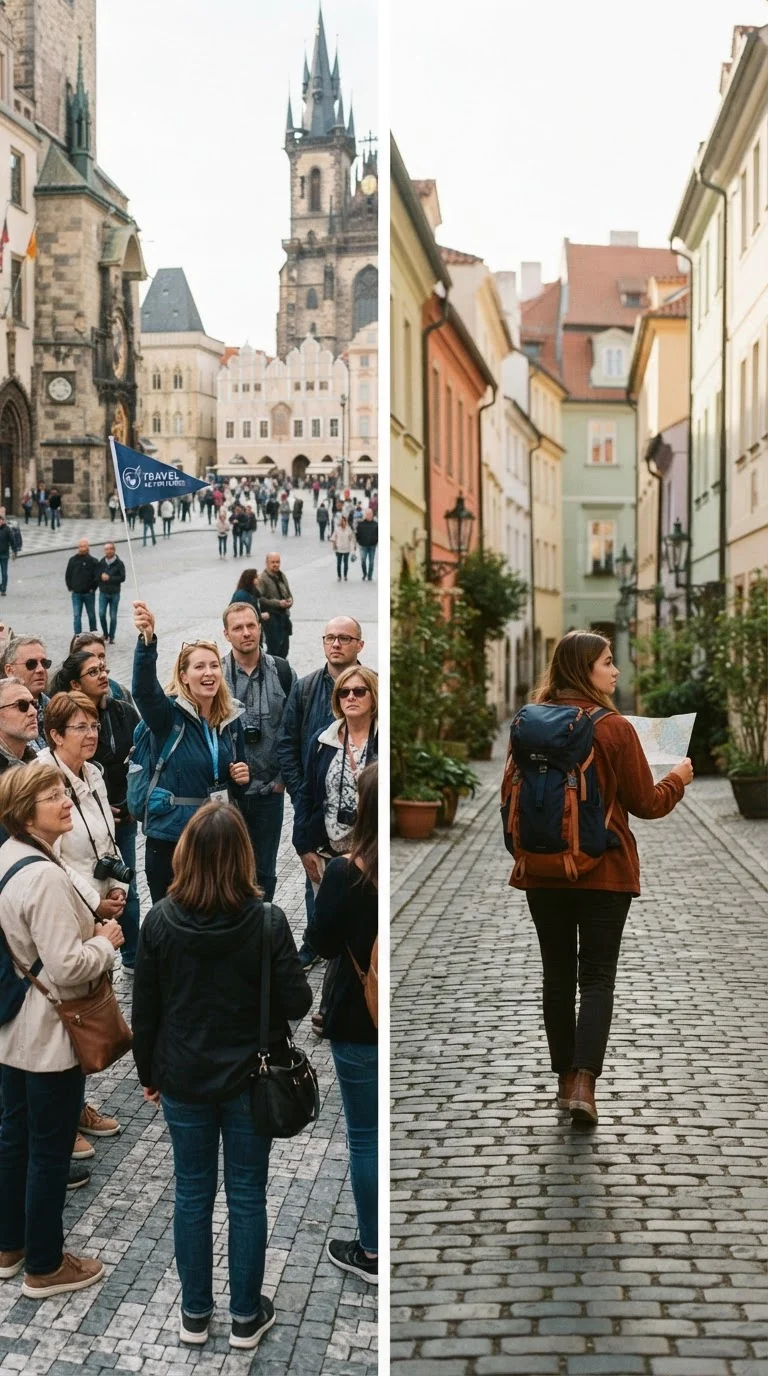
No single factor separates these two approaches more sharply than control over pacing. Group tours operate on fixed schedules - departure times, meal windows, site visits - designed around the needs of a group rather than any individual. This structure is genuinely useful when it removes decision fatigue across a complex itinerary. It becomes a constraint when a destination rewards lingering.
Independent travel is built around revision. You can extend a stay, skip a planned stop, or change your route in response to a local recommendation. For travelers who have a clear sense of what they want from a destination, this flexibility produces a qualitatively different experience. For those who find open-ended planning stressful, it can become a source of anxiety rather than freedom. The choice between fixed and flexible itineraries is ultimately a question of personal travel style as much as destination logistics.
20-30%
Typical solo supplement on group tours
Single supplements on group tours commonly add 20-30% to the per-person rate, a cost that independent travelers avoid entirely.
Up to 40%
Potential savings on group accommodation rates
Tour operators purchasing accommodation in volume can access contracted rates substantially below what individual travelers pay at retail, particularly in popular destinations during peak periods.
It's also worth considering destination-specific context. In places with reliable infrastructure, clear signage, and widely spoken English, independent travel is straightforward. In destinations where transport links are sparse or language barriers are significant, the logistical overhead of independent travel grows substantially - and the case for a structured tour becomes more practical.
Experience Quality and Access
Group tours often provide access that independent travelers can't easily replicate. Reputable operators maintain relationships with local guides, communities, and sites - relationships that sometimes open doors to experiences not listed on any public booking platform. This is particularly true for specialty or cultural tours where context from an expert guide substantially changes what you understand and retain from a visit.
The trade-off is that group tour experiences are designed to work for a range of people simultaneously. Pacing is calibrated for an average participant; depth of engagement at any single site is constrained by the group's collective schedule. Independent travelers can pursue niche interests - spending half a day at a single museum, arranging a private cooking lesson, eating where locals eat rather than where tour operators have standing arrangements.
For context on how group size itself shapes the experience, the comparison between small-group and large-group tours is worth reviewing before booking. A 10-person tour and a 40-person tour carry very different dynamics even when the itinerary is nominally the same. Those interested in the spectrum between fully guided and fully independent might also find value in understanding the difference between escorted and hosted tour formats, which sit between the two extremes covered here.
Prices, availability, and tour inclusions vary by operator and change frequently. Always verify current details directly with providers before booking, and consult official government sources for visa and entry requirements specific to your destination.