
What You're Actually Paying for With Ship Excursions
Cruise lines mark up shore excursions significantly - industry observers and independent travel researchers consistently note that ship-booked tours carry premiums typically ranging from 30% to over 100% compared to booking the same activity directly through a local operator. That premium funds the ship's commission, the logistical coordination, and the guarantee that the ship will wait if your tour runs late.
Beyond the base price, additional layers of cost are easy to miss. Gratuities, port facility fees, and non-refundable cancellation windows are frequently buried in the fine print. Port fees, gratuities, and cancellation penalties deserve close attention before you commit - our detailed breakdown covers exactly what to look for. These extras can add $15-$30 per person to an already-inflated base price.
That said, the premium isn't pure waste. Ship excursions come with real operational value - guaranteed departure coordination, English-language guides, vetted vendors, and traveler assistance if something goes wrong. The question is whether those benefits are worth the markup at a given port.
Ship-wait guarantee protects against missing departure
If a ship-booked excursion runs late, the vessel waits. That protection is absent with independent arrangements and can matter significantly in ports with unpredictable logistics.
Vetted operators and guided coordination included
Cruise lines pre-screen their excursion vendors, provide English-speaking guides, and handle all transfers. This reduces research burden and lowers risk of encountering unqualified local operators.
Convenient for first-time or less-confident cruisers
For travelers unfamiliar with a destination's transit systems or local norms, the structured format of a ship excursion removes friction and provides a more predictable experience.
Useful safeguard in remote or complex destinations
In ports where English is uncommon, safety advisories exist, or ground transport is scarce, the ship excursion's pre-arranged logistics provide tangible value that justifies a price premium.
The Case for Going Independent
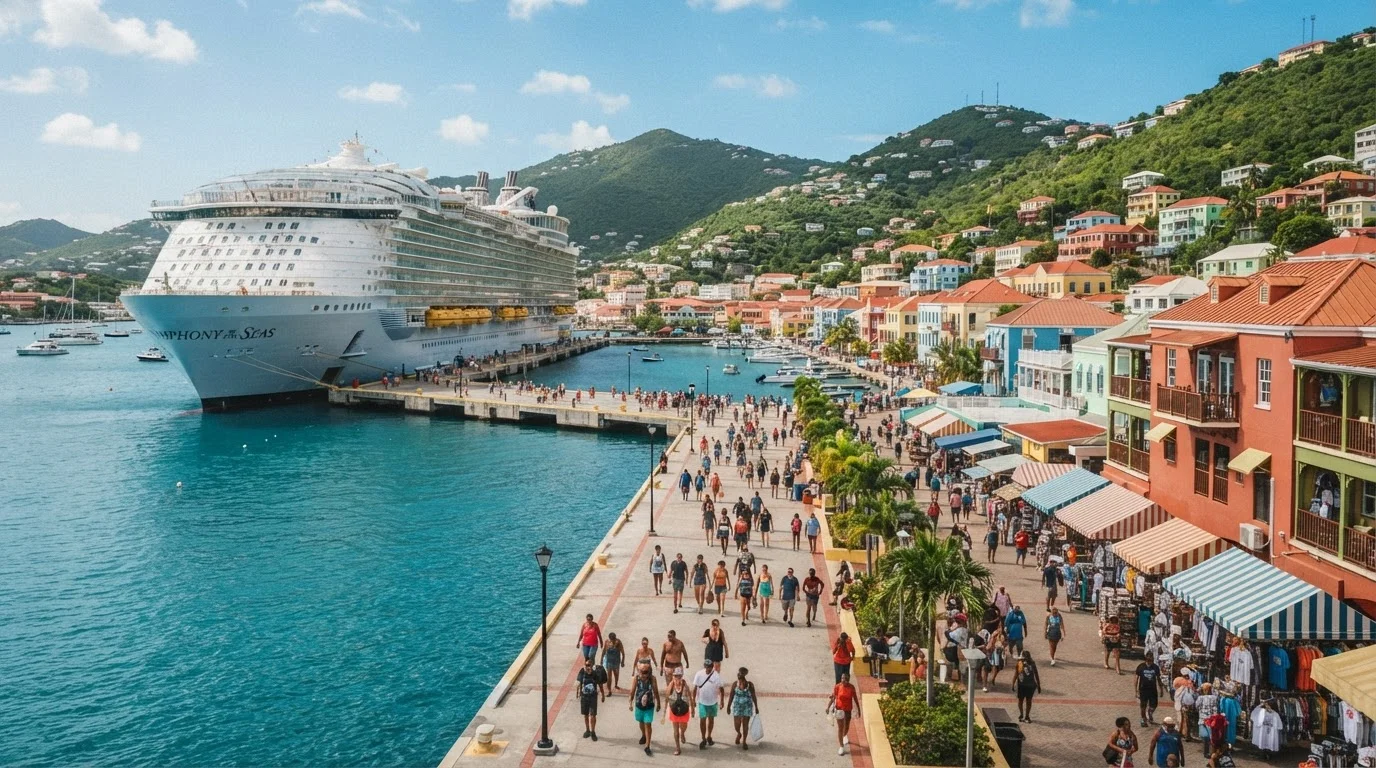
In ports with strong tourism infrastructure - think popular Caribbean stops, major Mediterranean cities, or established Mexican coastal destinations - independent arrangements are often straightforward to organize and meaningfully cheaper. Local tour operators, public transit, and reputable third-party booking platforms give cruisers real alternatives.
30-100%
Typical ship excursion markup over local rates
Industry travel analysts and independent cruise researchers consistently estimate this range based on comparisons of ship-sold tours against equivalent locally booked activities.
$15-$30
Approximate per-person hidden fee additions
Gratuities and port surcharges commonly tacked onto ship excursion base prices, per traveler estimates from cruise budgeting guides.
Flexibility is the other major advantage. Ship excursions run on fixed schedules with large groups, which limits spontaneity and often prioritizes shopping stops over authentic experiences. Independent travelers can pace themselves, linger longer at sites that matter to them, and skip venues that function primarily as commission-generating retail stops.
For a grounded comparison of how costs and experiences actually differ, group excursions versus private tours is worth reading alongside this piece. And if you're intent on stretching your port time without overspending, practical approaches for maximizing shore time covers free walking routes, timing strategies, and other cost-conscious tactics.
Consistently higher cost than independent alternatives
Ship excursion markups routinely run 30-100% above comparable local tours. On a multi-port itinerary, that gap compounds into a substantial difference in total trip spend.
Large group format limits flexibility and pace
Ship tours run on fixed schedules with groups that can exceed 40 people. Spontaneous stops, extended time at key sites, and personal pacing are largely off the table.
Shopping stops are often built into the itinerary
Many ship excursions route groups through vendor-affiliated retail stops. These stops benefit commission-earning operators more than travelers seeking authentic or efficient port experiences.
Hidden fees inflate the advertised price
Gratuities, port surcharges, and non-refundable cancellation windows are common additions to ship excursion pricing and are frequently underemphasized at the point of booking.
Less access to authentic local experiences
Structured excursions often prioritize accessibility and scale over immersive encounters. Independent travelers typically find it easier to engage with local food, culture, and neighborhoods on their own terms.
When the Ship's Excursion Is Actually Worth It
The ship-wait guarantee matters most in ports where infrastructure is limited and taxi availability is unreliable - certain Central American stops, less-visited Pacific islands, or itineraries with very short port times. Missing departure because an independent tour ran over is a real risk, and the cost of catching the ship at its next port is steep.
Always Check Current Entry and Safety Conditions
Port-specific risk levels, local regulations, and traveler safety conditions can change. Before arranging any independent shore trip - particularly in Central America, the Caribbean, or less-frequented itinerary stops - verify current advisories through the U.S. Department of State's travel advisory portal and your cruise line's own port guidance. Do not rely solely on this article or general travel sources for safety-critical decisions.
Remote or politically complex destinations also tip the calculus toward ship bookings. In ports where English is uncommon, local logistics are opaque, or traveler safety advisories exist, the ship excursion's vetted structure provides genuine value beyond mere convenience.
Travelers with mobility considerations, young children, or those making their first cruise may also find the structured simplicity of ship excursions worthwhile - at least for the first port or two, until they get a feel for how port operations work. Weighing ship-booked versus independent shore tours honestly offers a port-by-port framework for making this call more systematically.
Finally, consider what else you're spending on the cruise. Not every cruise extra is worth scrutinizing equally - excursions are often the highest-leverage line item in a cruise budget, but understanding the full picture of add-on value helps with overall trip budgeting. You can also review common excursion booking mistakes to avoid compounding costs regardless of which approach you choose.