
How Cruise Loyalty Programmes Are Structured
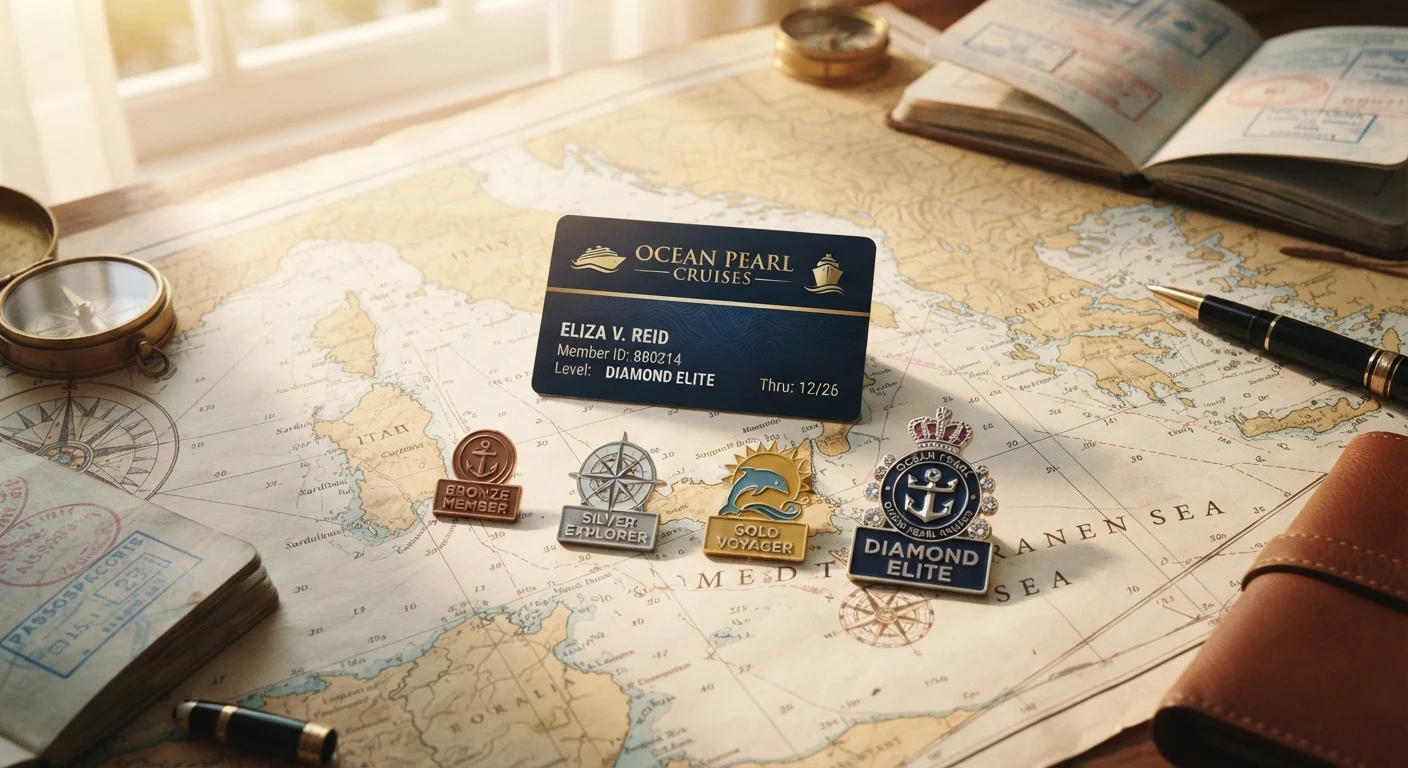
Most cruise lines operate a tiered loyalty programme with three to five levels. Entry-level membership is automatic upon completing a first sailing; subsequent tiers require accumulating a defined number of nights, cruise credits, or programme points. The exact earning currency differs meaningfully between lines - a programme that counts individual nights sailed rewards longer voyages, while a credit-per-voyage system treats a three-night and a fourteen-night sailing equally.
Understanding which currency your preferred line uses is foundational to knowing whether loyalty tracking is worth your energy. If you tend to book shorter sailings, a nights-based programme will move you up the ladder slowly. If you sail once a year on a longer voyage, a credit-based programme may feel equally slow.
Status Portability Is Rare in Cruising
Unlike some airline alliances that allow partial status matches, cruise loyalty programmes operate almost entirely in isolation. Status earned with one line does not transfer to - or influence - your standing with another. If you change lines frequently, assume you are starting from the beginning each time.
Status is almost never portable. Choosing to concentrate sailings with a single line means trading away the flexibility to compare prices freely across the market - a real cost that should be factored in. See our overview of how cruise fares fluctuate to understand the baseline before committing to one line.
What Perks Actually Have Monetary Value
The allure of loyalty programmes is the promise of free things. In practice, perks divide into two categories: genuinely monetisable benefits and marketing-flavoured gestures. The former include onboard spending credits (which reduce your bill directly), priority embarkation (which saves hours in port queues), free laundry, complimentary specialty dining, and internet packages. These have clear dollar equivalents you can calculate.
The latter - welcome cocktail parties, exclusive newsletters, commemorative pins - carry little financial value. Budget travelers should focus narrowly on the perks they'd actually use and assign realistic market values. A complimentary dinner at a specialty restaurant is worth what that restaurant charges; a "members-only lounge" is worth nothing if you wouldn't have paid for one.
3-5
Typical loyalty tiers per cruise line programme
Most major cruise lines structure their programmes across three to five distinct membership levels, each requiring progressively more nights or credits to achieve.
~$50-$300
Estimated onboard credit range per eligible voyage at mid tier
Onboard credit amounts vary significantly by line and tier; figures are illustrative of the range commonly advertised by cruise lines in programme documentation.
For a broader view of which onboard additions tend to pay off regardless of loyalty status, see which cruise add-ons tend to deliver value.
When Loyalty Tracking Pays Off - and When It Doesn't
Loyalty programmes deliver genuine value to a specific type of traveler: someone who already sails frequently with a single line, books a mix of sailing lengths, and uses a meaningful portion of the perks on offer. For this person, mid-tier status can represent several hundred dollars of tangible benefit per voyage at no additional cost beyond what they'd spend anyway.
For occasional cruisers - one or two sailings per year, or sailings spread across multiple lines - the calculus shifts. Chasing status by paying above-market fares to stay loyal to one brand is unlikely to produce net savings. The open market regularly prices equivalent itineraries at a discount wide enough to outweigh the value of the perks foregone.
Calculate Perk Value Before Committing to a Line
Before deciding to concentrate sailings with one cruise line for loyalty purposes, list the specific perks at the next two tiers and assign each a realistic dollar value based on what you'd actually use. If the total doesn't exceed the premium you'd pay over open-market alternatives, the loyalty strategy isn't saving you money.
It's also worth noting that loyalty programmes are designed to encourage onboard spending. Higher-tier members who feel a sense of belonging to a line may be more likely to purchase extras without scrutiny. Our guide on how onboard spending inflates a cruise budget explores these dynamics in detail.
For travelers managing loyalty across multiple travel categories - not just cruises - the rules around point transfers and redemption value apply broadly. Loyalty programs for family travel offers useful framing for comparing programme value more systematically.