
The Big Picture: Two Roads, One Mountain Chain
The Blue Ridge Parkway and Skyline Drive are actually connected - Skyline Drive runs through Shenandoah National Park in Virginia's northern Blue Ridge, and the Parkway picks up at the park's southern boundary near Waynesboro, VA, continuing all the way to Cherokee, NC. Together they form a nearly unbroken scenic corridor through the Appalachians. But calling them interchangeable would be a mistake.
Skyline Drive is a national park road, governed by the National Park Service, with controlled access points, a per-vehicle entry fee, and facilities spaced throughout. The Blue Ridge Parkway, meanwhile, is its own designated unit of the National Park System - America's longest linear park - but it functions more like a scenic highway, passing through private land, crossing public forests, and threading through actual towns. No toll booths. No entry fee. Just the road.
For budget-conscious road trippers, that distinction matters immediately. See how these two drives stack up across the dimensions that affect your wallet and your itinerary in the comparison table below.
| Criterion | Blue Ridge Parkway | Skyline Drive |
|---|---|---|
| Length | 469 miles (VA to NC) | 105 miles (VA only) |
| Entry Fee | Free | Per-vehicle fee (7-day pass) |
| Speed Limit | 45 mph max | 35 mph max |
| Trip Duration | 3-7+ days (full route) | 1-3 days |
| Amenity Density | Spread out; gaps of 50+ miles | More consistent; staffed centers |
| Nearby Towns | Yes - Asheville, Boone, Roanoke | Limited; park-contained |
| Hiking Access | Extensive via connecting forests | 500+ miles of trails in park |
| Camping Options | NPS + private campgrounds | NPS campgrounds; reservable |
Cost Breakdown: Entry Fees, Fuel, and Lodging
Skyline Drive entry fees are set by the National Park Service and apply per vehicle for a seven-day pass (fees are subject to change - check the NPS website before you go). America the Beautiful annual passes cover entry, which can make Skyline Drive essentially free if you hold one or plan to visit multiple national parks in a year. The Blue Ridge Parkway charges no entry fee at any point.
Fuel costs scale with distance. A full end-to-end drive of the Parkway (469 miles, all at a 45 mph speed limit) consumes considerably more gas than Skyline Drive's 105 miles at 35 mph. Budget travelers typically drive sections of the Parkway rather than the full length in a single trip.
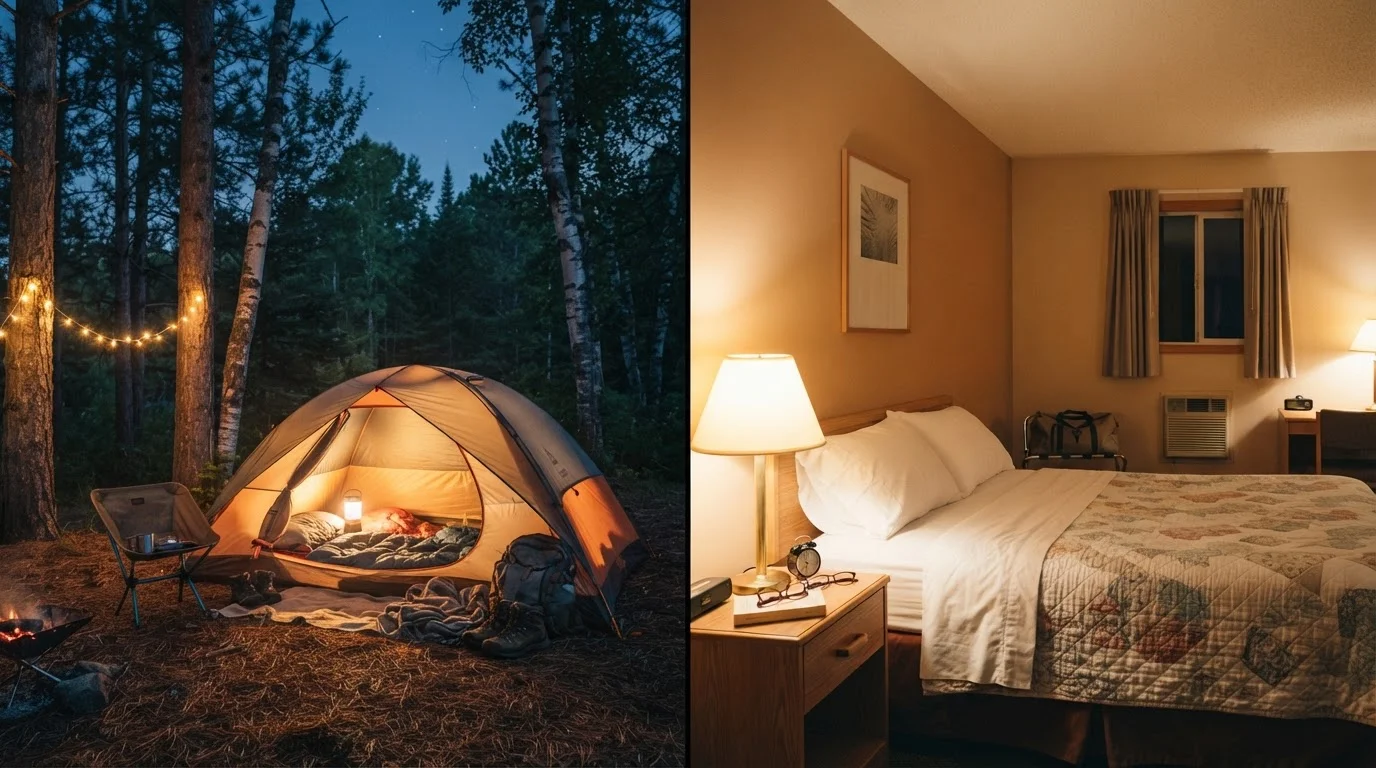
Lodging options differ meaningfully. Skyline Drive has NPS-operated campgrounds and a lodge at Skyland and Big Meadows - reservable through recreation.gov. The Parkway has NPS campgrounds scattered along its length, plus proximity to private campgrounds, motels, and Asheville's full range of accommodations near the southern end. Dispersed camping isn't permitted on either route, but front-country camping fees are generally comparable. Scenic byways like these carry real time costs too - factor in how many miles per day feels realistic before you lock in a lodging plan.
469 mi
Blue Ridge Parkway total length
The NPS designates it America's longest linear parkland, stretching from Shenandoah to the Great Smoky Mountains.
35 mph
Skyline Drive speed limit
The enforced limit applies the full 105-mile length, making the drive slower but more wildlife-friendly than the Parkway.
75
Skyline Drive overlooks
NPS maintains 75 designated overlooks along Skyline Drive, each offering named ridge and valley views.
Scenery, Stops, and What You'll Actually See
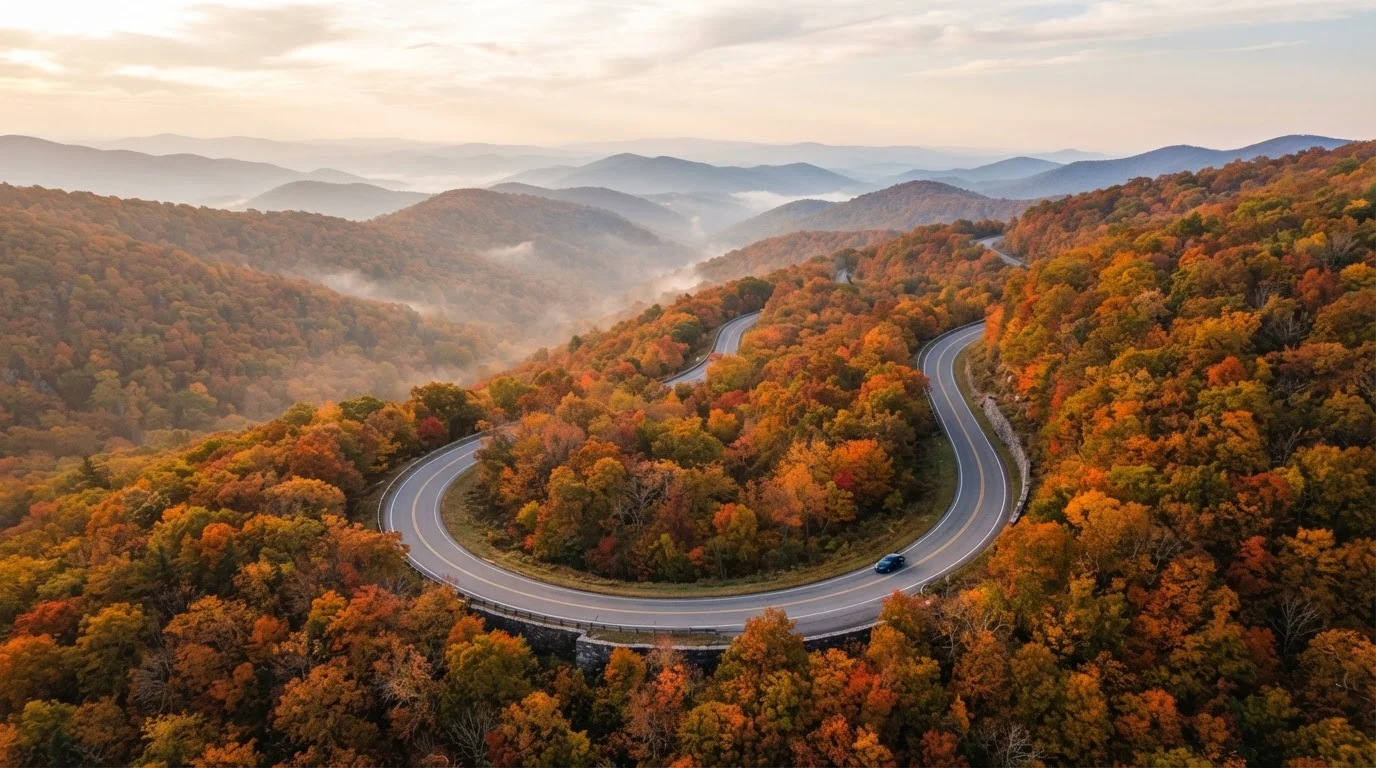
Both roads deliver the Appalachian highlands at their most photogenic: layered ridge views, dense hardwood forests, and - if your timing is right - fall foliage that rivals anywhere in the country. Peak color generally runs mid-October at higher elevations, though it varies by year. Check the NPS fall foliage tracker rather than planning around fixed dates.
Skyline Drive's 75 designated overlooks are evenly distributed and well-signed, making it straightforward to stop, photograph, and move on. Wildlife sightings - white-tailed deer in particular - are extremely common, especially at dawn and dusk. Black bears are also present; follow all NPS food storage guidelines.
The Blue Ridge Parkway offers more variety precisely because it isn't contained within a single park. Highlights include the Linn Cove Viaduct (an engineering marvel hugging Grandfather Mountain in NC), Mabry Mill (a photogenic historic grist mill near Meadows of Dan, VA), and easy access to communities like Boone, NC and Asheville. The Parkway also connects to multiple national forests where dispersed hiking opportunities expand far beyond the road itself.
If mountain town culture and off-road exploration matter to your itinerary, the Parkway's open-ended structure wins. If you want a curated, contained experience with minimal planning, Skyline Drive delivers. Wondering how mountain destinations compare to coastal alternatives for a weekend trip? That's worth a separate look.
Seasonal Closures and Road Conditions
Both roads are subject to weather-related closures, particularly in winter and during ice events. Sections of Skyline Drive may close entirely in heavy snow. Portions of the Blue Ridge Parkway - especially at higher elevations in NC - can close from November through April. Always check current road status on the NPS website (nps.gov) before departing. Cell service can be spotty on both routes, so download offline maps.
Which Drive Fits Your Trip?
The right choice depends less on which road is objectively better and more on how much time you have and what kind of travel energizes you. Skyline Drive is a structured experience: enter at Front Royal or Rockfish Gap, follow the road, stop at overlooks, hike a trail or two, sleep at a campground. It's ideal for a focused two- or three-day escape, particularly from Mid-Atlantic metro areas like DC, Baltimore, or Richmond - all within two to three hours of the northern entrance.
The Blue Ridge Parkway is better approached as a framework for exploration rather than a point-A-to-point-B drive. Most travelers pick a section: the northern stretch from Waynesboro to Roanoke, the central portion through the NC High Country, or the southern end near Asheville. Mixing Parkway miles with detours into nearby towns keeps costs down (more food and lodging options) while deepening the experience.
Families weighing the logistics of a longer road trip against flying might find the Parkway's proximity to diverse destinations particularly compelling - the real trade-offs between road trips and fly-and-stay vacations go well beyond just the fuel cost. And if the Appalachians have whetted your appetite for longer drives, comparing cross-country route corridors is a natural next step for planning a bigger adventure.