
What Each Approach Actually Means for Planning
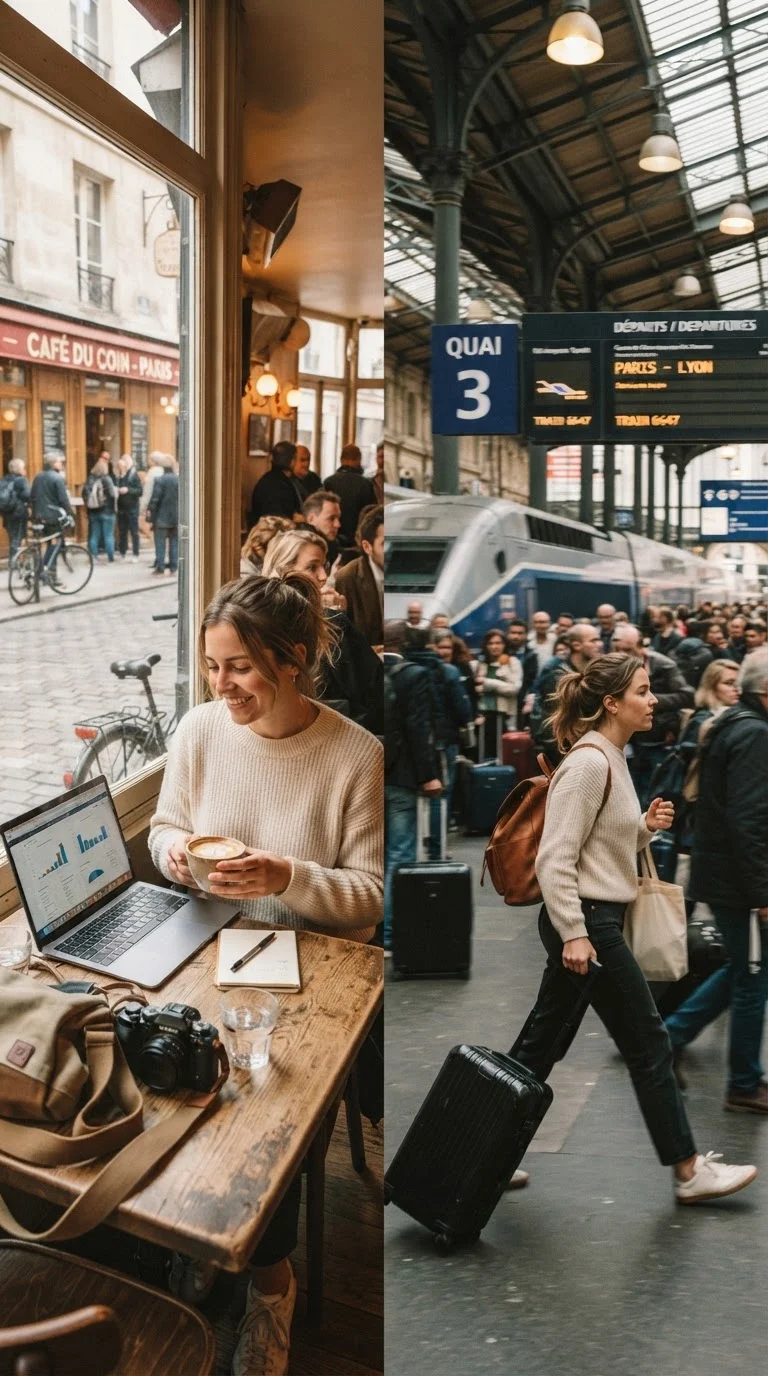
Slow travel typically means spending at least a week - often two to four - in a single location before moving on. Destination hopping means shifting cities or countries every two to five days. Both are legitimate, but they create fundamentally different planning workloads.
With slow travel, your heaviest planning is front-loaded: find longer-stay accommodation, confirm visa durations allow extended stays, and set up a local routine. After that, daily decisions shrink dramatically. Destination hopping flips this: each move requires rebooking accommodation, confirming onward transit, repacking, and reorienting - a cycle that repeats every few days.
If you're weighing how structure affects your solo experience more broadly, fixed vs. open-ended travel planning covers how much structure to build in before you leave.
| Slow Travel | Destination Hopping | |
|---|---|---|
| Transport costs | Low - few major moves | High - frequent bookings |
| Accommodation cost per night | Lower with weekly/monthly rates | Higher - nightly rates apply |
| Daily decision load | Low after initial setup | High - resets with every move |
| Visa planning complexity | High - duration limits matter | Lower - short stays per location |
| Packing requirements | Flexible - larger bag viable | Strict - light packing essential |
| Number of destinations covered | Few, experienced deeply | Many, covered quickly |
| Best trip length | 3 weeks or more | 1-2 weeks |
Cost Implications: Where Each Approach Costs More
Transport is the clearest cost separator. Destination hopping generates frequent flight, train, or bus bookings - each carrying booking fees, baggage charges, and the time cost of transit days. Slow travel consolidates these into one or two major moves per trip.
Accommodation costs shift in the opposite direction. Longer stays often qualify for weekly or monthly discounts on apartment platforms and guesthouses; nightly rates for two-night stays rarely do. However, slow travelers who pick an expensive base city will feel that cost over weeks, not days.
30-40%
Typical accommodation savings for weekly vs. nightly rates
Many short-term rental platforms and guesthouses offer weekly discounts in this range compared to equivalent nightly pricing, though rates vary significantly by location and season.
2-4
Transit days lost per week when destination hopping
Travelers moving every two to three days commonly report spending a significant portion of their trip in transit rather than at the destination itself.
Daily expenses also behave differently. Travelers settled in one place tend to cook more, find affordable local restaurants, and stop paying tourist-zone prices. Destination hoppers, constantly navigating new places, tend to default to convenience - higher-priced transit meals, tourist-district dining, and paid tourist attractions at every stop. For a practical breakdown of how pace reshapes daily spend, see how travel pace affects daily costs.
Logistics That Change Depending on Your Pace
Accommodation strategy: Slow travelers benefit from negotiating directly with hosts for extended stays or using monthly rental markets. Destination hoppers need flexible cancellation policies and should avoid non-refundable bookings made far in advance. Stretching a lodging budget across a multi-city trip details how to approach overnight logistics across multiple stops without overspending.
Visa and entry rules: This is where slow travel carries real risk if planning is skipped. Most standard tourist visas allow 30 or 90 days; staying longer without the correct visa category can result in fines or entry bans. If you're planning any stay exceeding a month, review long-stay vs. tourist visa categories and verify requirements with the relevant embassy before booking.
Don't Assume Tourist Visa Durations Are Flexible
Many travelers plan extended slow travel stays without checking whether their passport grants the full duration they assume. Tourist visa allowances vary by nationality, destination country, and even the discretion of the border officer at entry. Overstaying - even unintentionally - can result in fines, deportation, or multi-year entry bans. Always verify current entry rules through the official embassy or consulate website of your destination country before finalizing any long-stay plan.
Packing: Destination hoppers live out of their bag constantly - this usually means traveling lighter by necessity. Slow travelers can check a larger bag, buy local items, and return items to a fixed base. Neither is inherently better, but the packing strategy should be decided before you leave, not mid-trip.
Mental Load and Decision Fatigue
One underestimated planning consideration is mental bandwidth. Every move in a destination-hopping trip triggers a cluster of micro-decisions: how to get to the station, where to store bags, which neighborhood to book, how to navigate a new city's transit. Compounded over weeks, this exhausts many solo travelers - particularly those managing everything alone without a travel companion to share the cognitive load.
Slow travel front-loads complexity. The first two days in a new base are the hardest - figuring out the local SIM card, grocery stores, transit passes, and neighborhood layout. After that, the location becomes familiar and the daily decision count drops sharply. For budget-conscious solo travelers on trips longer than two weeks, this often translates into more intentional spending and fewer impulse decisions driven by overwhelm.
Try the Anchor-City Hybrid
Rather than committing fully to either extreme, consider using two or three anchor cities as bases and taking day trips or one-night excursions from each. You keep the accommodation savings and familiarity of slow travel while still covering meaningful geographic range. This approach also reduces the number of visa-category decisions you need to make and simplifies packing logistics considerably.
The honest trade-off: destination hopping is stimulating in short bursts and genuinely suits some travel personalities. But on longer trips, the cumulative logistics of moving constantly tend to crowd out the actual experience of being somewhere. Planning your trip structure around your own capacity - not an idealized travel style - is the most practical choice you can make.