
What Basic Economy Actually Means
Basic economy is a stripped-down fare class offered by most major US carriers. The headline price is lower than standard economy, but the trade-off is a bundle of restrictions applied at booking and at the gate. Specific rules vary by airline, but the common thread is less flexibility for a lower base fare.
Typical restrictions include: no advance seat selection (or a fee to choose), no ticket changes or cancellations for a refund, boarding in the last group, and - on many carriers - no overhead bin access, meaning only a personal item fits under the seat in front of you. Frequent flyer miles may still accrue, but often at a reduced rate. Understanding the full ruleset for the specific airline you're booking is essential before committing.
Rules Vary Significantly by Airline
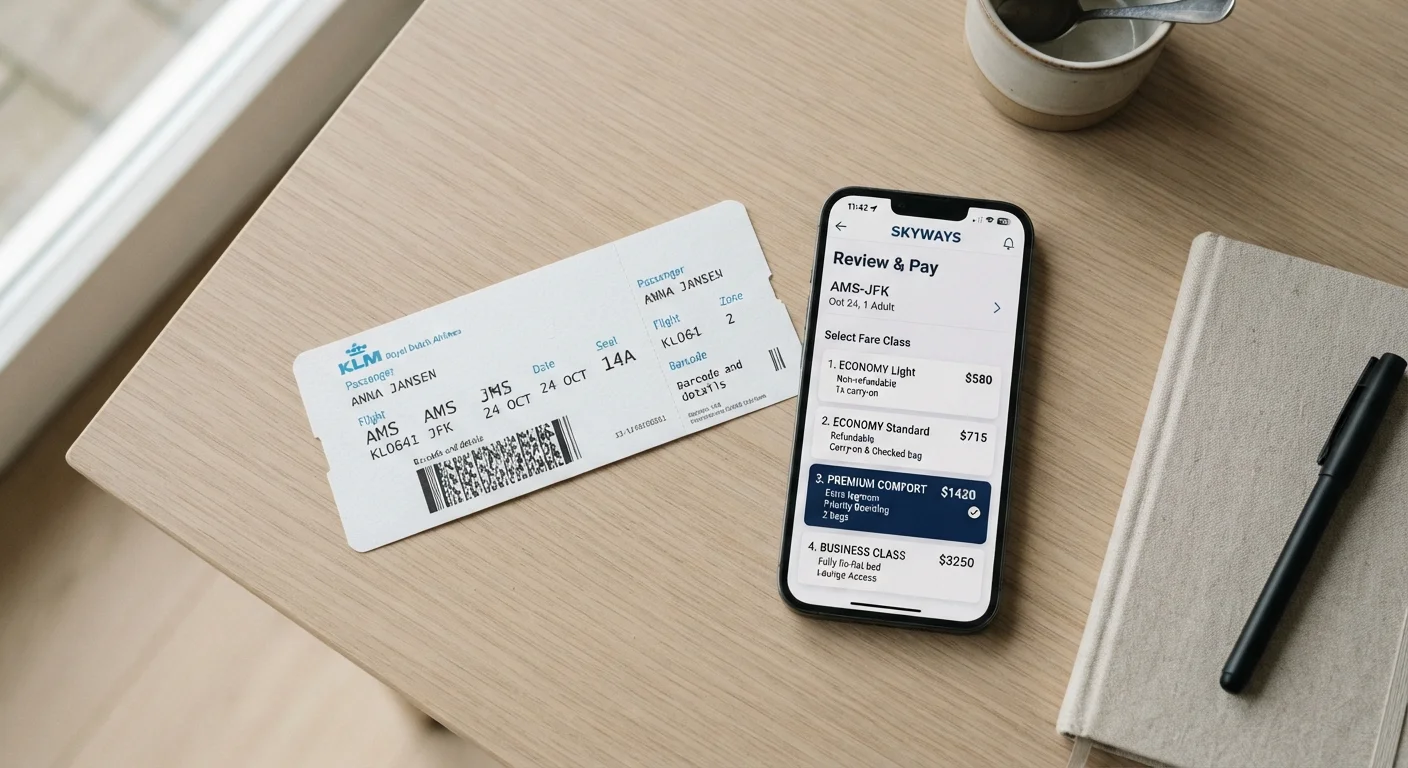
Not all basic economy products are identical. Some carriers restrict overhead bins; others allow them. Some block mileage accrual; others don't. Before booking, read the specific fare rules for that airline's basic economy tier - they are listed at the fare selection step on most booking platforms. Never assume restrictions based on another carrier's policy.
The Pros: Where Basic Economy Genuinely Delivers
There are real scenarios where the restrictions of basic economy are immaterial and the savings are genuine.
Lower base fare on identical routes
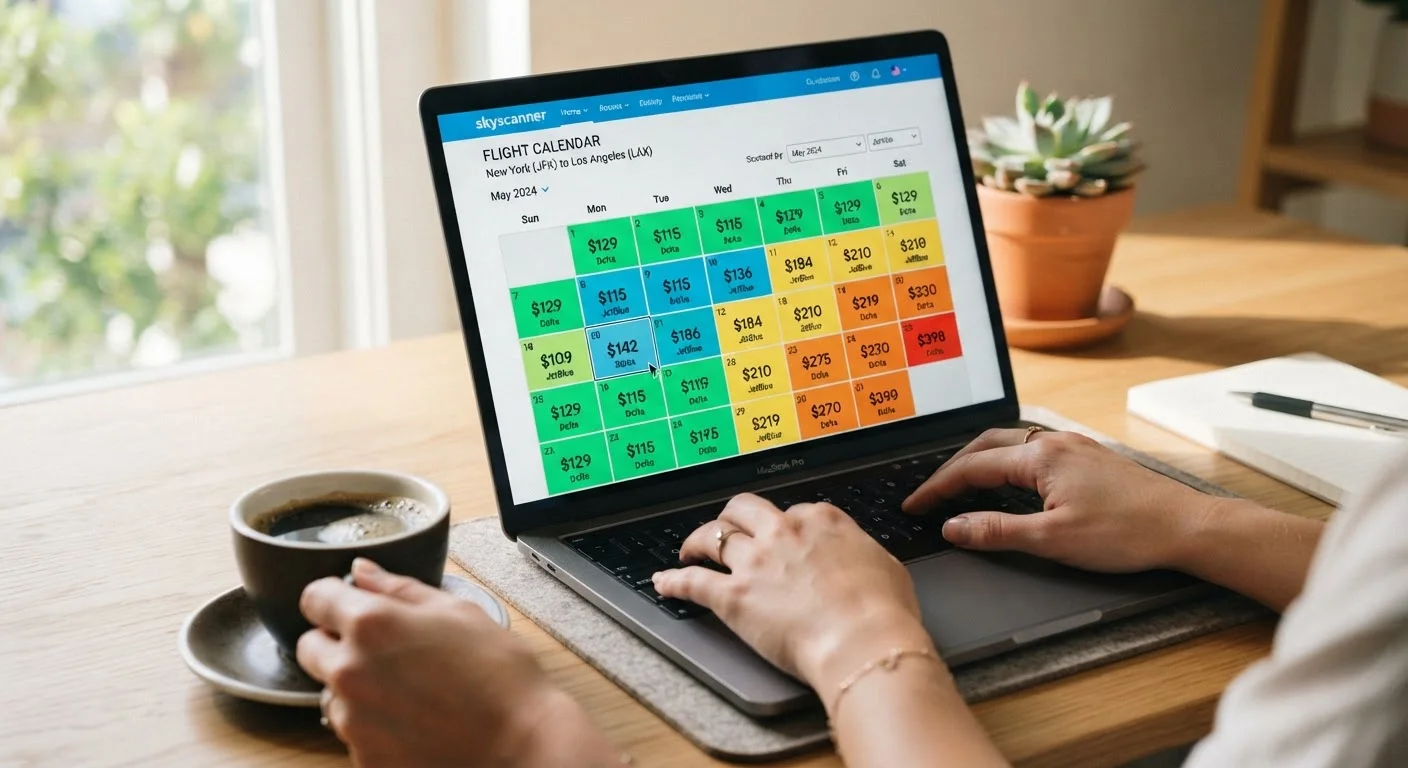
Basic economy can be $20-$60 cheaper per segment than standard economy on the same flight, which adds up meaningfully on frequent short trips.
Works well for ultra-light travelers
If a small personal item covers everything you need, the carry-on restriction is irrelevant and you capture the full fare saving.
Mileage accrual still active on most carriers
Most major US airlines still credit frequent flyer miles for basic economy travel, though sometimes at a lower earning rate than standard economy.
Ideal for flexible, low-stakes trips
When the trip is short, the dates are firm, and seat location doesn't matter, basic economy restrictions impose no real cost or inconvenience.
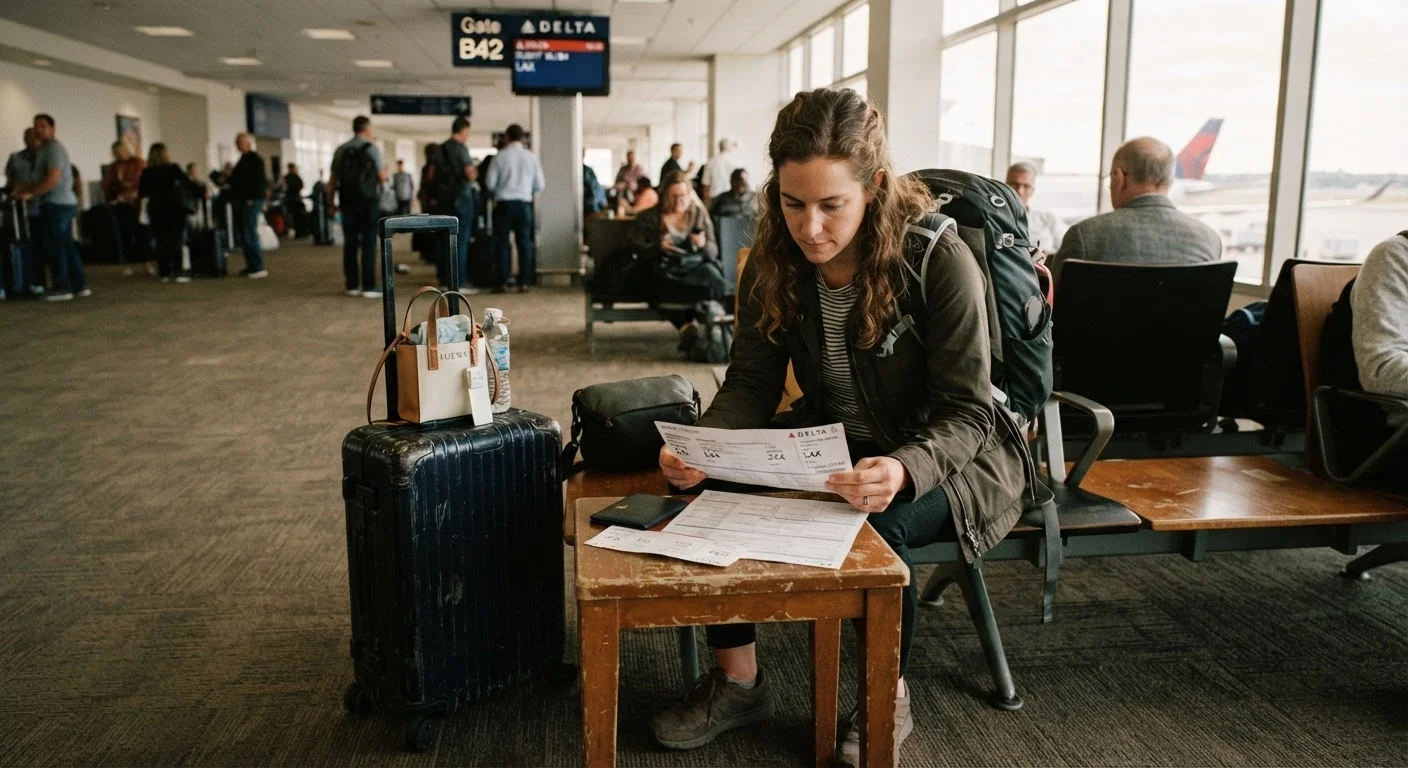
For a solo traveler flying a short domestic route - say, a two-hour hop for a weekend trip - with only a small backpack and no need to sit in a particular seat, the fare class does exactly what it promises: gets you there for less. The true cost comparison between low-cost and full-service carriers shows that base-fare savings are most durable when add-ons stay at zero.
The Cons: Where the Costs Quietly Stack Up
The restrictions that define basic economy translate directly into fees or friction the moment your trip has any complexity.
Carry-on bag often prohibited or extra
Several major carriers ban overhead bin bags on basic economy tickets, meaning a standard carry-on triggers a gate check fee that can exceed $50 each way.
No seat selection without paying extra
Families or travel companions are frequently assigned non-adjacent seats unless they pay seat fees, which can run $15-$40 per seat per segment.
No changes or refunds allowed
Basic economy tickets are typically non-changeable and non-refundable, meaning any schedule disruption on the traveler's end results in a full ticket loss.
Last boarding group placement
Late boarding means overhead bin space is often gone, creating pressure to gate-check bags even when a carry-on would technically be permitted.
Add-on fees erode the price advantage
Adding one checked bag, one seat selection, and a change protection plan can push the real cost above standard economy, eliminating the apparent saving.
$35-$65
Typical carry-on fee at the gate
Gate-checked bag fees on basic economy fares commonly fall in this range across major US carriers, based on published airline fee schedules.
$20-$50
Average fare gap vs. standard economy
The price difference between basic and standard economy on domestic US routes is often smaller than travelers expect once ancillary fees are added.
Families are particularly exposed. Seat assignment fees across multiple passengers on a round trip can close the gap with a standard economy fare entirely. For a fuller picture of where flight costs fit into a family travel budget, see the real cost of a family vacation. Similarly, if you're comparing basic economy on a legacy carrier against a budget airline's base fare, the fee structures can look surprisingly similar - a point explored in the real tradeoffs of flying with budget carriers.
Doing the Math Before You Book
The single most useful habit when evaluating a basic economy fare is building the all-in price before clicking purchase. Add up every fee you're likely to incur:
- Carry-on or checked bag fee (if applicable for that carrier's basic fare)
- Seat selection fee if you need a specific seat or to sit with a travel companion
- Change or cancellation risk - price in the cost of a last-minute replacement ticket if your plans could shift
Then compare that total to the next fare class up. On many routes, the gap between basic and standard economy is $20-$50 per person. A single checked bag fee can exceed that difference. Understanding how budget airline fare structures work applies the same logic across carrier types.
If you're building a trip around cost-efficient destinations, pairing smart fare-class decisions with affordable international destinations can compound the savings meaningfully.