

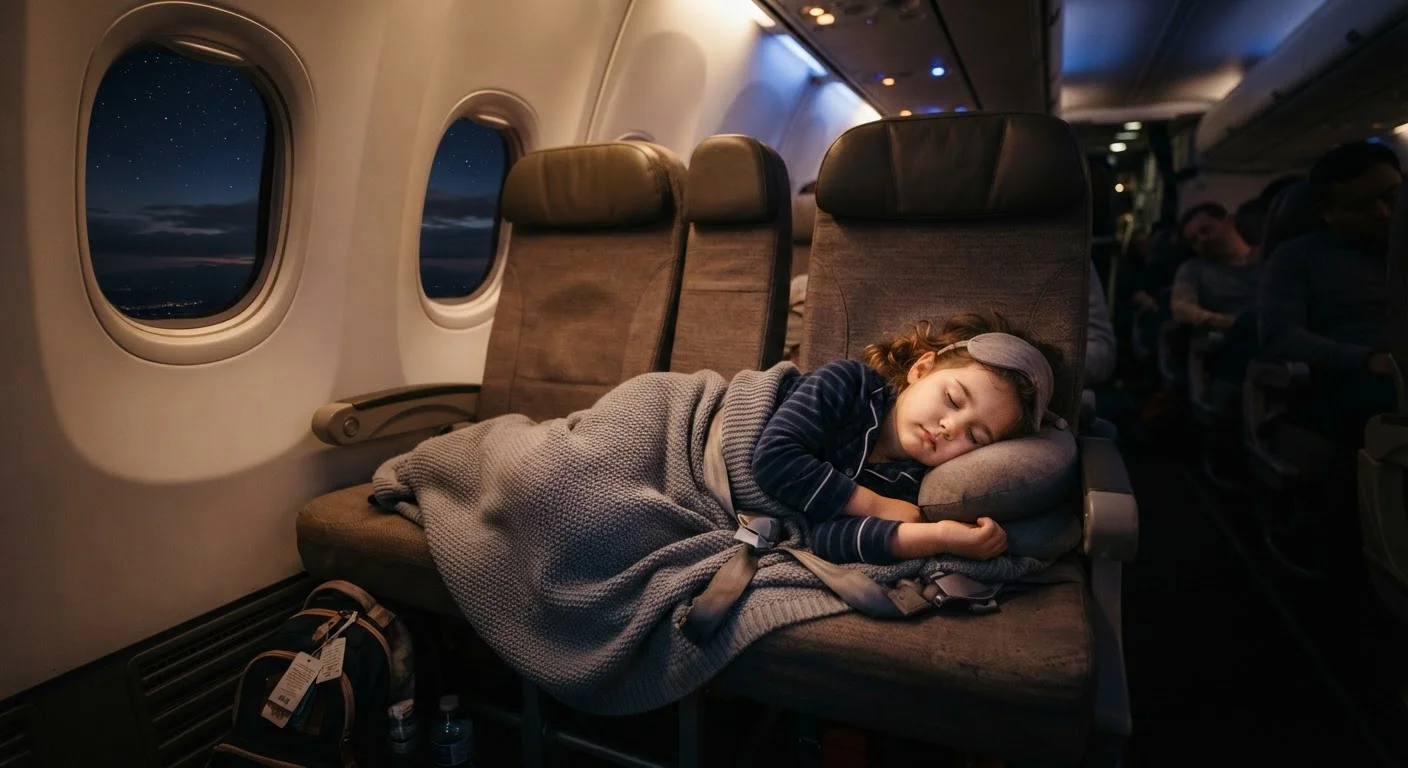
Why Children Experience Jet Lag Differently
Adults often describe jet lag as a foggy, dragging fatigue. In children, the experience looks quite different - and for parents, that difference matters. Rather than just feeling tired, kids frequently become emotionally dysregulated, refusing meals at dinner, waking at 3 a.m. wired and playful, or melting down over minor frustrations. Understanding why helps parents respond with empathy instead of frustration.
Children's circadian rhythms - their internal body clocks - are still maturing throughout childhood. Infants and toddlers have the least-established rhythms, which makes them more susceptible to disruption but also means they depend heavily on external cues: feeding schedules, nap routines, and light exposure. Older children and tweens have more robust rhythms but still haven't developed the same physiological flexibility adults have.
Direction matters, too. Eastward travel shortens the perceived day, forcing the body to sleep and wake earlier than it's ready. Westward travel lengthens the day, which most circadian systems tolerate more easily. For families flying across five or more time zones - a New York-to-London trip, say - expect two to four days of notable disruption for school-age kids and potentially longer for toddlers.
Jet Lag vs. Travel Fatigue: Know the Difference
Not every tired, cranky child on day one is experiencing jet lag. General travel fatigue - from long flights, irregular meals, excitement, and disrupted naps - can mimic jet lag symptoms. True jet lag involves a mismatch between the body's internal clock and local time, and typically persists for several days rather than resolving after one good night's sleep. Distinguishing the two helps you respond appropriately rather than over-engineering a recovery plan.
For a deeper look at all the moving parts of long international flights with young children, see our guide on long-haul international travel with young children.
Symptoms to Expect by Age Group
Jet lag doesn't look the same at every developmental stage. Here's what families typically observe:
- Infants (0-12 months): Irregular feeding and sleep windows, prolonged night waking, increased fussiness. Their schedules can take up to a week to settle - plan for shorter outings and protected nap time.
- Toddlers (1-3 years): Early morning waking, refusal to nap at local times, heightened tantrums, and appetite disruption are all common. This age group is often the toughest because they can't articulate what they're feeling.
- Preschoolers (3-5 years): Daytime sleepiness paired with wired nighttime energy. May complain of tummy aches or headaches - both known physical symptoms of circadian disruption.
- School-age children (6-12 years): Difficulty concentrating, mood swings, and nighttime difficulty falling asleep. This group tends to adjust faster once exposed to natural light and activity.
- Tweens and teens (13+): Adolescent sleep biology already skews later; eastward jet lag can compound this. Expect resistance to early bedtimes and significant daytime grogginess.
Families with kids across multiple age bands will face a range of symptoms simultaneously - which is its own planning challenge. Our article on traveling with mixed-age kids covers how to balance these differing needs without losing your mind.
Evidence-Based Strategies to Help Kids Adjust Faster
The good news: there's a solid body of research on circadian entrainment - and several practical tools parents can actually use.
Book an Arrival Day With Nothing Planned
The single most family-friendly jet lag strategy is also the simplest: build a buffer day into your itinerary. Arriving with zero obligations on day one lets you nap if needed, eat when hungry, and settle in without stress. Overscheduling the first 24 hours is one of the most common - and most avoidable - family travel mistakes.
Light Exposure: Your Most Powerful Tool
Light is the primary cue that resets the circadian clock. On arrival, get your kids outside in natural daylight during the local morning hours. Avoid screens and bright lights in the two hours before the new local bedtime. This single habit - practiced consistently for the first three days - can significantly speed adjustment.
Pre-Trip Schedule Shifting
Starting three to four days before departure, gradually shift your child's bedtime and wake time by 30-60 minutes in the direction of the destination. Eastward travel means moving everything earlier; westward means moving it later. It's not dramatic, but even a one-hour shift before you board creates a meaningful head start.
Keep Days Active, Nights Calm
Resist the temptation to let jet-lagged kids nap freely all day - this entrenches the old schedule. Encourage active daytime play and meals aligned with local time. In the evening, wind down with familiar rituals: bath, books, quiet music. Familiar sleep cues signal safety and sleepiness even in an unfamiliar room.
Feed on Local Time
Meal timing is a secondary clock signal. Feeding children at local mealtimes - even if they're not very hungry - helps synchronize digestive rhythms with the environment. Bring familiar snacks for this transition period since appetite is often disrupted.
For broader context on how children adapt to travel demands, it's worth reading why kids handle long trips better than parents expect - the research may surprise you.
~1 day
Adjustment time per time zone crossed
Sleep researchers generally estimate one day of recovery per time zone as a practical planning benchmark, though individual variation is significant.
3-7 days
Typical jet lag duration in children
Most pediatric sleep studies suggest children recover from moderate jet lag within this window under normal conditions.
5+ zones
Time zones where symptoms become notably harder
Crossing five or more time zones is widely considered the threshold where jet lag symptoms become more pronounced for all age groups.
This article is for general informational purposes only and does not constitute medical advice. Always consult your child's pediatrician before using any supplement, including melatonin, and verify all health-related travel information with qualified healthcare providers before your trip.