
The Core Components Most Packages Share
At their foundation, most bundled tour packages are built around three non-negotiable pillars: accommodations, ground transportation, and guided programming. Hotels are pre-selected by the operator, typically categorized by star rating (three-star, four-star, or deluxe), and your room type is usually double occupancy by default - single-supplement fees apply if you're traveling alone.
Ground transportation covers transfers from the arrival airport to your first hotel and between destinations on the itinerary. This is genuine value: coordinating private airport pickups or intercity coaches independently can be time-consuming and expensive. What it does not always include is transportation to optional activities or free-time outings you arrange yourself.
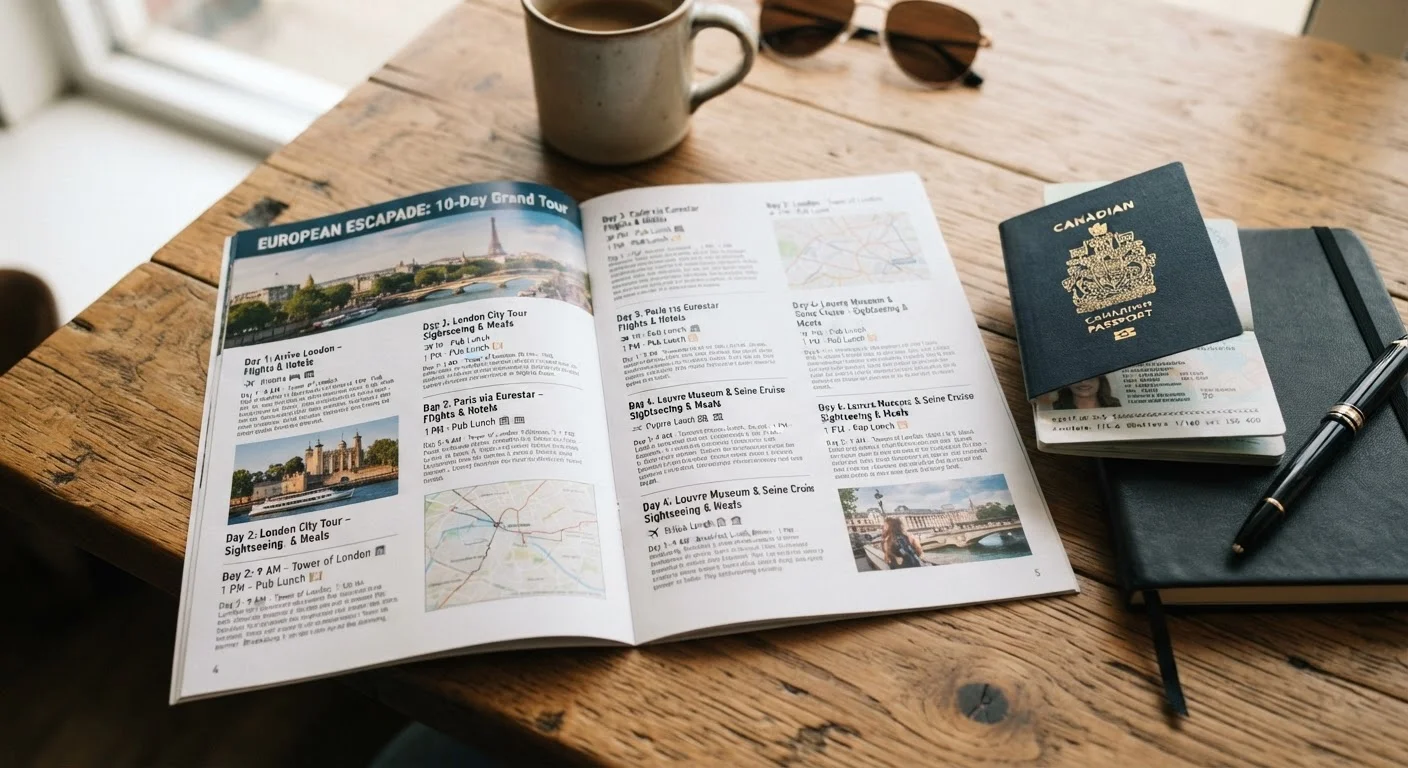
Guided programming - city tours, cultural site visits, regional excursions - is listed by the day in the itinerary, but the depth varies significantly. A line reading "morning tour of the historic district" might mean two hours with a local guide, or it might mean a 45-minute drive-by orientation. Reading a tour itinerary carefully before booking helps you distinguish substantive programming from thin scheduling.
~30%
Average out-of-pocket meals cost on 'partial board' packages
Industry travel research consistently finds that travelers on partial-board packages spend roughly 25-35% of their daily budget on meals not covered by the package.
$15-$25
Typical daily gratuity per person on guided tours
Tour operators commonly recommend this per-person daily gratuity range for guides and drivers, a cost almost never included in the package price.
60%+
Packages described as 'all-inclusive' with major exclusions
Consumer travel surveys suggest the majority of packages marketed as all-inclusive still exclude significant costs such as flights, alcohol, tips, or optional excursions.
What's Frequently Listed But Rarely Fully Covered
Meals and entrance fees are the two categories that generate the most traveler confusion - and disappointment. When a package advertises "daily breakfast included," that typically means a hotel breakfast buffet, not restaurant dining. Lunches and dinners are usually pay-your-own unless the itinerary explicitly says otherwise.
Entrance fees follow the same partial-coverage pattern. You may see "visit to the ancient ruins" in the schedule, but the operator may cover only the general admission while optional audio guides, interior sections, or reserved exhibitions cost extra. Watch for qualifier language: "select entrance fees included" is a signal that you'll pay for some sites yourself.
Gratuities are almost universally excluded. Some operators note a recommended daily tipping amount in the booking documents - it's worth calculating this into your total trip budget before comparing package prices. What 'all-inclusive' actually covers on tour packages is a related question worth exploring before you commit.
Request a Full Inclusions Breakdown in Writing
Before finalizing any tour booking, ask the operator for a written list of every included and excluded element - meals, fees, tips, and transfers. Compare this against the package summary you were initially shown. Discrepancies between marketing copy and the actual contract are common and worth resolving before you pay a deposit.
How to Read Inclusions Without Being Misled
Operators format inclusions in ways that can obscure as much as they reveal. A highlights summary on the booking page is a marketing document; the detailed day-by-day itinerary is the authoritative record. These two versions of the same package can look very different.
Key phrases to scrutinize: "opportunity to visit" (you pay); "at leisure" (no programming, no coverage); "approximately" before any duration (the timing is not guaranteed). Conversely, "included entrance" and "guided visit" are stronger commitments.
Also confirm whether the package is air-inclusive or land-only. A land-only price excludes international flights, which dramatically changes the true cost of the trip compared to a competing full-package price. For a structured way to audit everything before booking, work through the pre-booking checklist for guided tours to make sure nothing slips through. If you're new to this type of travel, a beginner's introduction to guided group travel provides useful grounding on how packages are structured overall.