
Why Drink Packages Deserve Closer Scrutiny
Cruise beverage packages are among the most aggressively promoted add-ons in the industry. They're bundled into flash promotions, dangled as booking incentives, and marketed with language designed to make them feel like obvious value. For some travelers, they genuinely are. For others, they're an expensive convenience that gets purchased on the assumption it will pay off - and never does.
Understanding the mechanics behind these packages is the first step toward making a rational decision. The math isn't complicated, but it requires honest self-assessment and attention to the fine print that cruise lines don't always highlight upfront. See our breakdown of what a cruise fare actually covers for broader context on where onboard costs tend to accumulate.
Myth
An all-inclusive drink package means you've already paid for everything - no surprises at checkout.
Fact
Most packages exclude automatic gratuities, which are typically added at 18-20% of the package price and billed separately.
The word "inclusive" in cruise marketing rarely means what travelers assume. Beverage packages almost universally add an automatic gratuity on top of the advertised price. On a $75/day package over seven nights, that can add over $100 to the total cost before you've ordered a single drink. Some cruise lines build this into a bundled promotional offer; others tack it on at the point of purchase. Always confirm the gratuity structure before buying - the advertised daily rate is almost never the full price you'll pay.
Myth
If one person in a cabin doesn't drink much, they can skip the package while their partner buys one.
Fact
Most major cruise lines require all adults sharing a cabin to purchase the same beverage package, with limited exceptions.
This policy exists to prevent drink-sharing, which is explicitly prohibited under package terms. Cruise lines enforce it by requiring all guests of drinking age in a stateroom to enroll simultaneously. If one adult doesn't drink alcohol at all, some lines offer a non-alcoholic or lower-tier package at a reduced rate to satisfy the requirement - but the couple must still pay for two packages. Travelers who overlook this rule when doing their break-even math often find the package significantly less attractive once both costs are factored in.
Myth
Premium packages that cover "any drink on the menu" always include everything available at the bars.
Fact
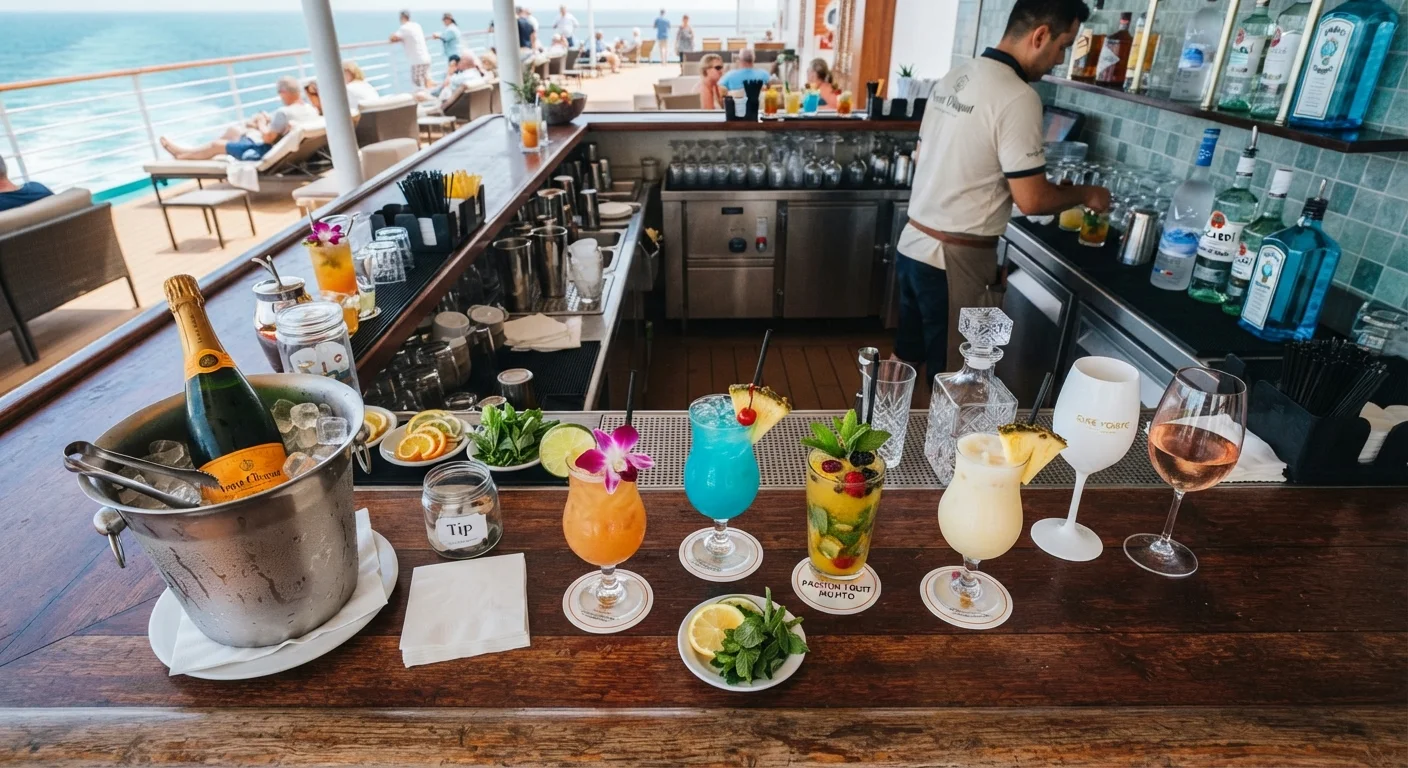
Most premium packages cap coverage at a maximum per-drink price, and high-end spirits, bottles of wine, and certain specialty items are excluded or attract an upcharge.
Package terms typically specify a per-drink dollar cap - often around $12-$15 - above which the passenger pays the difference. Premium whiskeys, aged rums, high-end champagne, and certain cocktails at specialty bars frequently exceed this threshold. Additionally, minibar items in staterooms, room service beverages, and drinks purchased in private restaurant venues are commonly excluded even from "premium" tiers. Reading the specific inclusions list, not just the package name, is essential before committing.
Myth
Buying a drink package at the time of booking always gets you the lowest price.
Fact
Prices can vary depending on when you purchase - pre-cruise, during promotional windows, or onboard - and the best timing depends on the cruise line's specific pricing model.
Some cruise lines offer lower pre-cruise package rates through their online portals compared to onboard purchase prices, particularly during early-booking or promotional periods. Others price packages identically regardless of when you buy. A handful of lines have moved toward dynamic pricing, where package costs fluctuate based on sailing demand. The practical implication: check the package price at booking, revisit it a few weeks before sailing, and compare against what the line quotes onboard - there's no universal rule that earlier is cheaper.
Myth
A non-alcoholic or "soda" package is always worth it for non-drinkers since sodas and juices cost very little individually.
Fact
Non-alcoholic packages have their own break-even thresholds, and travelers who drink primarily water or included beverages may not consume enough to justify the cost.
Non-alcoholic beverage packages - which typically cover sodas, juices, specialty coffees, mocktails, and sometimes bottled water - are priced in a range that requires consistent daily consumption of purchased items to break even. Travelers who primarily drink tap water (available free) or consume beverages mainly with meals may find they never approach the threshold. However, for travelers who drink multiple specialty coffees and premium juices daily, these packages can genuinely save money. The calculation is the same as with alcoholic packages: estimate realistic daily consumption first, then compare against the total package cost including gratuity.
Running the Real Numbers
The break-even calculation for an alcoholic beverage package typically requires consuming somewhere between four and six drinks per day, depending on the package tier and the ship. At a cocktail price of roughly $12-$16 per drink before gratuity, a package priced at $65-$90 per person per day (plus mandatory gratuity) demands consistent, daily consumption to justify itself across a seven-night sailing.
4-6
Drinks per day needed to break even
Industry pricing analysis suggests most standard alcoholic beverage packages require consuming four to six drinks daily to recover the per-day package cost on a typical sailing.
~18-20%
Gratuity added to package price
Most major cruise lines automatically add an 18-20% service charge to beverage package purchases, which is separate from the advertised per-day rate.
2x
Cabin cost multiplier when both adults must enroll
Cruise lines that require all adults in a stateroom to purchase the same package effectively double the total package expenditure for couples, changing break-even math significantly.
The math shifts substantially on shorter sailings - a three-night cruise gives you far fewer days to recoup the upfront cost. It also shifts if you plan to spend full days in port, where you'll be drinking off the ship rather than running up an onboard tab. Travelers who spend a lot of time ashore on port-intensive itineraries often find packages deliver less value than on sea-day-heavy voyages.
For a broader look at which onboard extras tend to justify their price tags, see our analysis of cruise add-on value. And if you're concerned about overall budget creep, how onboard spending quietly inflates a cruise budget covers the patterns worth watching for.
Watch for Package Upsells at Embarkation
Cruise lines often station staff at embarkation points specifically to sell beverage packages to boarding passengers. The pressure to decide quickly, combined with the excitement of departure day, can lead to impulsive purchases. If you haven't done the break-even math before you board, take a few hours to settle in and assess the ship's drink menu and pricing before committing. Packages can typically be purchased onboard during the first day of sailing.