
What You're Actually Paying For
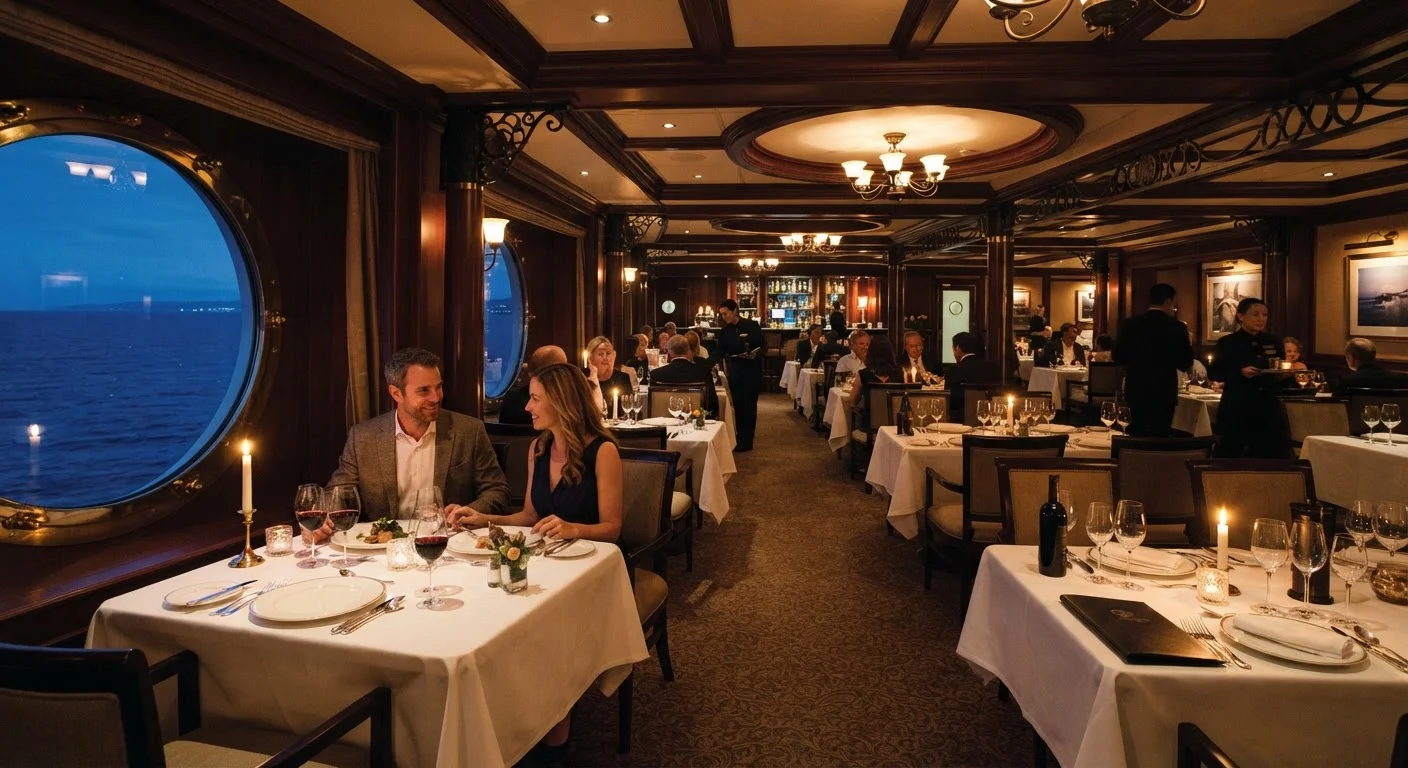
Specialty restaurants on cruise ships operate separately from the included main dining room, buffet, and casual venues. Guests pay a per-person cover charge - sometimes called a surcharge or service fee - that typically runs between $20 and $60 per person for a full dinner, though steakhouses and high-concept tasting menus at some lines can push past $100 per person.
That fee funds a distinctly different experience on paper: smaller dining rooms, reservations-only seating, more attentive staffing ratios, and menus built around a specific cuisine - Japanese teppanyaki, Italian fine dining, French bistro, or celebrity-chef-branded concepts. The promise is a restaurant-quality meal in the middle of the ocean.
What travelers sometimes overlook is that the surcharge sits on top of an already-paid fare. As we break down in what a cruise fare actually covers, food in the main dining room is already included - so the upgrade question is really about incremental value, not survival necessity.
Smaller venue means more attentive, personalized service
Specialty restaurants typically operate with higher staff-to-guest ratios than the main dining room, which translates to faster courses, more knowledgeable servers, and fewer waits for attention.
Access to cuisine not replicated elsewhere onboard
Teppanyaki grills, sushi omakase counters, or French tasting menus often represent cuisine styles the main dining room simply doesn't offer - making the surcharge a genuine expansion of options rather than a duplicate experience.
Quieter, more intimate atmosphere for special occasions
Main dining rooms can seat hundreds simultaneously; specialty venues are typically capped at 30-80 covers, which creates a markedly calmer environment suited to anniversaries, birthdays, or business dinners.
Ingredient quality is often noticeably higher
Specialty menus frequently feature premium proteins - prime-grade beef, fresh lobster, dry-aged cuts - that don't appear in the included dining options, offering a tangible difference for food-focused travelers.
Pre-purchased packages reduce per-meal cost
Dining packages sold before embarkation can bring the effective per-person cost down by 20-30% compared to walk-in rates, making two or three specialty meals more financially manageable.
When the Surcharge Is Hard to Justify
The strongest argument against specialty dining is the quality of what's already included. Main dining rooms on contemporary ships have improved substantially over the past decade, offering multi-course menus, rotating nightly specials, and tableside service at no extra cost. For most meals on a standard seven-night cruise, the included options are entirely adequate.
On shorter sailings - three or four nights - the math becomes even less favorable. With fewer evenings onboard, spending one or two of them on surcharge dining means a disproportionately large share of your trip budget goes to food rather than experiences ashore. This compounds when you factor in gratuities (which may or may not be included in the surcharge) and beverages.
Frequency is the other trap. Visiting two or three specialty restaurants across a week at $45 per person adds $90-$270 per couple - a figure that can quietly balloon a cruise budget. Onboard spending patterns often work this way: each individual purchase feels modest, but the cumulative total surprises travelers at checkout.
Surcharge stacks on top of an already-paid fare
Unlike land-based restaurants, specialty dining charges are additions to a cruise fare that already includes meals - travelers are effectively paying twice for the dining portion of their trip.
Main dining room quality has improved significantly
Contemporary cruise ships generally offer multi-course menus with rotating nightly options and competent tableside service in the included dining room, narrowing the quality gap with specialty venues.
Multiple visits create significant cumulative cost
At $40-$60 per person per meal, two specialty dinners for a couple adds $160-$240 to the trip total - a figure that becomes harder to justify on a budget-conscious sailing.
Gratuities may be added on top of the stated surcharge
Some cruise lines apply an additional 18-20% service charge to specialty dining bills, which is not always clearly disclosed in promotional materials and can materially increase the true cost.
Short sailings reduce the value calculation
On a three- or four-night cruise, using two evenings for surcharge dining means the premium experiences consume a large proportion of limited onboard nights.
Strategies for Getting More From Specialty Dining
If you decide one or two specialty meals fit your budget, timing and pre-planning affect how much value you extract. Most cruise lines offer discounted dining packages sold before embarkation - a two- or three-night package almost always costs less per meal than booking individually once onboard. Prices typically rise after the ship departs.
Watch for Gratuity and Beverage Add-Ons
The stated surcharge for specialty dining often excludes an automatic gratuity, which many lines add at 18-20% of the bill. Alcoholic beverages are also charged separately unless you hold an all-inclusive drinks package. Factor both into your real cost estimate before booking. If you're evaluating the full picture of cruise extras, some lower-profile add-ons may offer better incremental value for the same spend.
Timing your reservation also matters. Lunch service, where available at specialty venues, is often priced lower than dinner at the same restaurant - sometimes by 30-40%. Embarkation day, when most passengers are exploring or settling in, frequently sees promotional pricing at specialty venues trying to fill tables.
For a broader view of which cruise extras tend to justify their price tags versus which ones are easy to skip, our guide to cruise add-on value puts specialty dining in context alongside beverage packages, shore excursions, and spa treatments.
$20-$60
Typical specialty dining surcharge per person
Per-person cover charges at cruise ship specialty restaurants commonly fall in this range for dinner, based on widely published cruise line pricing structures.
20-30%
Savings from pre-purchased dining packages
Cruise lines generally price multi-night dining packages sold before embarkation at a discount compared to booking the same restaurants individually onboard.