
How the Pricing Structures Actually Compare
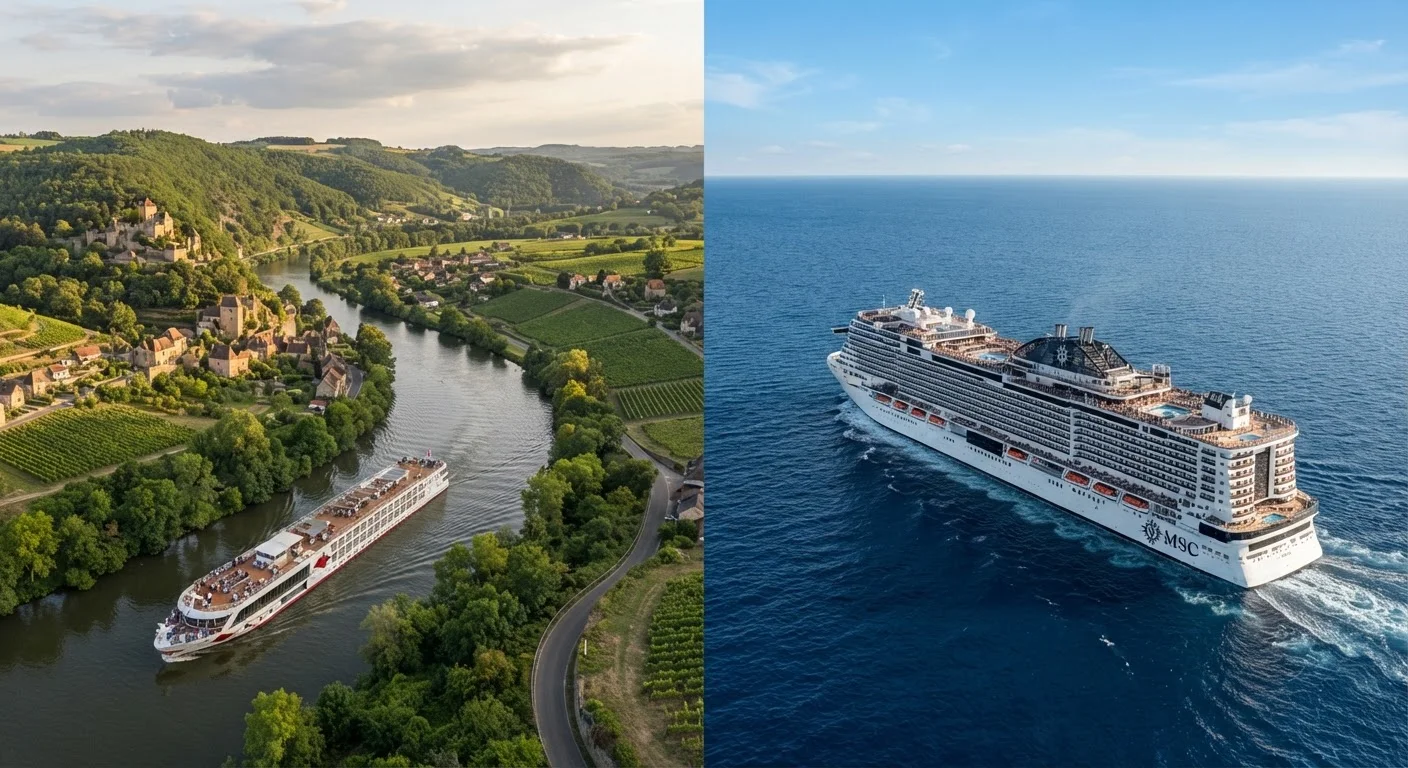
The sticker price difference between river and ocean cruising can be misleading without context. A week-long European river cruise may carry a per-person fare of $2,500-$5,000 or more, while a comparable seven-night ocean cruise might start at $600-$900 per person in an inside cabin. At first glance, ocean cruising appears dramatically less expensive - and for some travelers, it genuinely is. But the comparison requires unpacking what each fare includes.
River cruise fares typically bundle shore excursions, onboard meals, and often alcoholic beverages into the base price. Ocean cruise fares, by contrast, are structured differently: the base fare covers your cabin and access to main dining, but gratuities (often $15-$20 per person per day), drink packages, specialty restaurants, and booked shore excursions are all additional. A traveler who participates fully in an ocean cruise itinerary may find their final bill 40-60% higher than the base fare suggested.
| Criterion | River Cruising | Ocean Cruising |
|---|---|---|
| Typical base fare (7 nights) | $2,500-$5,000+ per person | $600-$2,500+ per person |
| Excursions included | Usually yes | Rarely in base fare |
| Drinks included | Often yes | Separate package required |
| Gratuities | Frequently included | Typically $15-$20/day extra |
| Ship passenger capacity | 100-200 passengers | 500-7,000+ passengers |
| Port location | City-center docking | Varies; often distant from sites |
| Motion sickness risk | Very low | Moderate to higher at sea |
| Onboard entertainment | Limited; lecture-focused | Extensive; resort-style |
For a genuinely useful budget comparison, calculate your estimated all-in cost for each cruise type before committing. Our guide to cruising on a tight budget walks through how to do this systematically, from fare selection to managing port-day expenses.
Ship Size, Passenger Count, and What That Means for You
River ships typically carry between 100 and 200 passengers and are purpose-built to navigate narrow inland waterways. That passenger count shapes everything: embarkation is quick, staff-to-guest ratios are high, and the overall atmosphere leans toward unhurried and personal. The trade-off is limited onboard amenity space - there are no casinos, waterslides, or Broadway-style theaters.
Ocean ships range from boutique expedition vessels carrying under 200 guests to mainstream mega-ships accommodating 5,000-7,000 passengers. Larger ocean ships function almost as floating resorts, with multiple pool decks, dozens of dining options, and round-the-clock programming. For solo travelers or couples who enjoy lively onboard social environments, this can add meaningful value. For travelers who find large crowds draining, it can detract from the experience.
100-200
Typical river ship passenger capacity
Industry figures from river cruise operators indicate most river vessels carry far fewer guests than even small ocean ships, directly affecting onboard atmosphere.
40-60%
Potential add-on cost above ocean cruise base fare
Travel industry analysts commonly note that gratuities, drink packages, excursions, and specialty dining can add substantially to the advertised ocean cruise price.
7,000+
Maximum passengers on largest ocean ships
The world's largest ocean cruise vessels now carry passenger counts rivaling small cities, a scale that defines their resort-style onboard experience.
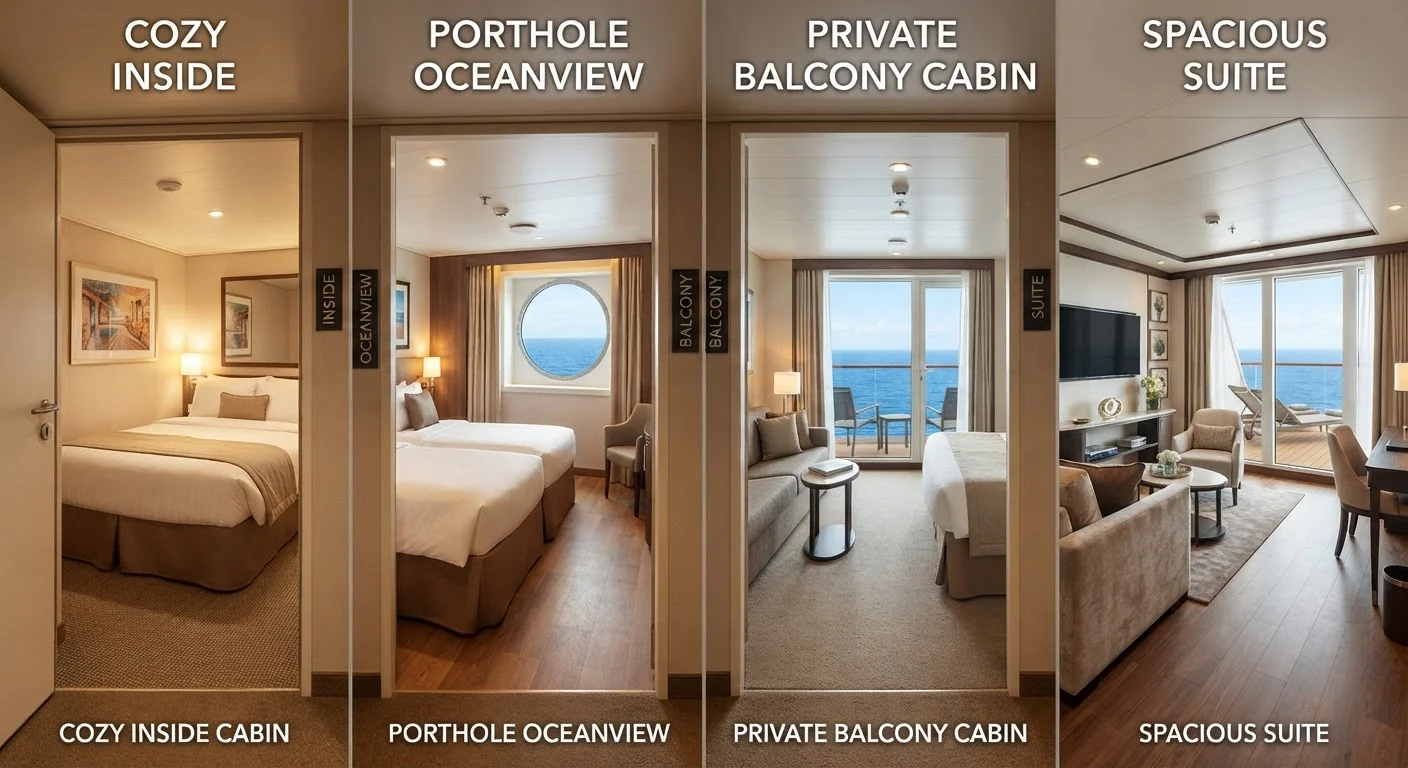
Cabin category also intersects with this choice. River ships generally offer only a few cabin tiers - often a standard cabin, a larger cabin, and a suite - so there's less room to trade down for savings. Ocean ships offer a much wider ladder of options. Understanding those distinctions is worth the time; our cabin categories comparison explains what each tier actually delivers for your money.
Destination Access and Itinerary Design
One of the most underappreciated differences between the two cruise types is how each gets you to - and into - a destination. River ships are engineered to dock directly in city centers: passengers step off the gangway and walk into the heart of Cologne, Budapest, or Lyon. There are no tender boats, no shuttle buses from distant container ports, and no admission fees already baked into shore excursion prices.
Ocean cruise itineraries are geographically broader but operationally more variable. Some ports offer convenient walkable access to notable sites; others require a $30-$60 round-trip shuttle or excursion to reach anything of interest. Before booking, it's worth researching each port individually. Our itinerary selection guide covers how port logistics vary by region and what to look for when evaluating a sailing.
River itineraries also tend to be geographically themed and historically coherent - a Danube sailing connects Vienna, Bratislava, and Budapest as a narrative sequence. Ocean itineraries can be similarly curated or can feel loosely assembled. Budget travelers benefit from scrutinizing how much of each port day is genuinely usable time versus time spent in transit to and from the ship. Smart choices on excursions and add-ons can also significantly affect your per-port spend on either cruise type.
Travel conditions, entry requirements, and port access can change. Always verify current information with official sources and your cruise operator before booking.