
Why Most Fare Alerts Fail to Deliver
Fare alerts are a well-established tool, but most travelers configure them in ways that guarantee disappointment. Vague routes, no price threshold, and overly wide date ranges produce a stream of notifications that either overwhelm or underwhelm - neither outcome helps you book a genuinely good fare.
The core problem is treating alerts as passive monitoring rather than active strategy. An alert is only as useful as the parameters you feed it. Without a baseline fare for comparison, a clear travel window, and a target price, any notification you receive is essentially noise.
Avoid Setting Alerts on Vague Routes
Alerts set for broad or flexible origin-destination pairs can generate dozens of notifications for flights that don't match your actual needs. This leads to alert fatigue, where genuinely useful drops get buried in irrelevant noise. Be as specific as your travel plans allow before activating any alert.
This guide walks through each configuration decision so your alerts surface real opportunities. For tactics that go beyond alerts - including open-jaw tickets and nearby-airport swaps - see Lesser-Known Tactics for Reducing Airfare.
Flight search platform with price tracking
Used to set route-specific alerts and receive notifications when fares drop below your target threshold.
Dedicated email folder or label
Organizes incoming fare alert emails so you can review them efficiently without inbox clutter.
Spreadsheet or note-taking app
Tracks your target price benchmarks and historical fare data for each route you're monitoring.
Step-by-Step: Configuring Alerts That Surface Real Deals
Follow the steps below in sequence. Skipping the baseline research phase - step one - makes every subsequent decision less reliable.
What you will need
Research the baseline fare for your route
Before setting any alert, spend 10-15 minutes checking current prices on your specific route across several departure dates. Note the typical economy fare range - this becomes your benchmark. Without a baseline, you have no way to judge whether an alerted price represents a real drop or just a normal fluctuation.
Define your travel window precisely
Set a firm departure range - for example, "any Friday or Saturday in October" rather than "sometime this fall." Fare alert tools perform better with specific inputs. If your dates are truly flexible, set separate alerts for each month rather than one catch-all alert, which can surface irrelevant results.
Set a concrete price threshold
Enter a target price - the maximum you'd pay and feel good about. This should sit below your baseline by a meaningful margin (typically 15-25% lower than the current average fare). Alerts triggered only by this threshold ensure you're notified for genuinely favorable prices, not ordinary fluctuations. See how this compares to other alert configuration approaches in our guide to fare alert configuration.
Activate alerts on more than one platform
No single tracking tool monitors every airline's inventory with equal depth. Running alerts on two different platforms simultaneously - particularly one that indexes budget carriers and one that covers full-service airlines - gives you broader coverage. Keep alert settings consistent across both so you're comparing equivalent route and date combinations. For a breakdown of how different tracking tools work, see Airfare Calendars, Fare Alerts, and Price Trackers.
Evaluate each alert against your pre-set criteria
When a notification arrives, resist the impulse to book immediately. Check three things: Does the fare meet your threshold? Do the travel dates match your window? Does the itinerary avoid fee traps like excessive layovers or checked-bag charges that erode savings? Only proceed if all three conditions are met. For a complete booking process checklist, see Booking a Cheap Flight: A Practical Walkthrough.
Adjust or pause alerts as your trip approaches
Fare alert tools are most useful in the 8-12 week window before departure for most domestic routes, and 3-6 months out for international travel. Once you're within two to three weeks of your travel date, price drops become less common and inventory shrinks. Pause or delete alerts at that stage to reduce noise, and shift to direct monitoring if you haven't booked yet.
Use a Dedicated Email Folder for Alerts
Route all fare alert emails into a dedicated inbox folder or label. This keeps them from cluttering your primary inbox and makes it easy to scan multiple alerts side by side when you're actively monitoring a route. Review this folder once or twice daily rather than reacting to every push notification.
Fares Can Disappear Within Hours
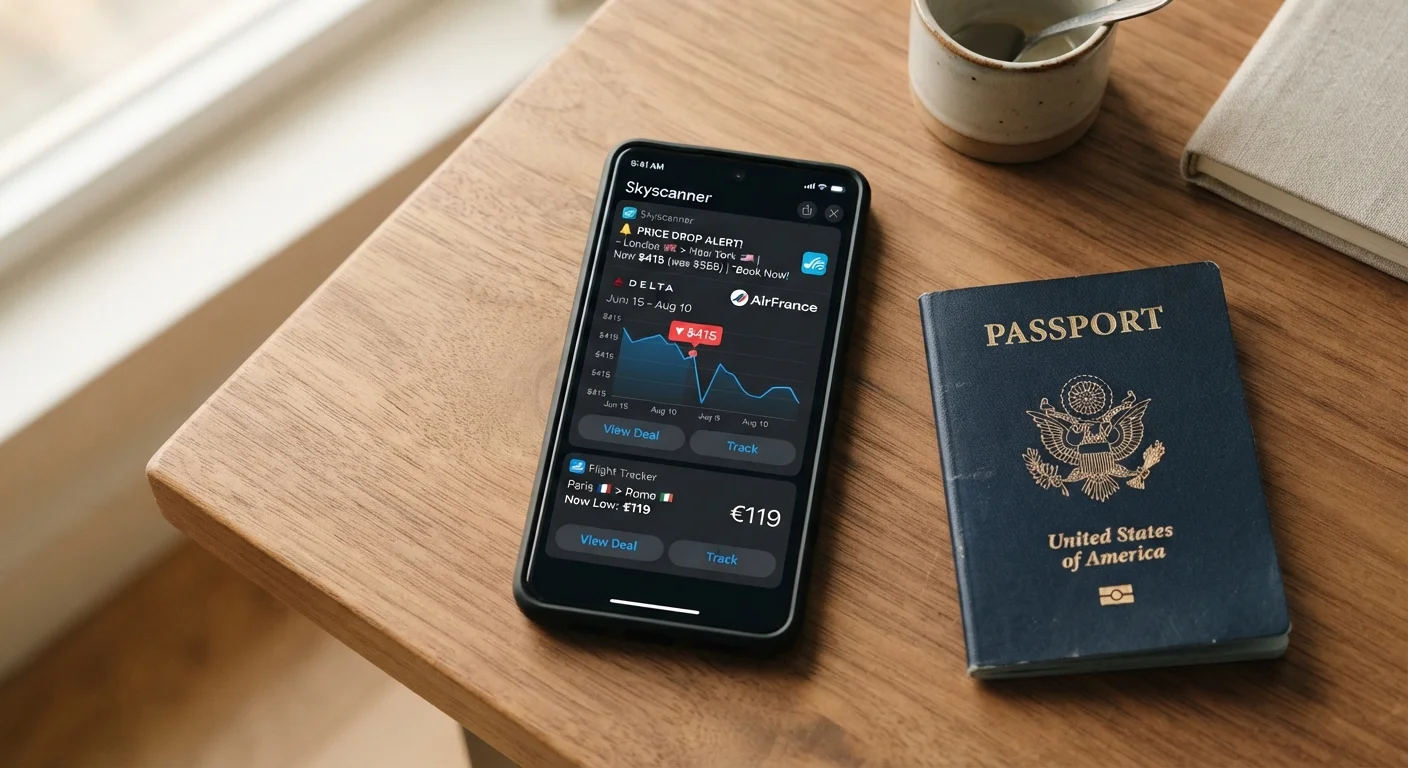
When a fare alert fires, the price shown is not guaranteed to still be available. Airlines can reprice inventory in real time, and flash drops sometimes last only a few hours. Always verify the current fare directly on the airline's or booking platform's website before making any decisions, and never assume the alerted price is locked in.
Managing daily travel costs is just as important as getting the airfare right - don't let in-destination spending undo your flight savings. And once an alert fires and you've decided to act, the airport and flight hacks hub has practical advice for keeping the rest of your journey cost-efficient.