
Why Travel Money Myths Persist - and What They Actually Cost You
Misinformation about travel money spreads quickly because it often contains a kernel of truth. Airport exchanges can be poor. ATMs can carry fees. The problem is that these partial truths harden into rigid rules - and rigid rules lead to bad decisions in the field. A traveler who avoids every airport exchange desk may arrive in a destination at midnight with no local currency and no ATM nearby. One who refuses all card use abroad may carry unnecessary cash risk across multiple countries.
The real cost isn't just financial. Poor money decisions create friction, stress, and time lost that compounds across a trip. Separating myth from fact - grounded in how international payments actually work - lets budget travelers make context-specific choices instead of following folklore. The myths below are among the most persistent, and the corrections are grounded in how currency markets, payment networks, and travel card products actually operate.
Myth
Airport currency exchange booths always have the worst rates, so you should never use them.
Fact
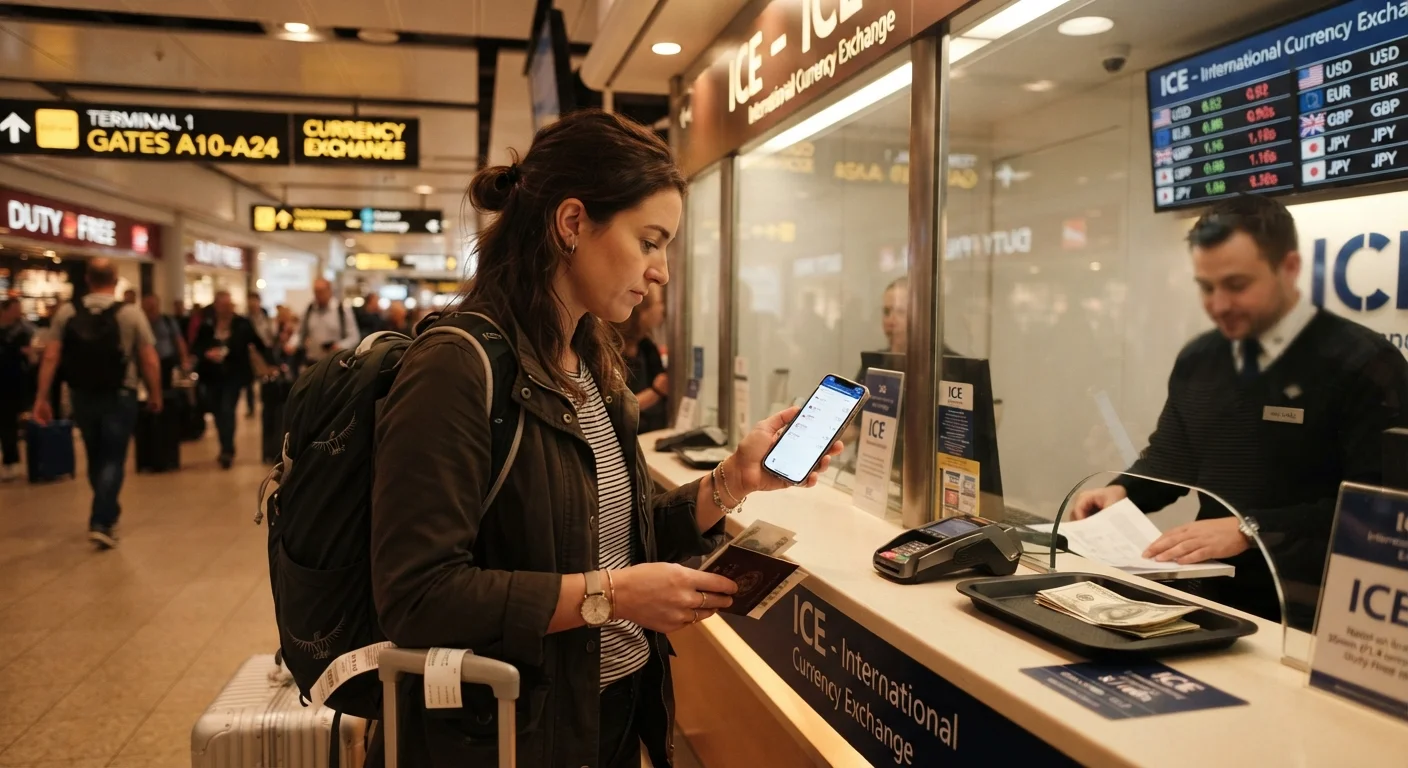
Airport rates vary widely - some booths are genuinely poor, but a few major hubs host competitive exchange desks, especially airside locations after security.
The blanket rule to avoid airports entirely can leave travelers arriving with no local cash and no viable alternative. The real issue isn't the location - it's the specific operator. Some airport concession desks run on high-commission models; others, particularly bank-affiliated kiosks in major international terminals, offer rates that compare reasonably with street-level exchanges. The safest approach is to check the interbank (mid-market) rate before you fly using a currency reference tool, then compare it against what the desk is quoting. A spread of 3-5% is common; anything above 8-10% is worth avoiding. Exchanging a small amount at arrival to cover transport and immediate needs - while sourcing the rest via ATM or a pre-loaded travel card - is a practical middle ground most budget travelers overlook.
Myth
Paying in your home currency abroad (when offered) saves you from confusing foreign exchange math.
Fact
Dynamic currency conversion (DCC) - the option to pay in your home currency at a foreign terminal - almost always applies a worse exchange rate than your card issuer would use.
When a card terminal abroad offers to charge you in US dollars instead of the local currency, it sounds convenient. In practice, the merchant or their payment processor sets that rate, and the markup is typically 3-7% above the mid-market rate - on top of any fees your own bank charges. Your card's network rate (Visa or Mastercard's published rate) is almost always more favorable than DCC. The rule is simple: always choose to pay in the local currency when given the option. If a terminal defaults to your home currency without asking, you can usually override it before confirming. This single habit can save a noticeable amount across a multi-week trip.
Myth
Prepaid travel cards are a gimmick - you save just as much using your regular debit card.
Fact
Purpose-built prepaid travel cards frequently eliminate or reduce foreign transaction fees that standard debit cards routinely charge, though the benefit depends on which products you're comparing.
Many U.S. checking accounts still attach a 1-3% foreign transaction fee to every international purchase, plus a separate ATM withdrawal fee. A prepaid travel card designed for international use often waives these charges and locks in a rate at load time - useful when your home currency is strong. That said, prepaid cards aren't universally better: some charge inactivity fees, reload fees, or poor rates when you load funds. The comparison matters enormously. For a structured look at the trade-offs, see our prepaid travel cards vs. debit cards breakdown before deciding what to carry.
Myth
Using ATMs abroad is risky and expensive - better to bring all your cash from home.
Fact
ATMs connected to major international networks typically dispense local currency at or near the interbank rate; the cost depends heavily on your home bank's fee structure, not the ATM's location.
Carrying all travel cash in U.S. dollars exposes you to unfavorable street exchange rates, theft risk from a single large sum, and the practical problem that many destinations don't accept foreign currency outside tourist zones. ATMs, by contrast, draw directly from your account at a network-negotiated rate. The fees that sting - typically $2-$5 per withdrawal plus a percentage - come from your U.S. bank, not the foreign machine. Accounts designed for travel often reimburse these fees up to a monthly cap. Withdrawing in larger, less frequent amounts also minimizes per-transaction costs. Network ATMs affiliated with global banks (look for major network logos) are generally safer and more reliable than standalone machines in tourist areas.
Myth
Cards are accepted everywhere internationally now, so you don't need to carry any local cash.
Fact
Cash remains essential in many international destinations - particularly in rural areas, local markets, smaller restaurants, and regions where card infrastructure is still developing.
The assumption that contactless payments have gone fully global can leave travelers stranded. Even in otherwise well-connected countries, local transit systems, street food vendors, tipping, and small guesthouses frequently operate cash-only. In some popular budget destinations across Southeast Asia, parts of Latin America, and Eastern Europe, cash dominates everyday commerce. Arriving without any local currency is a genuine logistical risk. A practical buffer - equivalent to one to two days of expected spending - gives you flexibility without overexposure to loss or theft. This is especially relevant if you're exploring affordable international destinations where local economies rely heavily on cash transactions.
Building a Smarter International Money Strategy
No single payment method is optimal for every situation abroad. The travelers who spend least on currency conversion and fees are those who use a layered approach: a fee-friendly debit or travel card for ATM withdrawals, a card with no foreign transaction fees for larger purchases, and a modest cash reserve for vendors and markets that don't accept cards.
Skimming Machines Are a Real Threat at Foreign ATMs
Standalone ATMs in high-tourist areas - particularly those not affiliated with a recognized bank branch - carry a higher risk of card skimming devices. Use ATMs located inside bank lobbies or attached to the exterior of a staffed bank branch where possible. Cover the keypad when entering your PIN, and check your account for unauthorized transactions within 24 hours of each withdrawal.
Before departure, confirm your bank's international ATM fee policy in writing - promotional fee-reimbursement structures can change. Notify your card issuer of travel dates to avoid fraud holds at critical moments. And always verify entry requirements and any destination-specific financial norms with official government sources before travel, since conditions change.
For broader trip-cost thinking, the same evidence-based approach applies to flights and lodging. Our flight pricing myths guide and lodging myths breakdown apply the same myth-busting lens to the other major travel cost categories.
1-3%
Typical foreign transaction fee on standard U.S. debit cards
Many U.S. checking accounts still apply a foreign transaction fee on every international purchase, compounding across a multi-week trip.
3-7%
Average markup applied via dynamic currency conversion
Payment industry analyses consistently show DCC rates are set by merchants or processors, not card networks, and nearly always favor the merchant.
This article provides general financial information for educational purposes only and does not constitute personalized financial advice. Fees, rates, and card terms change frequently - verify current details directly with your financial institution before traveling.