
Why the 'Always Book Round-Trip' Rule No Longer Holds
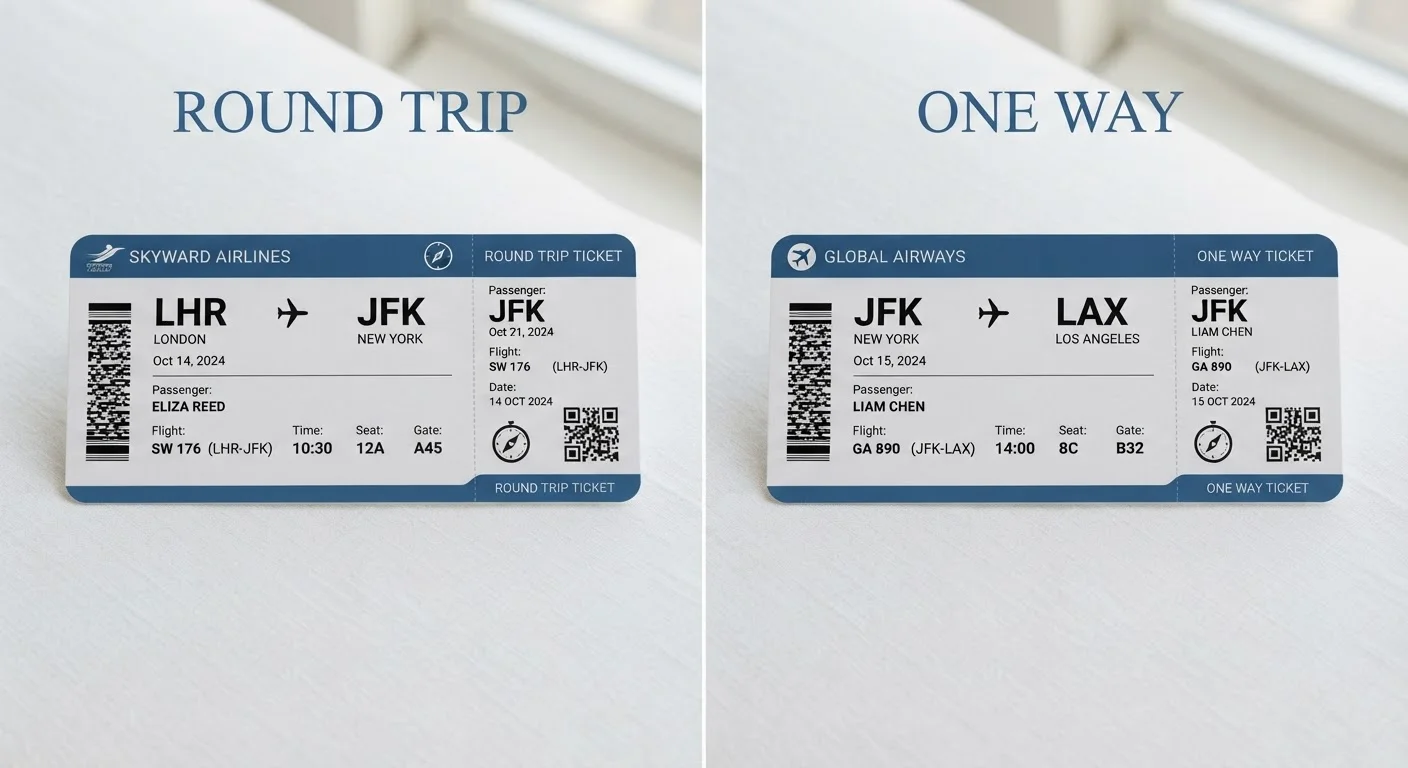
For decades, conventional wisdom held that round-trip tickets were automatically cheaper than buying two one-ways. That was largely true when major carriers dominated pricing and built loyalty discounts into return fares. The landscape has shifted. The rise of low-cost carriers - many of which price all tickets as one-ways - has made the two-one-way model genuinely competitive on a wide range of routes.
The core issue is that airlines price fares based on supply, demand, and route economics - not a consistent formula that favors one ticket structure. On some routes and carriers, round-trips carry a meaningful discount. On others, especially where a budget airline serves one direction, two one-ways come out ahead.
Understanding how airline pricing actually works is the first step to making the right call. The short version: neither ticket structure is universally cheaper. The right answer depends on route, carrier mix, and travel dates.
| Criterion | Round-Trip Ticket | Two One-Way Tickets |
|---|---|---|
| Typical cost on legacy carriers | Often discounted vs. two one-ways | Can exceed round-trip total |
| Typical cost with low-cost carriers | May not exist or be less competitive | Often competitive or lower |
| Open-jaw flexibility | Not supported on standard fares | Fully supported |
| Rebooking protection on disruption | Airline responsible for both legs | Each ticket treated independently |
| Ability to change one leg only | Often triggers full itinerary reprice | Each leg modified independently |
| Carrier mixing | Single carrier or alliance | Any combination of carriers |
| Booking complexity | Single transaction | Two separate transactions |
When Round-Trip Pricing Works in Your Favor
Legacy carriers - airlines that operate hub-and-spoke networks and offer full-service cabins - still tend to discount round-trip bookings. This is partly structural: their revenue management systems are built around the assumption of return travel, and they historically used minimum-stay requirements (such as a Saturday night) to separate leisure from business fares.
Round-trip tickets also provide a practical protection that two separate one-ways do not: through-ticketing. When both legs are on a single booking, the airline is responsible for getting you to your final destination if a disruption occurs. If your outbound flight is delayed and you miss your connection, the carrier must rebook you at no extra charge.
For straightforward domestic routes - especially where one carrier dominates both directions - it's worth checking the round-trip price first. You may find it's already the combined minimum.
~40%
Share of US domestic seats sold by low-cost carriers
Low-cost and ultra-low-cost carriers have grown substantially in US domestic market share over the past decade, according to Bureau of Transportation Statistics data, increasing the relevance of one-way pricing structures.
2x
Common one-way to round-trip price ratio on legacy carriers
On many legacy carrier routes, a one-way ticket is priced close to the full round-trip fare, meaning two one-ways can cost nearly double - a structural incentive to book round-trip when available.
When Two One-Ways Give You the Advantage
Two scenarios consistently favor separate tickets. The first is carrier asymmetry: when the lowest-cost airline serving your outbound leg is different from the one serving your return. If a budget carrier operates direct service one way but not the other, mixing carriers almost always produces a lower combined fare than any single round-trip option.
The second is open-jaw travel - flying into one city and departing from another. A standard round-trip cannot accommodate this structure. Two one-ways (or a purpose-built open-jaw fare from the same carrier) are the only options. This matters particularly for road-trip hybrids; see fly-and-drive trip planning for how families use this structure to reduce backtracking costs.
Flexibility is a third driver. If there's a real chance your return date could shift, two one-ways let you change one leg independently. Changing a single leg of a round-trip on many carriers triggers a fare recalculation on the entire itinerary, often wiping out any savings.
The important caveat: separate tickets carry real risk. A delay on your first flight will not obligate the second airline to rebook you. Read why splitting tickets can backfire before booking separately on tight connections.
How to Make the Comparison Accurately
The only reliable method is to search both structures for the same dates and compare the all-in totals - including any carrier-imposed fees, checked baggage charges, and seat selection costs that differ between options.
- Search for the round-trip fare first on the primary carrier for your route. Note the total with fees.
- Search each direction independently, allowing for different carriers. Add the two one-way totals including any per-booking fees.
- Factor in connection timing risk. If the two-one-way option uses a tight connection, price in the realistic cost of a missed flight before declaring it cheaper.
- Check whether departure day affects pricing differently for each leg - asymmetric demand sometimes means one direction is significantly cheaper on certain days.
If you're considering connecting flights to lower the fare further, weigh the layover tradeoffs carefully - the savings can be real, but so can the risks.
Fares, airline policies, and fee structures change frequently. Always verify current pricing and terms directly with the airline or booking platform before purchasing. This article provides general information and is not a guarantee of any specific fare outcome.