A structured packing checklist for families travelling with children of different ages, from infants to tweens, so nothing essential gets left behind.
Key Takeaways
Packing for mixed-age families requires separate lists for infants, toddlers, school-age kids, and tweens.
Universal essentials like documents, medications, and snacks apply to every traveler in the group.
Age-specific comfort and entertainment items prevent meltdowns on long travel days.
Distributing weight across family members' bags reduces baggage fees and checked-bag stress.
A printed or digital master checklist means nothing critical gets left behind.
Why One Packing List Doesn't Fit All Ages
Traveling with a six-month-old and a ten-year-old at the same time isn't just logistically different - it's practically two separate trips happening simultaneously. The infant needs formula, a portable sleep space, and a full diaper kit. The tween needs noise-canceling headphones, a charger, and something to keep them from broadcasting boredom to the entire plane. And everyone in between has their own layer of needs.
That's exactly why generic packing lists let families down. They either go too broad ("pack clothes and toiletries") or too narrow (optimized for a single traveler). This checklist is structured by age group so you can select the sections that apply to your crew and skip the rest - efficiently and without second-guessing.
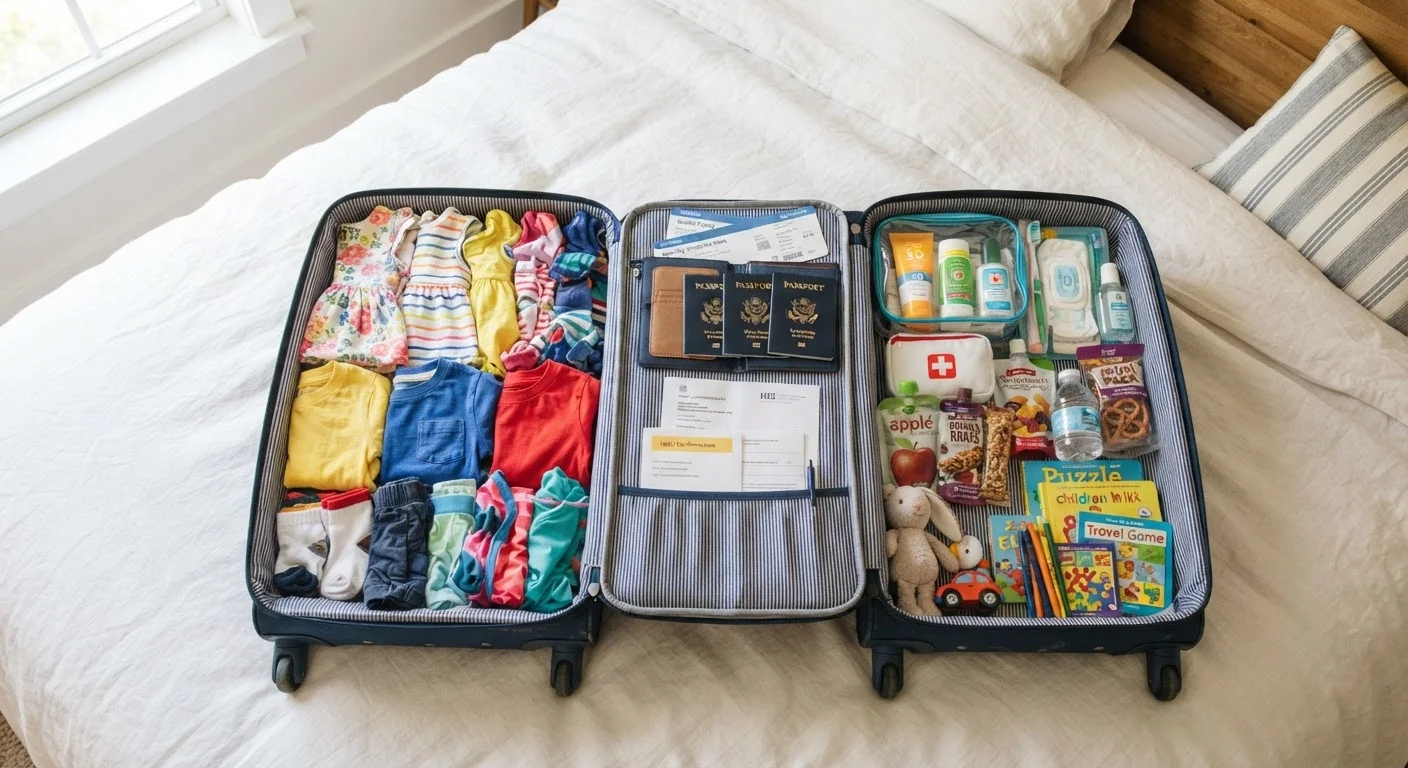
Pack all passports, ID cards, and travel authorization documents in a single waterproof pouch.Must
Carry a printed and digital copy of travel insurance, hotel confirmations, and emergency contacts.Must
Pack each person's prescription medications with original pharmacy labels in your carry-on.Must
Include a basic first-aid kit with bandages, antiseptic wipes, child-safe pain reliever, and motion sickness remedy.Must
Bring a reusable water bottle for each family member to reduce costs and stay hydrated.Should
Pack a small day bag or backpack for excursions that folds flat inside checked luggage.Should
Infants (0-18 months)
Pack enough diapers for the full travel day plus a 25% buffer in case of delays.Must
Include pre-measured formula portions or a nursing cover depending on your feeding method.Must
Bring a compact travel bassinet or confirm a crib is available at your accommodation before departure.Must
Pack two full outfit changes per travel day in your carry-on - blowouts respect no schedule.Must
Include infant-safe sunscreen and insect repellent appropriate for your destination's climate.Should
Bring a familiar comfort item (pacifier, lovey blanket) to ease transitions in unfamiliar environments.Should
Toddlers (19 months-4 years)
Pack a portable potty seat or training insert if your toddler is mid-potty-training.Must
Include at least three familiar snacks in sealed containers - hunger and boredom are the top toddler triggers.Must
Bring a lightweight stroller or carrier suitable for the terrain you'll encounter.Should
Pack a small set of new, unwrapped toys or activity books to introduce during long waits.Should
Include a child harness or wrist link for busy airports and crowded attractions.Nice to have
School-Age Kids (5-9 years)
Load a tablet or device with downloaded movies, games, and audiobooks before departure - don't rely on in-flight Wi-Fi.Must
Pack a dedicated charger and portable power bank for each device your child is responsible for.Must
Include a travel journal or activity pad - writing and drawing are screen-free entertainment that kids this age often enjoy.Should
Pack a small personal backpack they can manage independently, with their snacks, entertainment, and one outfit change.Should
Bring a pair of earplugs or basic headphones suitable for their ear size.Should
Tweens (10-12 years)
Provide a simple itinerary overview so tweens know what's happening - surprises are less welcome at this age.Should
Pack their own personal hygiene kit (deodorant, face wash, lip balm) to respect growing independence needs.Must
Include noise-canceling headphones or quality earbuds - tweens value audio privacy during long journeys.Should
Give them a small travel wallet with a modest spending budget so they can make age-appropriate purchasing decisions.Nice to have
Pack a portable battery or solar charger to keep their devices powered throughout the trip.Should
Clothing Strategy (All Ages)
Apply the 1-2-3 rule per child: one outfit per day, two underwear per day, three days max before a laundry plan.Must
Pack at least one layer suitable for air-conditioned transport and restaurants regardless of destination climate.Must
Use packing cubes labeled per child to keep bags organized and speed up daily retrieval.Should
Include one swimsuit and quick-dry outfit per child even if swimming isn't the main activity - opportunities arise.Nice to have
How to Use This Checklist Without Losing Your Mind
Start by identifying which age-group sections apply to your family. Many families will use two or three sections - that's completely normal, and it's why this checklist is modular. Assign each category to the family member (or bag) responsible for carrying those items.
Don't Pack Medications in Checked Bags
Always keep prescription medications, infant formula, and critical first-aid supplies in your carry-on bag. Checked luggage can be delayed, misdirected, or temporarily unavailable - none of which you want to discover at 11 p.m. in an unfamiliar city. TSA allows reasonable quantities of liquid medications and formula exceeding the standard liquid limits; verify current rules at the official TSA website before you fly.
One practical tip that saves real money: distribute weight strategically. Kids over age five can typically manage a small backpack with their own snacks, tablet, headphones, and a change of clothes. This keeps personal entertainment items out of checked bags and reduces the odds of a meltdown when the airline loses your luggage.
For families traveling with children across a wide age range, planning the trip itself requires the same kind of nuanced approach. Our article on traveling with mixed-age kids covers itinerary balancing when toddlers and tweens have wildly different energy levels. If your adventure involves a long international flight, don't miss our deep dive on long-haul international travel with young children before you finalize your carry-on strategy.
Required
Packing Cubes
Separate each child's clothing and gear within shared luggage so items are immediately identifiable.
Required
Portable Power Bank
Keep tablets, phones, and devices charged during long travel days without hunting for airport outlets.
Required
Waterproof Document Pouch
Store passports, insurance documents, and confirmations safely and accessibly throughout the trip.
Optional
Collapsible Day Bag
Stow flat in checked luggage and deploy for excursions, beach days, or spontaneous adventures.
Optional
Reusable Snack Bags
Pre-portion snacks for each child to reduce waste and avoid overpaying for airport food.
Family Travel Editorial Team is the collective byline for our editorial team and contributor network. Articles published under this byline or an editorial pen name are researched, written, and reviewed according to our editorial standards for clarity, consistency, and independence before publication.
The content on this site is for informational purposes only and is not a substitute for professional advice. Always consult a qualified professional for guidance specific to your situation.