
The Gap Between the Plan and the Trip
Family trips almost never fail because of bad luck. They fail because the plan didn't account for real life with children: the slow mornings, the unexpected nap, the toddler who refuses to walk another block. The itinerary looked airtight at home and fell apart by day two.
The good news? These breakdowns are predictable - which means they're preventable. Whether you're mapping out a weekend road trip or a two-week international adventure, the same handful of mistakes keep showing up. Here's what they are, why families keep making them, and exactly what to do differently. For a complete planning foundation, start with our Family Trip Planning From Start to Finish.
Packing too many activities into each day, leaving no margin for delays or low-energy moments.
Why it happens: Parents plan in optimistic mode - estimating transit times, meal durations, and kid stamina based on best-case scenarios rather than experience.
Setting a travel budget that ignores hidden costs like entrance fees, tips, snacks, and incidentals.
Why it happens: Most families budget for flights and hotels but forget the dozens of smaller expenses that accumulate quickly on a family trip.
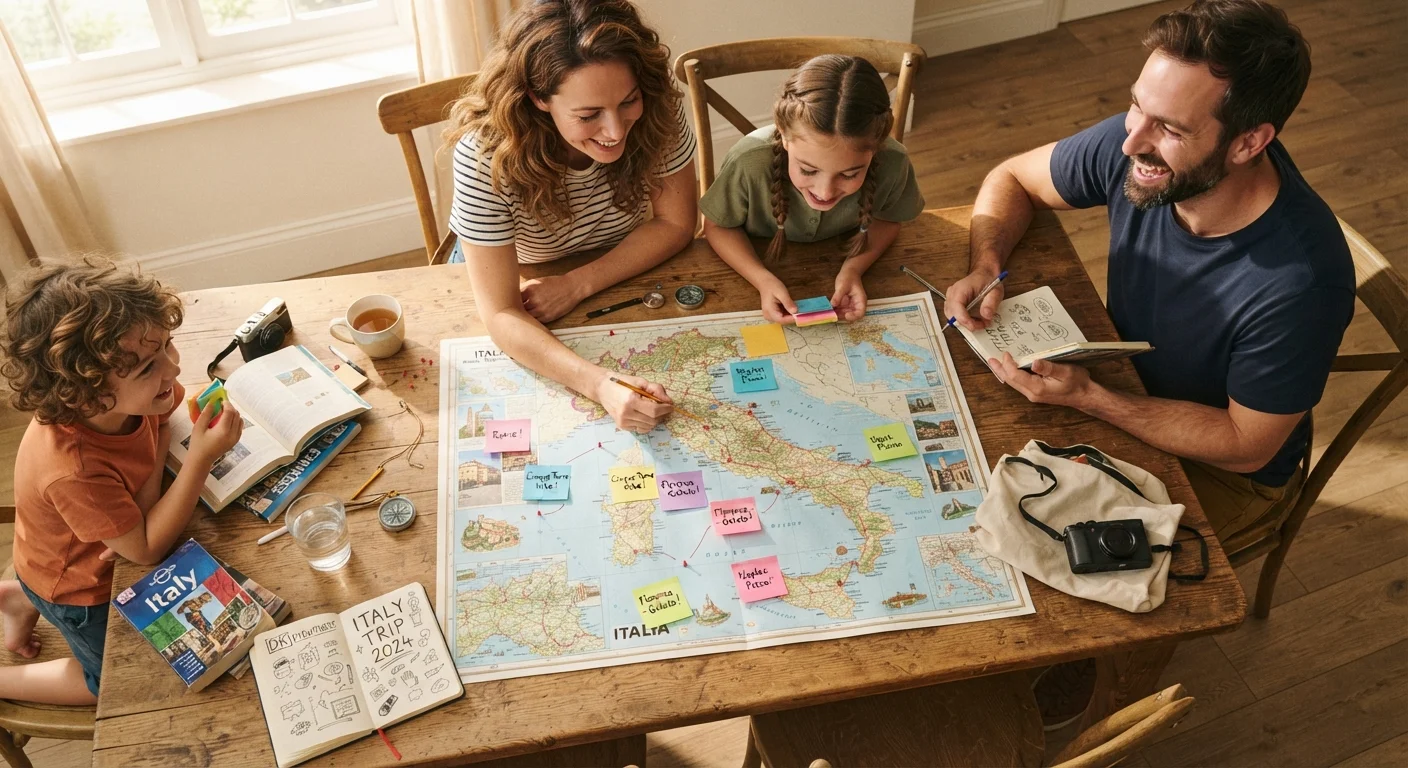
Treating children as passengers in the planning process rather than participants.
Why it happens: Planning with kids feels inefficient, so parents often present a fully formed itinerary rather than involving children in any choices.
Ignoring the logistics gaps - how you'll get between attractions, where you'll store bags, when and where you'll eat.
Why it happens: Itineraries focus on highlights and underestimate the connective tissue: the transit, the waiting, and the meal-timing that holds a day together.
Booking a rigid, non-refundable itinerary with no flexibility for illness, weather, or changed plans.
Why it happens: Non-refundable options are usually cheaper, and parents book optimistically assuming everything will go as planned.
Smarter Habits That Keep Trips on Track
Avoiding these mistakes doesn't require military-level organization - it just requires planning with your actual family in mind, not an idealized version of them. A few habits make the biggest difference.
~60%
Families who over-schedule their trips
Travel industry surveys consistently find that a majority of family travelers report feeling rushed or over-committed during their trips due to packed itineraries.
20-30%
Typical budget underestimate on family trips
Financial planning research on vacation spending suggests families routinely underestimate total trip costs by 20-30% due to overlooked incidental expenses.
Build in unscheduled time intentionally. One genuinely free half-day per multi-day trip gives you room to recover, explore spontaneously, or simply rest. Families who treat downtime as a planning element - not a failure to fill the schedule - consistently report more enjoyable trips. See how deliberate pacing transforms the experience in our guide on how pacing an itinerary differently changes a family trip.
Anchor your budget to real numbers. Pull up actual entrance fees, meal costs, and transport fares before you finalize anything. If you're traveling with extended family, agree on budget expectations before booking - not after. Our family travel budget guide walks through every cost category worth tracking, and why family trips cost more than expected unpacks the decisions that quietly push budgets over target.
Give kids a stake in the trip. Even a five-year-old can pick between two restaurant options or choose the afternoon activity. That small ownership dramatically reduces pushback. For families traveling with grandparents or multiple households, coordinating expectations early is equally essential - our group family travel coordination guide is worth reading before the group chat gets complicated.
The families who have the smoothest trips aren't the ones who planned the most - they're the ones who planned the right things. More family travel tips and budget family trip ideas are waiting when you're ready to build on these foundations.
Don't Skip the Contingency Conversation
Before every trip, have a brief family conversation about what happens if plans change - a sick kid, a closed attraction, a weather day. Families who've talked through a Plan B in advance handle disruptions far more calmly than those who haven't. This is especially important on international trips where logistics are harder to adjust on the spot.